
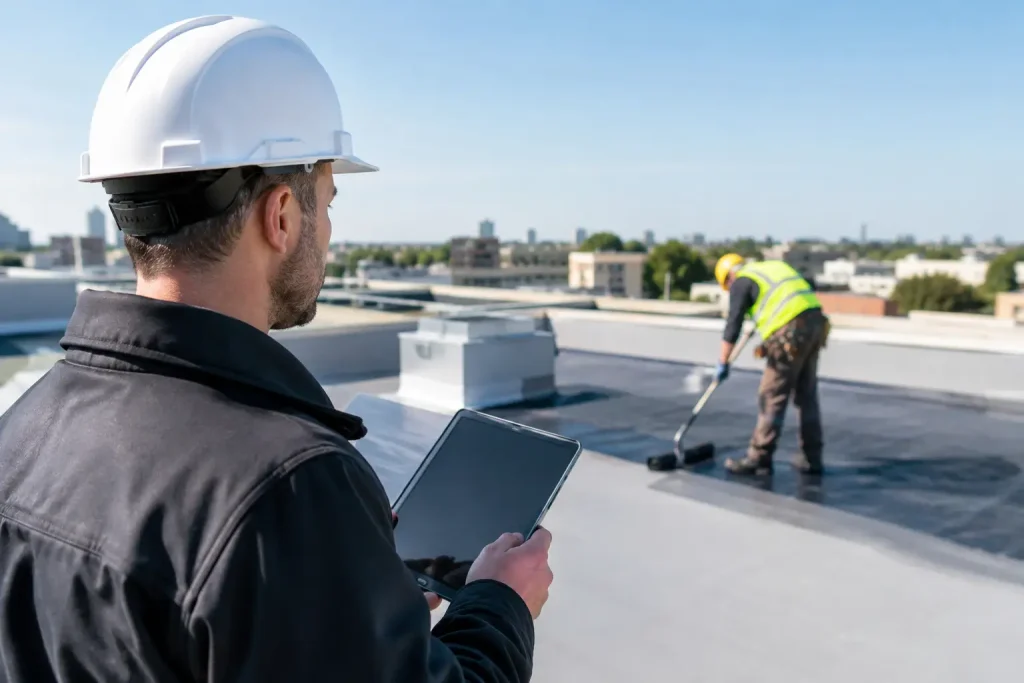
A leaking roof over a retail floor, warehouse, office, or apartment building can create expensive problems fast. Commercial roofer reviews give property owners an early look at how a contractor performs when timing, communication, and quality all matter. The goal is not to find a company with only perfect ratings. It is to find one with a consistent record of solving real roofing problems responsibly.
For Utah property owners, that means looking beyond the star rating. Snow, wind, hail, high summer heat, and rapid temperature changes put commercial roofing systems under real pressure. A contractor’s reviews should help you understand whether they respond quickly, explain repairs clearly, stand behind their workmanship, and respect the demands of an active property.
What Commercial Roofer Reviews Can Tell You
A five-star average can be encouraging, but the written comments usually tell the fuller story. Look for patterns across multiple reviews rather than putting too much weight on one glowing comment or one unhappy experience. Every contractor can encounter scheduling changes, material delays, or a difficult project. What matters is how often concerns appear and how the company handles them.
The most useful reviews describe a specific situation. A property manager may mention a persistent leak that was correctly diagnosed after another contractor missed it. A business owner may note that crews worked around customers and kept the site clean. Those details show more than a simple statement that the company was “great.”
Pay close attention to comments about responsiveness. Commercial roof issues do not always wait for a convenient time. Reviews that mention fast inspections, clear follow-up, emergency leak response, and dependable scheduling can be especially valuable when protecting tenants, inventory, equipment, or daily operations.
Look for Details About the Actual Work
Commercial roofs are not one-size-fits-all. Flat and low-slope buildings may use membrane systems, while other properties may have metal roofing, shingles, coatings, or a combination of materials. Good reviews often indicate whether the roofer understood the system already on the building and recommended a practical repair or replacement plan.
Specific comments about leak detection, flashing repairs, drainage concerns, insulation, membrane seams, or storm damage can signal that a contractor did more than offer a quick visual estimate. You do not need to become a roofing expert to read reviews well. You do need confidence that the contractor identified the source of the problem instead of treating the most visible symptom.
It also helps to see reviews from properties similar to yours. An office complex, restaurant, multi-family building, agricultural structure, and industrial facility all have different access needs and operational concerns. A roofer with strong residential feedback may still do excellent commercial work, but commercial project experience deserves its own attention.
How to Read Commercial Roofer Reviews Wisely
Start with the newest reviews, then work backward. Recent feedback is more likely to reflect the contractor’s current crew, communication practices, and service capacity. If a company earned excellent reviews several years ago but has a recent pattern of missed calls or unresolved work, that deserves a closer look.
Next, read both positive and negative reviews. Positive feedback should reveal more than friendliness. Look for mentions of fair estimates, professional crews, completed work, clean job sites, and follow-up after the project. Negative feedback can be useful too, particularly when it identifies a concern and shows how the contractor responded.
A professional response does not require a company to agree with every complaint. It should be respectful, timely, and focused on finding a solution. Defensive or dismissive replies may suggest trouble if a warranty issue or unexpected repair need arises later.
Review volume also matters, although it is not everything. A contractor with a long record of reviews across several years often provides a clearer picture than a company with a handful of recent ratings. At the same time, do not assume the biggest review count automatically means the best fit. Local contractors can offer attentive service, direct communication, and a stronger understanding of Utah weather conditions.
Watch for Repeated Concerns
One complaint about scheduling may reflect a one-time disruption. Multiple comments about poor communication, surprise costs, unfinished work, or difficulty reaching the contractor should not be ignored. Repeated themes are usually more meaningful than isolated reviews.
Be cautious with reviews that sound vague, overly promotional, or nearly identical to one another. The most credible feedback usually includes practical details: what problem the property had, how the contractor communicated, what work was completed, and whether the customer felt the price matched the service.
It is also smart to consider what is missing. If a roofing company receives many reviews for sales conversations but few references to completed projects, warranty support, or workmanship, ask more questions before signing a contract.
Questions Reviews Cannot Answer on Their Own
Reviews are a strong starting point, not a replacement for a thorough estimate and inspection. Before choosing a commercial roofer, ask how they will evaluate your roof, what materials they recommend, and why that system fits your building. A trustworthy contractor should be able to explain the options in plain language.
Ask about the scope of work, expected timeline, crew access, safety practices, cleanup, and warranty coverage. If your building is occupied, discuss how the work could affect tenants, customers, parking, noise, deliveries, and business hours. The best plan is not always the least expensive one. A lower upfront price may leave out needed repairs, drainage improvements, or long-term protection.
For storm-related damage, ask whether the contractor can document visible issues and help you understand the insurance claim process. Insurance coverage depends on your policy and the cause of damage, so no contractor should promise an outcome they cannot control. They can, however, provide photos, measurements, and clear documentation to support your claim.
Financing may also be worth discussing for major repair or replacement work. A good contractor will be straightforward about costs and help you compare practical options without pressure.
Signs You Have Found a Contractor Worth Calling
The reviews point in the right direction when customers consistently describe honest recommendations, clear communication, punctual crews, quality repairs, and fair treatment after the job is complete. When those themes are supported by a detailed inspection and a written estimate, you have a much stronger basis for making a decision.
At Big West Roofing, we believe commercial property owners deserve answers before work begins, not surprises after the invoice arrives. A free inspection gives you a chance to discuss the condition of your roof, understand your options, and make a decision that fits your property and budget.
A commercial roof protects far more than the building itself. Take the time to read the details, ask direct questions, and choose a local roofing partner whose reputation shows they will be there when your property needs them.