
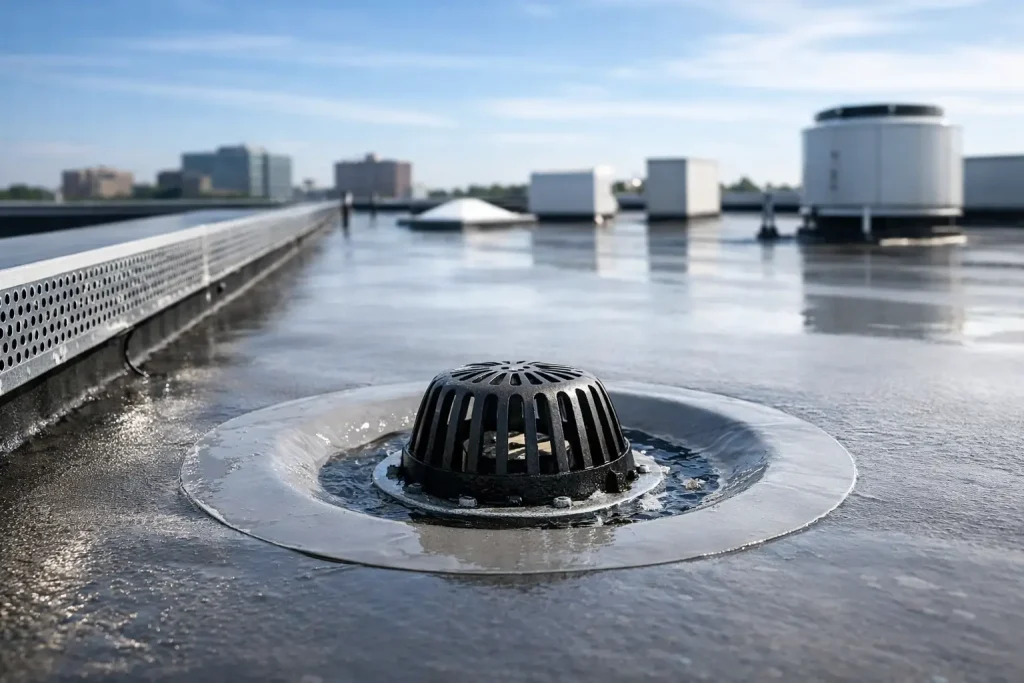
Water rarely damages a commercial roof all at once. More often, it collects near a drain, seeps beneath a membrane seam, freezes overnight, and slowly turns a manageable maintenance issue into an expensive leak. The right commercial roof drainage solutions help Utah property owners move water off the roof efficiently, protect the building below, and get more dependable service from their roofing system.
For a retail center, office building, warehouse, apartment complex, or other commercial property, drainage is not an accessory. It is part of how the roof performs. A roof can have quality membrane materials and professional installation, but standing water, blocked drains, or undersized gutters can still put the building at risk.
Why Commercial Roof Drainage Matters in Utah
Utah weather puts commercial roofs through a wide range of conditions. Heavy rain can arrive quickly, snow can accumulate for days, and rapid warming can create large volumes of snowmelt. When drainage components cannot handle that water, it may pond on low areas of the roof instead of reaching a safe discharge point.
Ponding water adds weight and can accelerate wear on membranes, seams, flashings, and roof penetrations. In freezing conditions, trapped water may expand as it turns to ice, stressing vulnerable areas even further. Over time, that moisture can work its way into insulation, decking, ceilings, walls, and electrical systems.
The visible leak is often the last warning sign. Before water reaches an occupied space, a roof may already show softened insulation, membrane deterioration, rust around drains, staining, or debris buildup. That is why regular inspections and timely repairs matter. Finding a slow-draining area early is usually far more affordable than repairing interior damage later.
The Right Drainage System Depends on the Roof
There is no single drainage design that works for every property. The right approach depends on the roof’s size, slope, material, layout, existing drains, and the amount of water the system needs to manage. Nearby trees, rooftop equipment, parapet walls, and the building’s structure all affect the plan.
Internal Roof Drains
Internal drains are common on low-slope commercial roofs. Water flows toward drain bowls installed within the roof area, then travels through concealed piping inside the building. This design can be effective for large roofs because it does not rely on exterior gutters alone.
The trade-off is maintenance. Leaves, gravel, packaging, tennis balls, and other debris can clog strainers or restrict flow. If water cannot enter the drain, it has nowhere to go except across the roof surface. Drain bowls, clamping rings, strainers, and surrounding membrane details should be inspected regularly, especially after storms and during fall leaf drop.
Scuppers and Downspouts
Scuppers are openings through a parapet wall that allow water to leave the roof and enter a conductor head, downspout, or exterior drainage path. They are often used on buildings with flat or low-slope roof sections and can provide a straightforward, visible route for water.
A scupper needs enough capacity for the roof area it serves. It also needs a clear path outside the building. A blocked downspout can cause water to back up against the parapet, where it may find its way into wall assemblies or beneath flashing. Ice buildup near scuppers is another concern during Utah winters, so proper placement and maintenance are essential.
Gutters and Edge Drainage
Commercial gutters collect water at the roof edge and direct it to downspouts. They are commonly used on metal roofs, sloped commercial roofs, and smaller structures. When properly sized and securely attached, gutters help prevent water from pouring over entryways, sidewalks, siding, and landscaping.
However, gutters are only as effective as their condition. Loose hangers, separated seams, crushed sections, and clogged outlets can quickly create overflow. Water spilling over a gutter may lead to slippery walkways, soil erosion, fascia damage, and staining on the exterior of the building.
Tapered Insulation and Roof Slope
Sometimes the drainage problem is not the drain itself. The roof may not have enough slope to move water toward it. Tapered insulation can be installed during a roof replacement or restoration project to create positive drainage paths while also improving insulation performance.
This is often a practical solution for persistent ponding areas on low-slope roofs. It does require thoughtful design and may add cost compared with a basic replacement, but it can reduce standing water and help protect the new membrane over the long term. For roofs with recurring low spots, addressing slope is usually wiser than repeatedly patching the same area.
Warning Signs Your Drainage Needs Attention
Property owners and facility managers do not need to climb onto the roof to spot every issue. A few signs around the building can point to drainage trouble, including ceiling stains, water near exterior walls, overflowing gutters, loose downspouts, and water pooling near entrances after a storm.
On the roof, standing water that remains more than 48 hours after rain is worth a professional evaluation. Some roofs may hold small amounts of water temporarily, but recurring ponding can indicate inadequate slope, blocked drainage components, or structural deflection. Blistering membrane material, open seams around drains, and vegetation growing where it should not are also concerns.
Do not overlook interior humidity or musty odors. A slow roof leak can wet insulation or building materials long before it produces an obvious ceiling stain. A free roof inspection can help identify whether the issue is drainage-related, a membrane repair need, or a combination of both.
Maintenance That Protects the Whole Building
Commercial drainage maintenance is simple in principle: keep water paths clear and make repairs before small defects spread. In practice, it should be scheduled, documented, and adjusted for the building’s surroundings. A property near mature trees may need more frequent cleaning than one in an open commercial area.
A practical maintenance plan should include clearing drain strainers, scuppers, gutters, and downspouts; checking for standing water after major storms; inspecting sealants and flashings around drainage points; and removing debris that can trap moisture against the roof surface. It is also wise to verify that downspouts discharge away from foundations, walkways, and areas where water can create safety concerns.
For larger properties, seasonal inspections are a smart baseline. Schedule one before winter weather, another after snowmelt, and additional checks after major wind, hail, or rain events. Roof access should be limited to trained personnel, since foot traffic can damage some membrane systems and create avoidable safety risks.
When Repair Makes Sense and When Replacement Is Better
A damaged drain flange, split gutter seam, loose downspout, or localized membrane failure can often be repaired without replacing the entire roof. Fast repairs are especially valuable when the underlying roof is still in good condition and the problem is isolated.
Replacement becomes a stronger option when drainage issues are tied to aging materials, widespread ponding, repeated leaks, saturated insulation, or an outdated roof design. A commercial roof replacement is an opportunity to improve slope, upgrade drainage capacity, correct flashing details, and select a membrane system that fits the building’s needs.
The most cost-effective choice depends on what is causing the problem. Repeated patching may appear less expensive in the moment, but it can become costly if water continues reaching insulation or interior finishes. A clear inspection report and straightforward estimate give property owners the information they need to make a confident decision.
Protect Your Roof Before the Next Storm
Commercial roof drainage solutions work best when they are planned around the building instead of treated as an afterthought. Clear drains, properly sized gutters, sound flashings, and adequate roof slope all work together to keep water moving where it belongs.
If your commercial property has standing water, overflowing gutters, or signs of a leak, Big West Roofing can provide a professional inspection and explain practical repair or replacement options. Taking care of drainage now can help protect your building, your tenants, and your budget when the next storm arrives.