
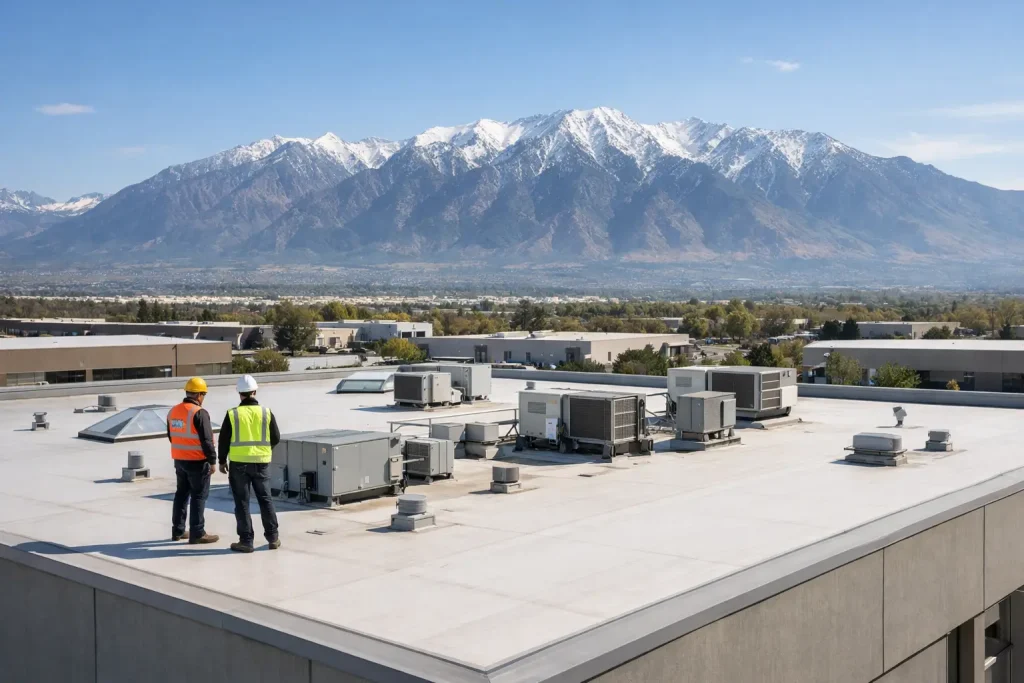
A commercial roof rarely fails all at once. More often, a small seam opening, clogged drain, damaged flashing, or ponding water slowly turns into stained ceilings, disrupted tenants, damaged inventory, and an expense nobody planned for. This commercial flat roofing guide gives Utah property owners a clear way to evaluate their roof, understand their options, and make decisions before a manageable issue becomes an urgent repair.
Flat commercial roofs are common on offices, retail centers, warehouses, multifamily buildings, churches, and industrial properties because they use space efficiently and accommodate equipment such as HVAC units. But a low-slope roof needs a system designed for standing up to sun exposure, snow, wind, temperature swings, and regular foot traffic from maintenance crews.
What “Flat” Commercial Roofing Really Means
Most commercial flat roofs are not completely flat. They are low-slope roofs designed with a slight pitch that guides water toward drains, scuppers, or gutters. When that drainage path is blocked or the roof has settled in certain areas, water can remain on the surface long after a storm.
That standing water is more than an appearance issue. It adds weight, accelerates material wear, exposes weak seams, and can shorten the life of the roof system. In Utah, seasonal snow, spring runoff, summer heat, and wind-driven storms make drainage and flashing details especially important.
A commercial roof is also more than its visible surface. It is a complete assembly that can include the roof deck, insulation, vapor barrier, membrane or cover material, edge metal, penetrations, drains, and flashing around walls and equipment. A quality repair or replacement considers how those parts work together instead of simply covering the area where water appears indoors.
Commercial Flat Roofing Guide: Choosing a System
The best roofing system depends on the building, its current roof condition, budget, drainage, expected foot traffic, and long-term ownership plans. There is no one material that fits every property. A contractor should inspect the existing assembly and explain the trade-offs in plain language before recommending a solution.
TPO Membrane Roofing
TPO is a popular single-ply membrane for commercial low-slope roofs. Its white surface can reflect sunlight and help reduce heat absorption, which can be a practical benefit for buildings with significant summer sun exposure. TPO is also lightweight, available in wide sheets, and often offers a cost-effective balance of performance and price.
Installation quality matters greatly with TPO. The seams are heat-welded, and those welds must be completed correctly to create a watertight surface. Details around pipes, curbs, parapet walls, and drains deserve just as much attention as the open field of the roof.
PVC Membrane Roofing
PVC is another heat-welded single-ply system. It is often selected for properties where resistance to grease, oils, or chemicals matters, such as restaurants or certain manufacturing facilities. Like TPO, PVC can provide a reflective roof surface and welded seams.
PVC may come with a higher initial price than some alternatives, so it makes the most sense when its performance benefits match the building’s use. For a restaurant with rooftop exhaust near the roofing surface, that added resistance can be worth considering.
EPDM Rubber Roofing
EPDM is a durable synthetic rubber membrane that has been used on commercial roofs for decades. It is commonly black, though lighter options are available, and it performs well across changing temperatures. EPDM is typically installed with adhesive, mechanical fasteners, or ballast, depending on the roof design.
Because EPDM seams are commonly sealed with tape or adhesive rather than heat-welded, careful detailing is essential. It can be a dependable option, particularly for larger roofs, but the final choice should account for insulation needs, energy goals, and the building’s drainage conditions.
Modified Bitumen and Built-Up Roofing
Modified bitumen and built-up roofing systems use multiple layers to create protection. They can be a strong choice for roofs with frequent foot traffic or complex layouts containing many penetrations. Their layered construction can also make isolated repairs more straightforward in some cases.
The trade-off is weight and installation complexity. These systems may require more labor and can be less reflective unless a reflective coating or cap sheet is used. They are not automatically the right answer, but they remain a practical option for the right commercial property.
Repair, Restoration, or Replacement?
Property owners often ask whether they can repair a flat roof instead of replacing it. The honest answer is: it depends on the condition of the entire roof, not just the location of the latest leak.
A targeted repair may be the sensible choice when the membrane is generally sound and the issue is limited to a damaged seam, flashing detail, puncture, drain, or small section of aging material. Fast repairs can protect the building and buy valuable time, especially when a full replacement is not yet necessary.
Restoration may be an option when the roof is dry, structurally sound, and nearing the point where surface wear needs attention. Depending on the existing system, a properly selected coating or restoration approach can extend service life and improve reflectivity. A coating is not a fix for widespread trapped moisture, deteriorated insulation, failed seams, or major drainage problems.
Replacement is usually the better long-term decision when leaks are recurring, insulation is saturated, membrane seams are failing in multiple areas, or the roof has reached the end of its expected service life. Replacing a roof can also be an opportunity to improve drainage, insulation, edge details, and compatibility with rooftop equipment.
Warning Signs That Deserve a Roof Inspection
Commercial roof leaks do not always show up directly below the problem. Water can travel along the deck or insulation before reaching a ceiling tile or wall. That is why visible interior damage should be investigated quickly rather than patched cosmetically.
Watch for these signs:
- Water stains, dripping, damp ceiling tiles, or peeling interior paint
- Ponding water that remains more than 48 hours after precipitation
- Blisters, wrinkles, cracks, open seams, or punctures in the membrane
- Loose edge metal, damaged flashing, or worn sealant around penetrations
- Clogged drains, debris buildup, or vegetation near drainage areas
- Rising energy costs that may point to wet or inadequate insulation
A free inspection can help determine whether the issue is active, where moisture may be entering, and what level of repair is appropriate. The goal is not to push a replacement when a repair will do. It is to give the property owner a clear picture of the roof’s condition and realistic next steps.
Maintenance Protects the Roof You Already Have
Commercial roof maintenance is one of the most practical ways to avoid avoidable damage. A maintenance visit is not just a quick walk around the roof. It should include checking membrane seams, flashings, drain function, rooftop equipment areas, edge metal, and signs of physical damage.
For many Utah properties, inspections twice a year are a reasonable starting point: once after winter and once before winter weather returns. It is also wise to schedule an inspection after hail, high winds, or a major storm. If the building has heavy rooftop traffic, mature trees nearby, or known drainage challenges, it may need more frequent attention.
Building staff can help between professional inspections by keeping drains clear, limiting unnecessary foot traffic, and reporting problems promptly. Never allow untrained vendors to make casual penetrations in the roof for equipment, wiring, or signage. A small unsealed opening can create a costly leak path.
Questions to Ask Before Hiring a Commercial Roofer
The lowest bid is not always the lowest cost. Commercial roofing proposals should clearly describe the existing roof condition, the recommended system, the scope of tear-off or recover work, insulation changes, flashing details, drainage work, and warranty terms.
Ask whether the contractor will identify wet insulation, how they will protect the building during construction, and how they will coordinate around tenants or business operations. If rooftop HVAC units, solar components, or other equipment are involved, confirm who is responsible for disconnecting, protecting, or reinstalling those components.
It also helps to ask how the contractor handles unexpected conditions. An honest roofing partner will explain that hidden deck damage or saturated materials can be discovered after work begins, then outline how those issues will be documented and approved before additional work proceeds.
Big West Roofing approaches commercial roofing with the same straightforward communication we bring to every local project. Property owners deserve a prompt response, a clear explanation of their options, quality workmanship, and a plan that respects both the building and the budget.
A roof inspection is a simple place to start. Whether your property has an active leak, storm damage, ponding water, or a roof nearing the end of its service life, getting informed early gives you more choices and more control over the next step.