
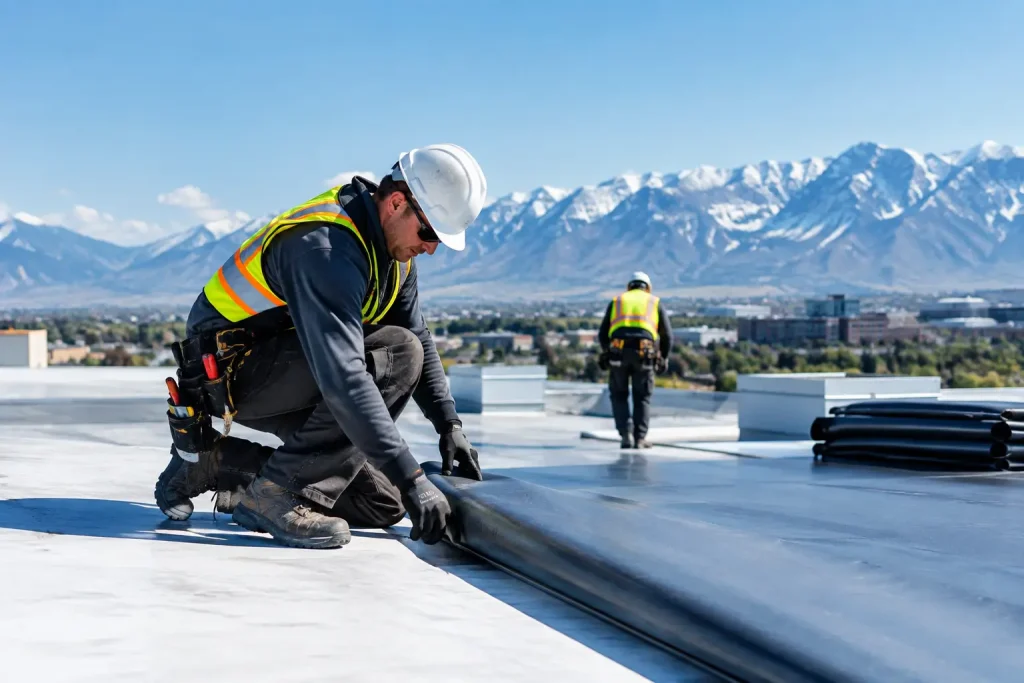
A commercial roof rarely fails at a convenient time. A small leak above a tenant space, warehouse aisle, or office can quickly become damaged inventory, disrupted operations, and an unhappy customer or employee. This commercial roof replacement guide is built to help Utah property owners make a clear decision before minor roofing concerns become expensive building problems.
A replacement is a significant investment, but it is also a chance to improve energy performance, reduce maintenance needs, and protect the people and business activity under your roof. The right approach starts with an honest inspection and a plan that fits your building, budget, and timeline.
Know When Replacement Makes More Sense Than Repair
Not every commercial roofing issue requires a full replacement. A targeted repair can be the practical choice when damage is isolated, the roofing system is still within its expected service life, and the insulation and roof deck remain dry and sound.
Replacement becomes more likely when repairs keep returning to the same areas, leaks appear in multiple locations, seams are failing across the roof, or the membrane has become brittle, cracked, or worn. Persistent ponding water, loose flashing, storm damage, and rising heating or cooling costs can also point to a system that is no longer doing its job.
The condition below the membrane matters just as much as what is visible on top. Water can travel through insulation and along the deck before it shows up inside. That is why a professional inspection should look for moisture intrusion, damaged insulation, poor drainage, structural concerns, and details around rooftop equipment, drains, curbs, and penetrations.
If the roof is near the end of its useful life, repeated repair bills can become false savings. Spending money several times a year to control leaks may cost more over time than scheduling a replacement with a clear warranty and long-term maintenance plan.
Start With a Thorough Roof Assessment
A dependable replacement project begins before materials are selected. Your contractor should inspect the existing roof system, confirm the roof’s size and slope, identify drainage issues, and evaluate whether a tear-off or an overlay is appropriate.
An overlay installs a new system over an existing roof in certain situations. It can reduce labor and disposal costs, but it is not always the right answer. If there is trapped moisture, saturated insulation, multiple existing roof layers, or concealed deck damage, a tear-off may be necessary. Removing the old material gives the contractor a clean view of the deck and allows damaged components to be addressed correctly.
During the assessment, be ready to discuss how the building is used. A medical office, restaurant, retail center, apartment building, warehouse, and manufacturing facility all have different priorities. Some need work performed outside business hours. Others need careful protection around equipment, HVAC units, skylights, or tenant entrances. A good roofing plan accounts for those details before crews arrive.
Choose a Commercial Roofing System That Fits the Building
There is no single best commercial roof for every Utah property. The right system depends on roof design, expected foot traffic, exposure to sun and snow, drainage, building use, and budget.
Single-Ply Membrane Roofing
Membrane roofing is a common choice for low-slope commercial buildings. TPO, PVC, and EPDM are single-ply systems that can offer dependable weather protection when installed with proper seams, flashing, insulation, and drainage.
TPO is often selected for its reflective surface and competitive cost. It can help reduce heat gain during Utah’s sunny summers, though performance depends heavily on material quality and installation details. PVC is valued in settings where chemical exposure, grease, or restaurant exhaust may be a concern. EPDM is a durable rubber option that has a long history on commercial roofs, particularly when a darker surface is acceptable.
Metal Roofing
Metal roofing can be an excellent long-term solution for certain commercial properties, especially on sloped roof sections or buildings that benefit from a highly durable exterior. It handles snow, wind, and sun well when designed and installed properly.
The upfront cost may be higher than some membrane options, and details around penetrations and transitions require experienced workmanship. Still, for owners focused on longevity and low maintenance, metal can offer strong value over the life of the building.
Built-Up and Modified Bitumen Systems
Built-up roofing and modified bitumen systems use multiple layers to create a durable roof surface. They can be a good fit for roofs with regular foot traffic or complicated layouts. Because these systems are layered, they can provide strong protection, but installation time, weight, odor, and project logistics should be considered.
Your contractor should explain why one system is recommended for your property instead of simply offering the material they install most often. The best choice is the one that addresses your building’s real conditions and supports your long-term plans.
Plan the Budget Beyond the Roof Surface
Commercial replacement estimates can vary because the membrane itself is only one part of the project. Insulation upgrades, tear-off and disposal, deck repairs, drainage improvements, parapet walls, flashing, edge metal, rooftop equipment details, and permits all affect the final cost.
A lower quote is not automatically a better quote. Ask what is included, what conditions could lead to additional costs, and whether the proposal addresses known trouble spots. Clear scope of work protects both the building owner and the contractor from surprises once the existing roof is opened.
It is also wise to consider the cost of waiting. A failing roof can damage insulation, ceilings, electrical systems, inventory, and interior finishes. Business interruptions and tenant complaints add another layer of expense. Financing options may help owners move forward before the problem grows, rather than delaying necessary work until emergency repairs are the only option.
Schedule Work Around Utah Weather and Operations
Utah weather can change quickly, from intense summer sun to heavy snow, high winds, and freeze-thaw cycles. While commercial roof replacements can be performed through much of the year, scheduling should allow for safe working conditions and proper material installation.
For many properties, spring through fall offers more predictable conditions. However, the best time to replace your roof is often when the system is showing clear signs of failure, not simply when the calendar is ideal. A qualified contractor can use weather monitoring, temporary protection, and phased work to manage risk when a project cannot wait.
Communication matters during an active commercial project. Property managers should know where crews will park, how debris will be handled, whether entrances need protection, and when noisy work will occur. If tenants or customers will be on-site, give them notice early and provide a direct point of contact for questions.
Protect the Investment After Installation
A new commercial roof should not be ignored until the next leak appears. Regular inspections and maintenance help preserve the system, protect warranty requirements, and catch small issues before they spread.
At least twice a year, and after major wind or hail events, have the roof checked for debris, blocked drains, damaged flashing, punctures, and open seams. Building staff can also help by reporting ceiling stains, unusual odors, standing water, or changes around rooftop units right away.
Avoid allowing untrained vendors to make penetrations for signs, equipment, cabling, or other additions without coordinating with your roofing contractor. A small opening that is not properly flashed can compromise an otherwise sound roof system.
Questions to Ask Before Hiring a Contractor
A trustworthy commercial roofer should be comfortable answering direct questions about licensing, insurance, installation experience, materials, warranties, project supervision, and safety practices. Ask who will manage the job daily and how unexpected deck damage or weather delays will be handled.
You should also ask for a written proposal that identifies the roofing system, insulation plan, flashing details, tear-off approach, cleanup expectations, and warranty coverage. If storm damage contributed to the roof’s condition, ask whether the contractor can document damage clearly for an insurance claim.
Big West Roofing believes commercial property owners deserve straightforward answers, careful workmanship, and a plan that respects their operations. A free inspection is often the most useful first step because it replaces guesswork with a documented view of your roof’s condition.
A commercial roof replacement does not have to feel overwhelming. Start with a thorough inspection, ask clear questions, and choose a system based on your building’s needs rather than a one-size-fits-all recommendation. The right project protects more than the roof – it helps protect the business, tenants, and people who count on the building every day.