
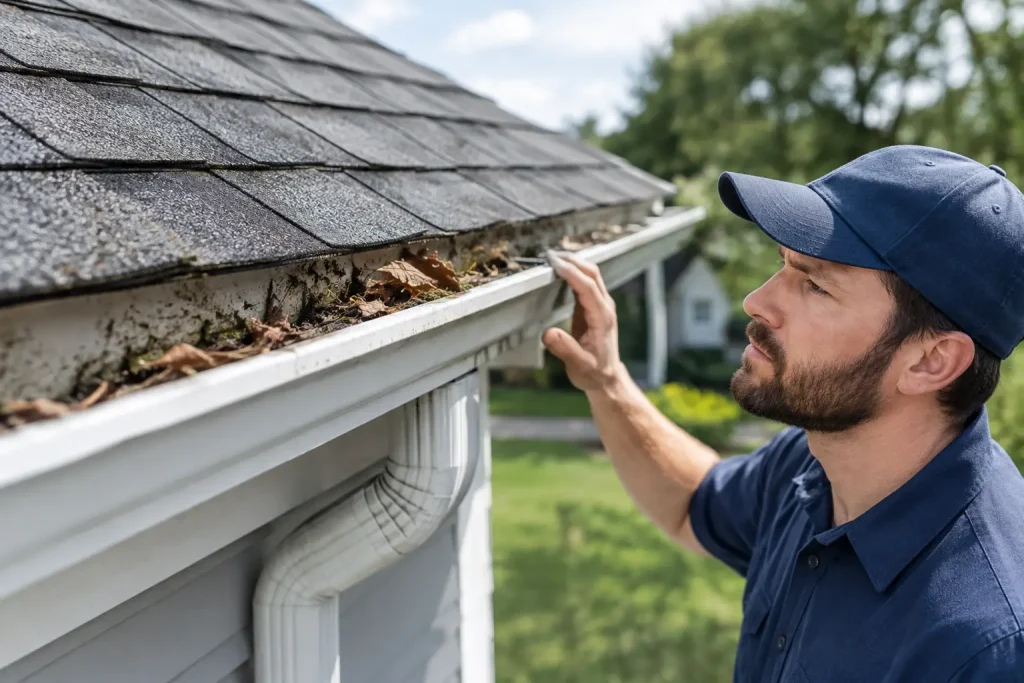
A gutter problem can look small from the ground: a drip near the porch, a short section pulling away, or water spilling over during a hard Utah storm. But gutters control where thousands of gallons of water go each year. When should gutters be replaced? The answer depends on the condition of the system, not just its age. A few isolated issues may be repairable. Repeated leaks, sagging, corrosion, or damage that allows water near your foundation are signs it may be time for a new system.
Why working gutters matter to your home
Gutters direct rainwater and melting snow away from your roofline, siding, landscaping, foundation, and walkways. When they clog, leak, or slope the wrong way, water takes the easiest path – often behind siding or beside the foundation.
In Utah, that risk can increase with seasonal snow, spring runoff, sudden downpours, and freeze-thaw cycles. Water that overflows in one storm may not seem urgent, but repeated exposure can lead to wood rot, stained siding, soil erosion, basement moisture, and ice hazards near entryways. Replacing failing gutters before those problems spread is usually far less expensive than repairing the damage water leaves behind.
When should gutters be replaced instead of repaired?
A professional inspection can separate a repairable issue from a system that has reached the end of its useful life. Repairs often make sense when the gutter damage is limited to one section, one joint, or a single downspout. Replacement is often the better long-term choice when problems are widespread, recurring, or tied to the gutter material itself.
1. Your gutters have frequent leaks at seams or corners
A small leak at one seam can often be sealed. If multiple seams leak, the sealant keeps failing, or water is dripping behind the gutters instead of into them, patching becomes a temporary cycle. Sectional gutters have more joints, which means more places for leaks to develop over time.
A replacement system can reduce that risk, especially when seamless gutters are a good fit for the home. Fewer joints generally mean fewer common leak points, although downspouts and corners still need proper installation and maintenance.
2. The gutters sag, pull away, or hold standing water
Gutters need a slight, consistent slope toward the downspouts. If they sag between hangers, pull away from the fascia, or keep water after a storm, they are not draining as designed. The added weight of standing water, wet leaves, or snow can make the issue worse.
Sometimes the fix is as simple as securing loose hangers and correcting the slope. But if the gutters are bent, the fastener holes are worn out, or the fascia board behind them is rotted, replacement may be the safer solution. The fascia should also be repaired before new gutters are installed, or the new system will not have a solid surface to support it.
3. You see cracks, holes, rust, or peeling finish
Small cracks may be repaired, depending on the material and location. Large cracks, holes, extensive rust, and peeling paint are different. They can signal that the metal has deteriorated or that water has been sitting in the gutter for too long.
Do not ignore corrosion around joints, downspout connections, and end caps. Those areas can fail quickly once the protective finish is compromised. If the gutter material is breaking down in several places, replacement is more reliable than trying to seal each new weak spot.
4. There are orange stains or soil erosion below the gutters
Look at the ground beneath the roof edge after rain. Deep channels in mulch or soil, splashing dirt on siding, and orange or brown staining may mean water is missing the gutter or pouring from a leak. You may also notice plants struggling where runoff repeatedly floods the root area.
The problem could be a clogged downspout or a short downspout extension. If cleaning and redirecting the water solves it, you may not need new gutters. If water is overflowing along several sections or escaping through failing seams, it is time to evaluate replacement.
5. Your basement, foundation, or siding shows moisture damage
Gutters are not the only cause of a wet basement or foundation issue, but they are one of the first places to check. Water pooling near the home can contribute to foundation cracking, damp walls, mold concerns, and shifting soil. On the exterior, you may see peeling paint, rotted trim, or soft spots in the siding near the roofline.
At this stage, waiting can turn an exterior project into a much larger repair. A contractor can inspect the roof edge, fascia, gutters, downspouts, and drainage path to identify where water is getting through.
6. You are repairing the roof or replacing damaged fascia
A roof replacement is often a practical time to replace older gutters, particularly if they are already bent, leaking, or nearing the end of their service life. Coordinating the work can help ensure the drip edge, fascia, and gutter system work together properly.
That does not mean every roof replacement requires new gutters. Well-maintained gutters in good condition may stay in place. Still, installing a new roof next to worn-out gutters can leave the home with a weak point at the roofline, so an honest condition assessment is worthwhile.
7. Storm damage has changed the way your gutters drain
High winds, hail, falling branches, and heavy snow can dent gutters, loosen hangers, disconnect downspouts, or pull sections away from the fascia. Damage may be easy to miss until the next storm sends water over the edge.
After severe weather, look for visible dents, separated joints, crooked downspouts, and water marks beneath the gutter line. Take photos if you can do so safely. When storm damage affects both the roof and gutters, documentation may also help support a homeowner’s insurance claim. A contractor can explain the damage clearly and help you understand whether repair or replacement makes better financial sense.
8. Repairs keep adding up
One repair is normal home maintenance. Calling for the same leaks, clogs, reattachment issues, or downspout problems year after year is a sign to compare the cost of continued repairs with replacement. A new, properly sized system may offer better value and less worry, especially for a home with long roof runs or areas that receive heavy runoff.
Age matters, but condition matters more
Many aluminum gutter systems last about 20 years or longer with proper care, while other materials may last more or less depending on installation quality, climate, and maintenance. Age is useful context, but it should not be the only decision factor.
A 10-year-old gutter system can fail early if it was improperly sloped or repeatedly damaged. A 25-year-old system may still perform well if it has solid hangers, clear downspouts, and no widespread corrosion. The better question is whether the gutters are still moving water away from your home every time it rains or snow melts.
What to expect from a gutter replacement
A good replacement starts with measurements and drainage planning, not simply hanging new material along the roof edge. The installer should consider roof size, pitch, valleys, local weather patterns, downspout placement, and where water will discharge on the property.
For many homes, aluminum gutters are a practical choice because they are durable, lightweight, and available in colors that complement the exterior. Proper sizing matters too. A larger gutter or additional downspout may be needed for areas where water collects quickly, such as below roof valleys.
Before work begins, ask whether damaged fascia, soffit, or roof-edge components need attention. Replacing gutters without addressing rotted wood can create another preventable problem. It is also wise to discuss maintenance needs, including safe seasonal cleaning and whether gutter guards make sense for your property. Guards can reduce debris buildup, but they are not a substitute for occasional inspection.
Protect the home before the next storm
You do not have to wait for a major leak to act. If your gutters overflow, pull away from the house, show repeated leaks, or send water toward the foundation, schedule an inspection while the damage is still manageable. Big West Roofing can provide a straightforward assessment, explain your repair and replacement options, and help protect the parts of your home that water can damage quietly.