
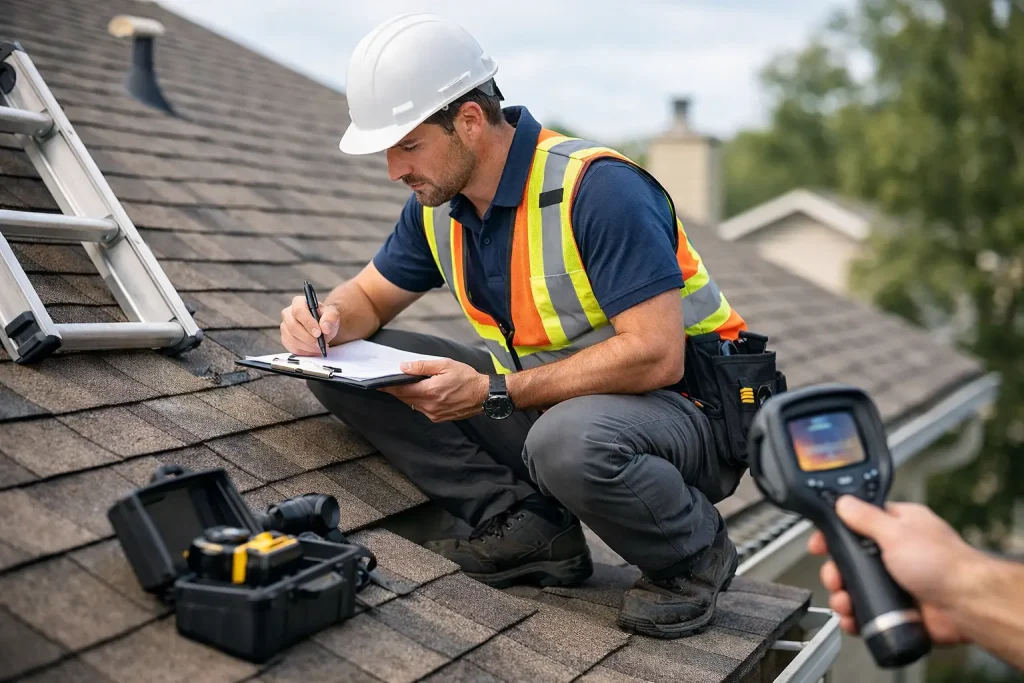
A roof problem rarely shows up at a convenient time. Usually it starts with a water stain on the ceiling, a few shingles in the yard after a windstorm, or that nagging feeling that your roof is getting old and you are not sure what shape it is in. If you are wondering what happens during roof inspection, the short answer is this: a good contractor is looking for signs of damage, wear, weak points, and anything that could turn into a bigger and more expensive issue later.
For homeowners in Utah, that matters more than most people realize. Snow load, high winds, summer heat, hail, and freeze-thaw cycles all put stress on roofing materials. A proper inspection is not just a quick glance from the ground. It is a careful evaluation of the roof system and the parts around it that protect your home from moisture, weather, and long-term structural damage.
What happens during roof inspection from start to finish
Most roof inspections begin with a conversation. The contractor will usually ask whether you have noticed leaks, missing shingles, higher energy bills, storm damage, or signs of wear around gutters and siding. If the roof is older, the age of the materials also matters because some issues are more common near the end of a roof’s lifespan.
From there, the inspection typically moves outside. In many cases, the contractor starts from the ground to look at the overall roofline, sagging areas, visible shingle damage, flashing conditions, and drainage patterns. This gives a broad picture before anyone gets on the roof.
Next comes the close inspection. Depending on the roof type, pitch, weather, and safety conditions, the contractor may inspect the roof surface directly. On shingle roofs, they look for cracked, curling, missing, loose, or bruised shingles. On metal roofs, they check for loose fasteners, failed sealant, rust, panel movement, and flashing separation. On membrane roofing, they are often looking for punctures, seam issues, standing water, and signs of shrinkage or surface deterioration.
The details matter here. A roof may look mostly fine from a distance and still have problem areas around vents, valleys, chimneys, skylights, and pipe boots. These transition points are where leaks often begin.
The parts of the roof a contractor checks
A roof inspection is really an inspection of a system, not just the shingles or panels you can see. The surface material is one part of the job, but there are several connected components that affect performance.
Shingles, panels, or membrane
This is the most obvious area. The inspector checks the condition of the roofing material itself, including wear patterns, storm impact, granule loss, exposed underlayment, lifted edges, or signs that materials were installed incorrectly in the first place.
Not every issue means you need a full replacement. Sometimes the damage is isolated and repairable. Other times, widespread aging or repeated patchwork points to replacement being the better financial choice.
Flashing and penetrations
Flashing is installed where the roof meets walls, chimneys, vents, and other openings. If flashing is loose, rusted, cracked, or poorly sealed, water can get in even when the rest of the roof surface still looks decent. This is one of the most common sources of leaks.
Valleys and drainage areas
Valleys handle a high volume of water runoff, so they wear faster than some other sections. Inspectors check for broken materials, debris buildup, and signs that water is not moving off the roof correctly. If water backs up or sits too long, damage can spread quickly.
Gutters, fascia, and soffit
A roof inspection often includes the edges of the roofing system. Gutters that are clogged, sagging, or pulling away can cause drainage problems. Damaged fascia and soffit can allow moisture intrusion and ventilation issues. These parts are easy to overlook, but they play a big role in protecting the home.
Ventilation and attic conditions
In some cases, especially when there are leak concerns or signs of premature roof aging, the contractor may inspect the attic or discuss ventilation. Poor ventilation can trap heat and moisture, shorten roof life, and contribute to mold, ice damming, and higher energy costs. If a roof is failing earlier than expected, ventilation is often part of the conversation.
What happens during roof inspection after a storm
Storm inspections are a little different because the focus is narrower. If your area recently had hail or high winds, the contractor is looking for impact damage, lifted shingles, torn tabs, bent metal, punctures, and damage to soft metals like vents, flashing, and gutters.
Hail damage is not always obvious to a homeowner. It can show up as bruising, granule loss, or subtle impact marks that weaken the roof over time. Wind damage can be just as deceptive because a shingle may loosen without fully blowing off right away.
This is also where documentation matters. If insurance may be involved, the inspection should clearly identify storm-related damage and note the affected areas. Homeowners benefit from a contractor who can explain what is cosmetic, what is functional, and what may support an insurance claim.
How long a roof inspection usually takes
For an average home, a roof inspection often takes between 30 minutes and an hour, though it can run longer for larger homes, steep roofs, complex rooflines, or properties with multiple roofing materials. If the contractor also checks the attic, exterior components, or storm damage in detail, expect more time.
Fast does not always mean careless, but a meaningful inspection should never feel rushed. If someone glances up from the driveway for five minutes and declares the roof fine or failed without much explanation, that is usually not enough information to trust.
What you should expect from the inspector
A good roof inspection should leave you with clarity. That means you should understand the current condition of the roof, any active problems, any likely near-future issues, and what your options are.
You should also expect plain language. Most homeowners do not want a lecture filled with technical terms. They want to know whether the roof is safe, whether it is leaking, whether repairs make sense, and whether replacement is urgent or something they can plan for.
Photos are often part of a strong inspection process, especially when the roof damage is hard to see from the ground. Visual proof helps homeowners make informed decisions and can be useful if insurance is involved.
What happens after the inspection
Once the inspection is complete, the contractor should explain what they found. If the roof is in good shape, that should be said clearly. Honest contractors do not turn every inspection into a sales pitch. If there are minor issues, you may hear recommendations for small repairs or maintenance.
If the roof has significant damage, the next step is usually an estimate and a discussion of options. That could mean targeted repairs, partial replacement in some situations, or full replacement if the roof is at the end of its life or the damage is widespread.
This is where experience matters. The cheapest fix is not always the smartest one. A low-cost repair on a heavily worn roof may only buy a short amount of time. On the other hand, replacing a roof too early is not ideal either. The right answer depends on the age of the roof, the type of damage, your budget, and your long-term plans for the property.
For homeowners dealing with storm damage, the post-inspection stage may also include help understanding the insurance process. That can make a stressful situation much easier to manage.
When to schedule a roof inspection
There is no bad time to have your roof checked if you suspect a problem, but some situations make an inspection especially worthwhile. After a major wind or hailstorm is an obvious one. So is any sign of interior leaking, water stains, moldy attic smells, or visible exterior damage.
It also makes sense to schedule an inspection if your roof is getting older and you want to avoid surprises. Many homeowners wait until damage is obvious, but by then the repair may be larger and more expensive than it needed to be. A proactive inspection gives you time to plan.
If you are buying or selling a home, an inspection can also help avoid last-minute issues. Roof concerns have a way of showing up during real estate transactions, and it is better to understand the condition early.
Why a professional inspection is worth it
Some roof issues are easy to spot. Many are not. Water can enter in one location and appear somewhere else inside the home. Storm damage can weaken materials without causing an immediate leak. Small flashing problems can go unnoticed until wood rot or interior staining begins.
That is why a professional inspection matters. You are not just paying for someone to identify visible damage. You are getting an informed assessment of how the whole roofing system is performing and whether action is needed now or later.
At Big West Roofing, that is how inspections should feel – straightforward, honest, and focused on helping you protect your home instead of guessing your way through a roofing problem. If your roof has taken a beating from age or weather, getting clear answers now can save you a lot of stress later.
A roof inspection should leave you feeling more certain than when you started, and that peace of mind is often just as valuable as the repair itself.