
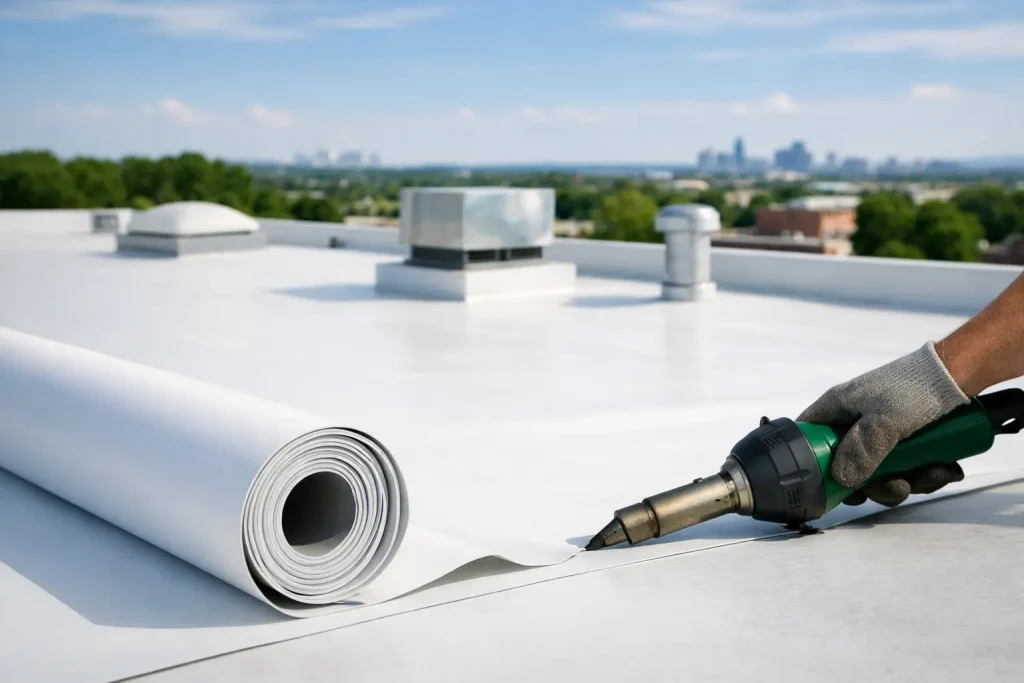
A flat or low-slope roof usually starts getting attention when something goes wrong – ponding water, seam issues, rising cooling bills, or leaks that keep coming back. That is often when property owners start hearing about tpo. For many commercial buildings and some residential applications, TPO roofing has become a practical choice because it balances cost, energy performance, and dependable weather protection.
If you are comparing roofing systems, it helps to know what TPO does well, where it has limits, and how installation quality affects the result. A roof is only as good as the system, the workmanship, and how well it fits the building.
What Is TPO Roofing?
TPO stands for thermoplastic polyolefin. It is a single-ply roofing membrane commonly used on flat and low-slope roofs. The membrane is manufactured in sheets and installed over insulation or a cover board, then attached using mechanical fasteners, adhesive, or a fully adhered system depending on the building and design needs.
One reason tpo roofing is so common is that it offers a clean mix of value and performance. It is typically white or light colored, which helps reflect sunlight and reduce heat absorption. That can make a real difference on buildings that take heavy sun exposure during Utah summers.
The seams are heat welded rather than simply glued together. When done correctly, those welded seams create a strong bond that helps the roof resist water intrusion. On paper, that sounds simple. In practice, the quality of the installation matters a great deal.
Why TPO Roofing Appeals to Property Owners
Most people are not shopping for a roof because they want to learn roofing terms. They want a system that solves a problem without creating new ones. TPO appeals to owners because it often checks the boxes that matter most.
Cost is one of the biggest reasons. Compared with some premium roofing systems, TPO is often more budget-friendly while still offering solid long-term performance. That makes it attractive for commercial buildings, multifamily properties, garages, additions, and certain residential low-slope sections.
Energy efficiency is another draw. The reflective surface can help reduce rooftop heat gain, which may lower cooling demands in warmer months. The exact savings depend on insulation levels, roof design, HVAC efficiency, and sun exposure, but the reflective benefit is real.
TPO also handles a range of weather conditions well when properly installed. It can resist UV exposure, dirt buildup, and normal wear better than many owners expect. That said, not every TPO product performs the same, and not every roof is a good candidate.
Where TPO Works Best
TPO is most commonly used on commercial roofs, especially buildings with broad, low-slope surfaces. Retail buildings, warehouses, office buildings, churches, apartment buildings, and mixed-use properties often use TPO because it is efficient to install across large areas.
It can also be a smart option for some residential projects. If a home has a flat porch roof, a low-slope section over a modern addition, or a garage roof with limited drainage slope, TPO may be a better fit than materials designed for steep-slope applications.
The key is matching the roofing system to the roof design. A steep residential roof usually calls for shingles, metal, or another steep-slope material. A low-slope roof needs a membrane system that can manage slow drainage and standing exposure to moisture. That is where TPO often makes sense.
The Real Pros and Cons of TPO
TPO has a lot going for it, but no roofing system is perfect for every property. It helps to look at the trade-offs honestly.
On the plus side, TPO is lightweight, reflective, and often cost-effective. It can be installed relatively efficiently, and its heat-welded seams are one of its biggest strengths. It is also available in different thicknesses, which gives some flexibility based on budget and performance goals.
The downside is that product quality can vary by manufacturer. TPO has improved over the years, but not all membranes have the same track record. A lower-grade membrane or rushed installation can shorten roof life and create seam failures, flashing issues, or puncture vulnerabilities.
Another factor is foot traffic. If your roof sees regular HVAC service traffic or maintenance crews, protective walkway pads and good planning matter. TPO is durable, but it is still a membrane system and can be damaged by careless traffic or dropped tools.
Weather also plays a role. Utah properties can see intense sun, wind, snow, and freeze-thaw cycles. TPO can perform well in that environment, but the assembly needs to be built correctly, with proper attachment, edge securement, drainage planning, and insulation design.
How Long Does a TPO Roof Last?
A well-installed TPO roof can last 15 to 25 years, sometimes longer depending on the product, roof design, climate, maintenance, and traffic. That is a wide range because lifespan is shaped by more than the membrane itself.
If the roof has poor drainage, neglected flashing details, or repeated punctures, performance will suffer. If it is installed by an experienced crew and inspected regularly, TPO can deliver very good service life for the investment.
Owners sometimes focus only on the membrane warranty, but warranties do not replace craftsmanship. The better question is whether the roof system is being designed and installed for the real conditions of the property.
What Affects TPO Roofing Cost?
TPO pricing depends on more than square footage. Roof size matters, of course, but so do tear-off requirements, insulation needs, roof access, edge metal details, number of penetrations, drain conditions, and whether the project is a repair, recover, or full replacement.
A large open roof is usually more straightforward than a smaller roof packed with curbs, vents, skylights, and equipment. More detail work means more labor, and on roofing projects, details are where quality matters most.
Thickness also affects cost. Thicker membranes can offer better puncture resistance and durability, but they come at a higher price. For some buildings, the upgrade is worth it. For others, a standard specification may be the better value. It depends on how the building is used and how much wear the roof is likely to see.
Common TPO Roofing Problems to Watch For
The most common problems with TPO are usually tied to installation, not the concept of the material itself. Weak seams, poor flashing, bad drainage, and loose edge details can all lead to leaks.
Punctures are another issue to watch. Service trades sometimes treat low-slope roofs like mechanical platforms, and that can be tough on any membrane. If technicians are regularly crossing the roof, protection should be part of the plan.
Shrinkage and aging can also show up over time, especially on lower-quality products or roofs exposed to heavy heat stress. Regular inspections help catch those issues before they turn into interior damage.
If a roof is already leaking, waiting usually makes the repair more expensive. Moisture can spread into insulation, decking, and interior materials long before the visible stain appears inside the building.
How to Know If TPO Is Right for You
The best starting point is not the material. It is the roof itself. What type of building do you have, what slope does the roof have, how old is the current system, and what problems are you trying to solve?
If your main priorities are affordability, reflectivity, and reliable performance on a low-slope roof, TPO is often worth serious consideration. If your roof sees unusual traffic, chemical exposure, or design challenges, another membrane or system may be a better fit.
That is why a roof inspection matters. A good contractor should look at drainage, substrate condition, insulation, flashing details, penetrations, and the overall age of the assembly before recommending a solution. The right answer is not always a full replacement. Sometimes a targeted repair is enough. Other times, patching an aging roof only delays a larger problem.
For Utah property owners, local experience matters too. Snow load, summer heat, wind exposure, and storm damage all affect roofing choices. A roofing system should make sense for the building and the climate, not just the brochure.
TPO Roofing and Long-Term Value
A roof is not just an upfront purchase. It is a long-term protection system for the property below it. TPO can offer strong value when it is selected for the right application and installed with care.
That value comes from a mix of reasonable cost, solid weather resistance, and possible energy savings. But the biggest factor is still workmanship. Even the best membrane cannot make up for poor detailing around penetrations, drains, or perimeter edges.
That is why many owners benefit from working with a contractor who explains the options clearly, gives honest recommendations, and does not push a one-size-fits-all answer. At Big West Roofing, that practical approach matters because every roof has different needs, and every customer deserves straight answers.
If you are considering TPO, the right next step is simple: get the roof evaluated, understand the condition of the full system, and choose the option that protects your property without overspending. A good roof should give you confidence every time the weather turns.