
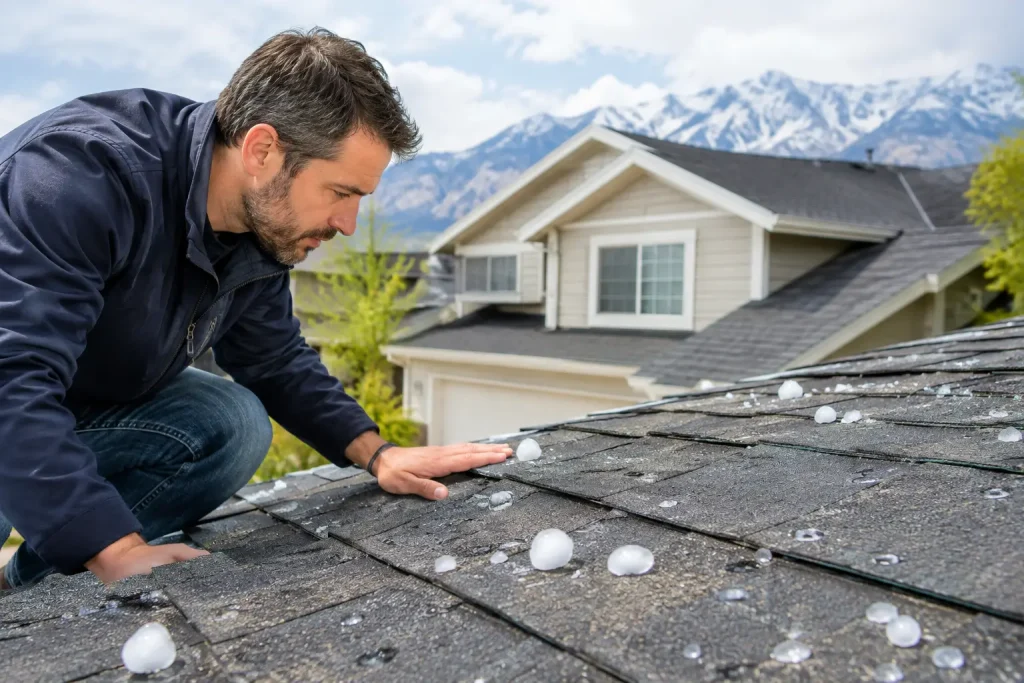
A hailstorm can leave a roof looking mostly normal from the driveway while creating bruised shingles, cracked vents, and weakened flashing overhead. This hail claim example shows how a Utah homeowner can move from finding possible storm damage to understanding the insurance process without guessing at the next step.
A realistic hail claim example
Imagine a homeowner in Saratoga Springs notices granules collecting near the downspouts after a spring storm. A few neighbors are replacing roofs, but there is no active leak inside the home. The homeowner schedules a professional inspection before calling the insurance company.
During the inspection, the contractor finds hail strikes across several roof slopes. The shingles have soft, circular bruises where the protective granules have been knocked loose. There is also damage to metal roof vents, gutter screens, and one section of fascia. The roof is 11 years old, and the inspector documents the damage with photos, measurements, and notes identifying the affected areas.
The homeowner’s policy has a $2,500 wind and hail deductible. After reviewing the documented damage, the insurer’s adjuster agrees that the storm caused damage to the roof and related exterior components. The initial estimate looks like this:
- Roof replacement: $15,800
- Damaged vents and flashing: $750
- Gutters and fascia repairs: $1,950
- Removal and disposal: $1,200
- Total approved replacement cost: $19,700
Because the deductible is $2,500, the homeowner is responsible for that amount. If the policy provides replacement cost coverage, the insurer may issue an initial payment based on the roof’s actual cash value, then release recoverable depreciation after the work is completed and final paperwork is submitted.
For example, the first payment may be $12,400 after depreciation and the deductible are applied. Once the roof replacement and exterior repairs are finished, the contractor submits the final invoice and any needed documentation. The insurer then releases the remaining approved depreciation, bringing the total insurance payment closer to $17,200. The homeowner pays the $2,500 deductible directly as their share of the project.
The exact numbers will vary by policy, roof age, materials, deductible, and scope of damage. Still, this example reflects the basic structure many homeowners see after a legitimate hail loss.
What makes a hail claim stronger
A claim is not approved simply because hail fell in the neighborhood. Insurance companies generally need evidence that a covered storm caused damage to covered property. Clear documentation helps connect the event, the condition of the roof, and the repairs being requested.
Start by noting the storm date and taking photos of any visible signs, such as hailstones, damaged screens, dented metal, fallen branches, or shingle granules around the home. Do not climb onto the roof to investigate. A wet, steep, or damaged roof is not worth the risk.
A professional roof inspection can identify damage that is difficult to see from the ground. Hail damage is often subtle, especially on darker shingles. A trained inspector looks for consistent impact marks, exposed asphalt, fractured shingle mats, dents on soft metals, and damage across multiple roof planes. They can also distinguish storm damage from ordinary aging, foot traffic, manufacturing defects, or poor installation.
The best inspection report is factual. It should show what was found, where it was found, and why repair or replacement is recommended. A trustworthy contractor should not promise coverage before an adjuster reviews the claim. They should help you understand the condition of your roof and provide the documentation needed to make an informed decision.
How the claim process usually works
Once you have reason to believe hail caused damage, review your policy and report the claim to your insurer. Most policies require prompt notice, and many have deadlines for filing storm claims. Waiting too long can make it harder to document the cause and extent of damage.
Your insurer will assign a claim number and schedule an adjuster inspection. Keep that claim number, along with photos, inspection reports, estimates, and records of every conversation. It is also helpful to write down the date, the person you spoke with, and what was discussed.
Your roofing contractor can often meet with the adjuster if you want support during the inspection. Their role is to point out documented damage and explain the proposed scope of work. The adjuster makes the coverage decision, but having a knowledgeable local contractor present can help ensure damaged components are not overlooked.
After the inspection, you will receive an estimate or claim decision. Read it carefully. Look at the roofing materials, labor, vents, flashing, gutters, siding, and other exterior items that may have been affected. If the approved scope does not match documented storm damage or local code requirements, your contractor may provide additional information for the insurer to review.
Why a supplement may be needed
An initial insurance estimate is not always the final word. Some damage is hidden until old roofing materials are removed, and some costs become clear only after the project begins. A supplement is a request for the insurer to consider additional covered work that was not included in the original estimate.
For instance, after tear-off, a contractor may find damaged decking that needs replacement before new shingles can be installed safely. Or the existing ice and water barrier may not meet current requirements for a repair in a particular area. The contractor documents the issue, provides photos and pricing, and submits it for review.
A supplement is not a loophole or a way to inflate a claim. It should be based on necessary work, documented conditions, and applicable code or policy requirements. Some supplements are approved, while others are not. Clear communication keeps the project moving and helps prevent surprises.
Common mistakes to avoid after hail damage
The biggest mistake is assuming there is no damage because there is no leak. Hail can shorten a roof’s service life before water enters the home. A free inspection soon after a major storm gives you a clearer picture of what happened.
Another mistake is signing an agreement with a contractor before you understand its terms. Be cautious of anyone who arrives uninvited, pressures you to sign immediately, or guarantees that insurance will pay for a full roof replacement. A reputable contractor will explain the scope, answer questions, provide clear pricing, and respect your decision-making process.
Homeowners should also avoid paying a contractor to waive or absorb the deductible. Your deductible is the portion of a covered loss you are responsible for under your policy. Trying to work around it can create insurance and legal problems, even when the offer sounds appealing.
Finally, do not make permanent repairs before the adjuster has a chance to inspect unless immediate work is needed to prevent further damage. If rain is entering the home, temporary protection such as tarping may be necessary. Take photos before and after emergency work, save receipts, and notify the insurer as soon as possible.
What to ask before choosing a roofing contractor
After a storm, fast service matters, but so does accountability. Ask whether the contractor is local, insured, experienced with hail damage, and able to provide a written scope of work. You should also ask who will perform the installation, how the property will be protected during construction, and what workmanship warranty is provided.
For Utah homeowners, it is helpful to choose a contractor who understands local weather, roofing systems, and the insurance process. Big West Roofing can inspect storm damage, explain repair and replacement options in plain language, and help provide the documentation your insurer may need.
A hail claim can feel stressful when your home is on the line, but you do not have to make decisions based on a quick look from the ground. Start with a careful inspection, keep good records, and work with professionals who will give you straightforward answers before the next storm has a chance to cause more trouble.