
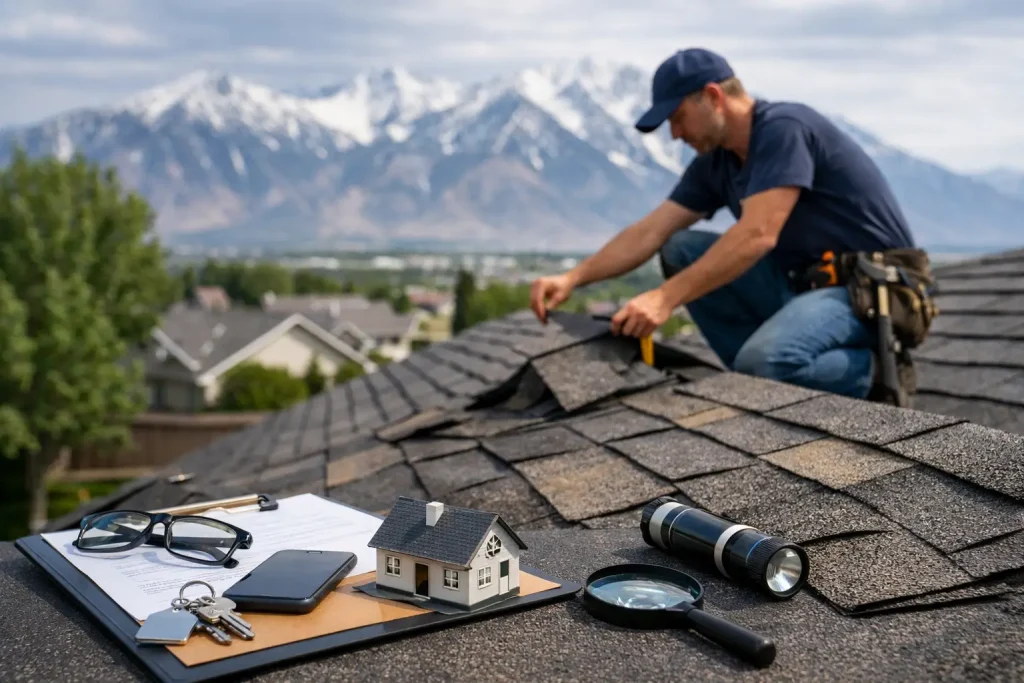
A few missing shingles after a Utah windstorm can look minor from the driveway. But lifted shingles, hail bruising, damaged flashing, or a small roof leak can allow water into the roof system long before you see a stain on the ceiling. This homeowner insurance roof claims guide explains what to do next, what your policy may cover, and how to avoid mistakes that can slow down your claim.
The first priority is protecting your home and family. The second is creating a clear record of the damage before repairs, weather, or time make the evidence harder to document.
Start With Safety and Prevent Further Damage
After a storm, do not climb onto a damaged roof. Wet shingles, loose materials, steep slopes, and hidden weak spots can make a quick inspection dangerous. Check your attic and top-floor ceilings from inside for active leaks, wet insulation, or daylight coming through the roof deck.
If water is entering the home, take reasonable steps to limit additional damage. Move furniture and valuables, place containers under drips, and use a tarp or temporary emergency repair when needed. Keep every receipt for temporary materials, mitigation, or emergency service. Many policies require homeowners to prevent further damage when it is safe to do so, but that does not mean you should make permanent repairs before the damage has been documented.
Take photos and videos from the ground and inside the home. Capture damaged gutters, fallen branches, loose shingles, dents in metal vents, damaged siding, and any interior water damage. Include wide shots that show the location as well as close-ups that show the details.
Know What Roof Damage Insurance Usually Covers
Homeowners insurance commonly covers sudden, accidental damage caused by a covered event. In Utah, that often includes wind, hail, falling tree limbs, fire, or damage caused by the weight of snow or ice. Coverage depends on the specific policy, its exclusions, deductible, and the cause of loss.
Normal aging is different from storm damage. A roof that has worn out over time, has poor installation issues, or has been neglected is usually not covered. Insurers may also limit or exclude certain damage types, including cosmetic hail damage to metal components, depending on the policy language.
Your roof’s age can affect the settlement amount. Some policies pay replacement cost value, which can cover the cost to replace damaged materials after deductible requirements are met. Others pay actual cash value, which subtracts depreciation based on age and condition. A 20-year-old shingle roof may receive a very different settlement than a newer roof with the same storm damage.
Review your declarations page and policy before filing if you can. Look for your deductible, roof coverage type, wind or hail deductible, and any roof-specific endorsements. If the language is unclear, call your insurance carrier and ask direct questions. Do not assume a claim will be covered just because a storm occurred.
Get a Professional Roof Inspection Before Filing
Not every storm requires an insurance claim. Filing a claim for damage that does not exceed your deductible may not make financial sense, and claims history can matter when you renew coverage. A professional inspection gives you a clearer picture before you make that decision.
A qualified local roofing contractor can identify damage that is difficult to see from the ground, such as creased shingles, broken seals, punctures, damaged flashing, hail impact marks, or compromised pipe boots. They can also separate storm-related issues from ordinary wear so you are working from the facts.
At Big West Roofing, a free roof inspection can help homeowners understand the condition of their roof and exterior without pressure or guesswork. An inspection is not a guarantee of insurance coverage, but it can provide the documentation you need to make an informed decision.
Ask for clear photos, a written description of the damage, and a repair or replacement estimate when appropriate. Keep these materials with your policy information, storm photos, receipts, and notes from conversations with your insurer.
How to File a Roof Insurance Claim
Once you have documented the damage and understand that a claim may be worthwhile, contact your insurance company promptly. Most carriers allow claims by phone, online portal, or mobile app. Be accurate and straightforward about what happened, when it happened, and what damage you have noticed.
When you file, record the claim number, the name and contact information of the representative, and the date of the conversation. Keep a simple claim log from that point forward. Write down each call, email, inspection date, and next step promised by the carrier.
The insurer will usually assign an adjuster to inspect the property. The adjuster’s role is to assess the reported damage under the terms of your policy. You have the right to ask questions, request clarification, and provide your contractor’s documentation. If possible, have your roofing contractor present during the adjuster appointment. This can help ensure the adjuster has safe access to the relevant areas and that observed damage is discussed clearly.
Do not sign a contract that gives a contractor control over your insurance claim or authorizes them to negotiate as your representative. A reputable roofer can document damage, explain scope items, and work from the approved estimate, but your policy and claim decisions remain yours.
Understand the Estimate and Your Deductible
An insurance estimate can be confusing because it may include unfamiliar terms, depreciation, line items, and payment amounts. Read it carefully before scheduling work. The estimate should identify the damaged areas, the approved materials, labor, waste removal, flashing, ventilation, and other components needed for the repair or replacement.
Your deductible is the portion you are responsible for paying. It is not a discount a contractor can simply waive. Be cautious of anyone who offers to cover, absorb, or hide your deductible. That can create serious problems with the insurer and may leave you exposed to poor workmanship or unexpected charges.
Many claims are paid in stages. The first payment may reflect actual cash value, while recoverable depreciation is released after the work is completed and final paperwork is submitted. This structure varies by policy, so ask your carrier what documents they require to release any remaining funds.
If the insurer’s scope misses damage identified during a legitimate inspection, your contractor can provide photos, measurements, and a written explanation for review. This is sometimes called a supplement request. It should be based on documented, necessary work – not an inflated estimate or a promise of a free roof.
Avoid Common Roof Claim Mistakes
The fastest way to make a roof claim harder is to wait too long. Storm evidence can fade, leaks can worsen, and some policies set deadlines for reporting damage. Report concerns promptly, even if you are still gathering details.
Another common mistake is choosing a contractor based only on a door-to-door pitch after a storm. Storm-chasing companies may promise fast approval, use high-pressure tactics, or leave the area before warranty issues arise. Choose a licensed, insured, local contractor with a verifiable reputation, clear communication, and a written scope of work.
Also avoid repairing over damage without photographs, throwing away damaged materials before they are documented, or relying on verbal promises. Keep everything in writing. That includes your contract, change orders, material selections, warranties, payment schedule, inspection reports, and insurance correspondence.
If Your Claim Is Denied or Underpaid
A denial does not always mean the conversation is over. Start by reading the denial letter or estimate closely. It should explain the reason, such as wear and tear, excluded damage, lack of evidence, or damage below the deductible.
Compare that explanation with your policy and the findings from your roof inspection. If you believe damage was overlooked or incorrectly categorized, ask the carrier how to request a reinspection or submit additional documentation. Provide organized evidence: dated photos, the contractor’s report, repair estimates, and records of the storm event if available.
Stay professional and specific. A clear request supported by evidence is more useful than a general disagreement. If the issue remains unresolved, review the dispute options in your policy and consider speaking with a qualified insurance professional or attorney for advice tailored to your situation.
A roof claim can feel stressful, especially when your home is exposed to Utah weather. Start with a safe inspection, keep good records, and work with people who explain the process honestly. A careful first step today can protect your home from a much larger repair tomorrow.