
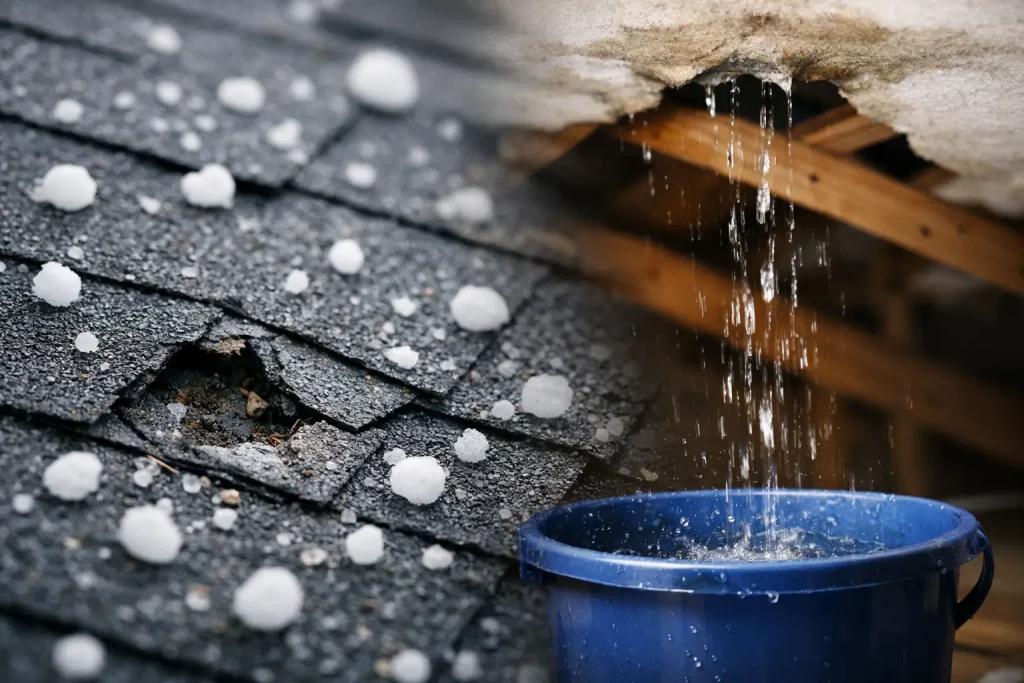
A Utah hailstorm can be over in minutes, but the damage it leaves behind may not show up until the next hard rain. So, can hail damage cause leaks? Yes. Hail can crack, bruise, loosen, or puncture roofing materials, creating small openings that allow water to work its way beneath the roof system and into your home.
The tricky part is that hail damage does not always look dramatic from the ground. Your roof may appear fine while weakened shingles, damaged flashing, or dented vents are slowly becoming a leak risk. A timely inspection can identify those issues before a small water stain turns into damaged insulation, mold, or expensive interior repairs.
How Hail Damage Causes Roof Leaks
A roof is more than the shingles you see from the driveway. It is a layered system designed to move water safely into the gutters. Hail can disrupt that system in several ways, and the severity depends on the size of the hail, wind speed, roof age, and roofing material.
On an asphalt shingle roof, hail often knocks away protective granules. Those granules help shield the shingle from sunlight and weather. When enough are lost, the shingle can become brittle and wear out sooner. Larger hail may also leave a soft, dark bruise where the shingle mat underneath has been fractured. That damage can eventually split open and let water through.
Hail can also crack older or already weathered shingles outright. Even if the crack is small, water can enter beneath the shingle during wind-driven rain or snowmelt. Once water gets under the surface, it may travel before it appears inside, which can make the source of a leak difficult for a homeowner to pinpoint.
Metal roofing usually handles hail well, but it is not invulnerable. Severe impacts can dent panels, damage protective coatings, loosen fasteners, or affect seams and flashing. On low-slope commercial roofs, hail can puncture or weaken membrane roofing, especially where the membrane has aged or has existing stress points.
The Parts of a Roof Hail Can Damage
Leaks are often caused by more than a single bruised shingle. Hail can affect the vulnerable details around a roof, where water protection depends on materials fitting tightly together.
Flashing around chimneys, skylights, walls, and roof valleys is a common concern. A hard impact can bend metal flashing or break the sealant that keeps water out. Roof vents, pipe boots, and exhaust caps can crack or become displaced, leaving openings that are easy to miss from the ground.
Gutters and downspouts matter, too. Dented or loosened gutters may not directly create a roof leak, but they can change how rainwater drains. Water that backs up along the roof edge can find its way beneath shingles or behind fascia boards. If hail damages siding, soffit, or fascia at the same time, moisture can reach areas that were previously protected.
Signs of a Hail-Related Leak Inside Your Home
You do not need to wait for water to drip from the ceiling to take action. Many leaks start quietly and worsen over time. After a hailstorm, watch for changes in your attic, ceilings, and upper walls.
A brown or yellow ceiling stain is an obvious warning sign, but peeling paint, bubbling drywall, or a musty smell can also point to hidden moisture. In the attic, look for damp insulation, darkened wood, water marks on rafters, or daylight near vents and roof penetrations. If you see active dripping, place a container beneath it if safe to do so, move valuables away from the area, and arrange for a professional repair as soon as possible.
Keep in mind that the location of an interior stain is not always the location of the roof damage. Water follows framing, underlayment, and gravity. A stain near a bedroom ceiling could begin several feet uphill on the roof, especially after wind-driven rain.
Can Hail Damage Cause Leaks Right Away?
Sometimes, yes. If hail cracks a skylight, breaks a vent cover, punctures a membrane, or knocks loose flashing, water can enter during the very next storm. These situations need quick attention, particularly when more wet weather is expected.
More often, the leak develops gradually. A hail impact may weaken a shingle without making a visible hole. Over the next several months, sun exposure, freezing temperatures, wind, and rainfall can turn that weakened spot into a failure point. Utah’s changing weather can be especially hard on roofs that have already lost granules or developed cracks.
That delayed timeline is one reason homeowners should not judge a roof only by whether it leaks immediately after a storm. A professional inspection documents the roof’s condition while the damage is fresh and helps you make an informed decision about repairs or an insurance claim.
What to Do After a Hailstorm
Start with a safe visual check from the ground. Look for missing shingles, granules collecting at downspouts, dented gutters, damaged screens, or pieces of roofing material in the yard. Take photos of any visible exterior damage and any indoor staining or moisture. These details can be useful when discussing repairs or filing a claim.
Avoid climbing onto the roof yourself, especially after a storm. Wet roofing is slippery, and hail damage can make shingles less stable than they look. A trained roofing professional can inspect the roof surface, flashing, penetrations, ventilation components, and attic area without putting you at unnecessary risk.
If there is a known opening or active leak, temporary protection may help limit further damage until repairs can be made. However, a tarp is not a permanent solution. It can trap moisture, shift in the wind, or hide the underlying damage. The goal should be a prompt, lasting repair that restores the roof’s ability to shed water.
Repair or Replacement: What Makes Sense?
The right solution depends on the extent and location of the hail damage. A few damaged shingles or a cracked pipe boot may be repaired without replacing the entire roof. Localized flashing damage can also often be corrected when the surrounding roof materials are still in good condition.
Replacement may be the better value when damage is widespread, shingles are brittle or near the end of their service life, or repairs would leave the roof with mismatched materials and recurring weak points. For commercial properties, a membrane roof should be evaluated carefully after significant hail because small punctures or weakened seams can lead to costly moisture damage below the surface.
A clear inspection should explain what was found, which repairs are necessary, and whether replacement is a reasonable option. Homeowners deserve straightforward answers, not pressure. If storm damage may be covered, documentation and support with the homeowner’s insurance process can also make the next steps less stressful.
Why a Fast Inspection Protects More Than Your Roof
Hail damage can affect the roof, gutters, siding, fascia, and soffit at the same time. Addressing the full exterior picture helps prevent water from shifting from one damaged component to another. It also gives you a better understanding of the work that is actually needed.
At Big West Roofing, we believe a roof inspection should give homeowners clarity. A prompt assessment after a hailstorm can catch small issues early, protect your home’s interior, and help you move forward with confidence before the next round of rain or snow arrives.