
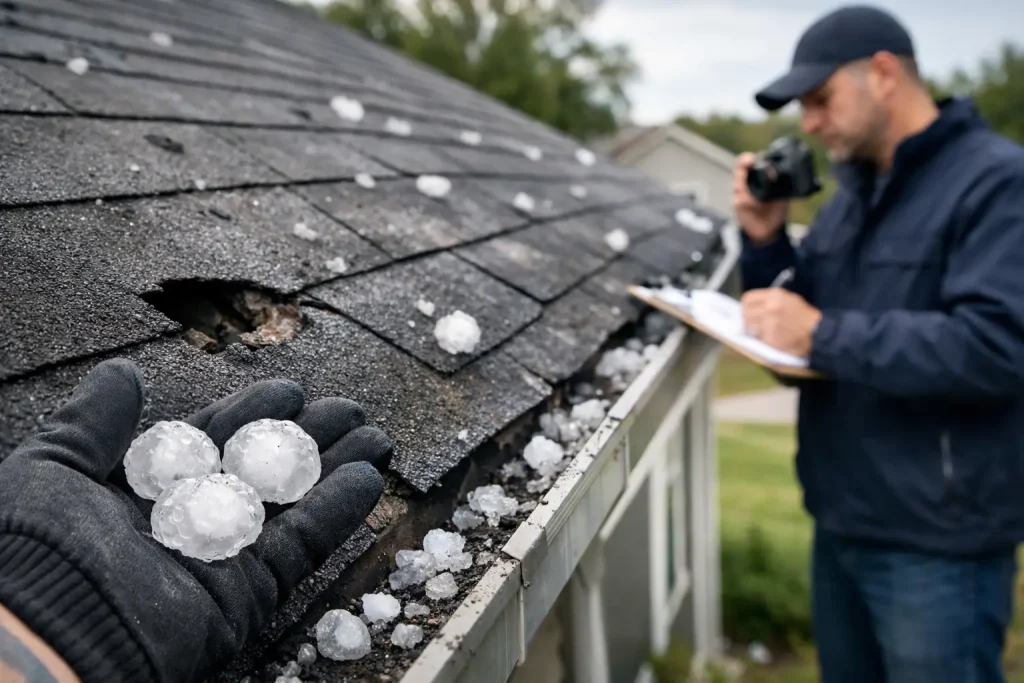
A hailstorm can be over in ten minutes and still leave you with years of roofing problems. That is what makes hail damage so frustrating for homeowners in Utah. You may not see a leak right away, and from the ground your roof can look fine, but the impact can weaken shingles, dent metal, loosen granules, and create vulnerable spots that get worse with sun, wind, and the next storm.
In a place where weather can shift quickly, waiting too long to check your roof often turns a manageable repair into a more expensive problem. The good news is that hail damage usually leaves clues. The key is knowing what matters, what does not, and when it is time to bring in a professional for a closer look.
How hail damage affects a roof
Not all hail hits the same way. The size of the hail matters, but so do wind speed, roof age, shingle condition, roof slope, and the type of roofing material on your home. A newer roof may handle a moderate storm better than an older one, while brittle shingles can crack under impacts that a newer system might survive.
On asphalt shingles, hail often knocks away protective granules. That can leave dark or soft spots where the asphalt underneath is exposed. Once that protective surface is compromised, UV rays and moisture can break the shingle down faster. In some cases the damage is obvious. In others, it shows up months later as accelerated aging, curling, or leaks.
Metal roofing responds differently. It may resist punctures well, but it can still end up with visible dents or damage around seams and fasteners. Gutters, downspouts, fascia, siding, vents, and soft metal accessories can also take a beating. That is why a full exterior inspection matters. Sometimes the roof itself is only part of the story.
Signs of hail damage you might notice first
Most homeowners do not climb onto their roof after a storm, and that is the right call for safety. Still, there are several warning signs you can look for from the ground or around the property.
If you see shingle granules collecting in gutters or near downspouts, that can point to impact damage. Dents on metal flashing, gutters, mailbox tops, garage doors, or window trim can also suggest the hail had enough force to affect the roof. On the shingles themselves, you may notice irregular dark spots, bruised areas, or patches that look different from the surrounding surface.
Inside the home, water stains on ceilings or walls are a late sign, not an early one. By the time moisture appears indoors, the roof system may already have been compromised for a while. That is why it is smart to schedule an inspection after a serious storm even if your home seems dry.
What hail damage can look like on different materials
Asphalt shingles often show bruising, granule loss, or circular impact marks. Wood shakes may split. Tile can crack or chip, sometimes in ways that are easier to miss from the ground. Metal roofs may show cosmetic denting, but cosmetic does not always mean harmless. If impacts affect seams, fasteners, or protective coatings, function can suffer too.
This is where experience matters. Storm damage is not always dramatic. Sometimes the issue is subtle enough that it gets mistaken for normal aging, foot traffic, blistering, or manufacturer wear.
Why quick action matters after hail damage
A damaged roof does not always fail immediately. That can create a false sense of security. Homeowners often assume that if there is no active leak, there is no urgent issue. In reality, hail damage can shorten the life of the roof long before water gets inside.
When shingles lose granules or develop impact fractures, they become more vulnerable to heat, cold, wind, and moisture. Small weaknesses spread. Seal strips can fail. Flashing can loosen. A roof that might have lasted another several years can age out much sooner after one rough storm.
There is also the insurance side to consider. If your area was hit by hail and your property shows storm-related damage, waiting too long can make documentation harder. The longer the delay, the easier it is for weathering and normal wear to blur the timeline. Prompt inspections help establish what happened and what needs attention now.
Repair or replacement after hail damage?
This is one of the most common questions homeowners ask, and the honest answer is that it depends. Some roofs need only targeted repairs. Others are better candidates for partial replacement or full replacement, especially if the storm damage is widespread or the roof was already nearing the end of its service life.
If the hail damage is isolated to a small section and the rest of the roof is in solid condition, a repair may be the most cost-effective option. That is often true when the material is still available and a repair can restore performance without creating a patchwork of future issues.
If the roof has damage across multiple slopes, significant granule loss, fractured shingles, or repeated storm wear on an older system, replacement may make more sense financially over the long term. A cheaper short-term repair is not always the better value if it only buys a little time before more problems appear.
A good contractor should explain both options clearly. Homeowners deserve a straight answer about what is necessary, what is optional, and what will protect the home best over time.
The insurance question
Many homeowners are not sure when to contact their insurance company after a hailstorm. In general, it helps to start with a professional inspection. That gives you a clearer picture of whether there is likely covered damage and whether filing a claim makes sense.
Not every dent or mark leads to an insurance-funded roof replacement. Policies differ, deductibles vary, and some damage may be classified as cosmetic rather than functional. That is one reason clear documentation is so important. Photos, written findings, and a detailed assessment of the roof and exterior can make the process much smoother.
If a claim is appropriate, working with a contractor who understands storm restoration can save time and confusion. Homeowners are already dealing with enough after a storm. Having someone explain the process in plain language and help document the damage can reduce a lot of stress.
Choosing a contractor for hail damage inspection and repair
After a major storm, neighborhoods often see an influx of storm-chasing companies. Some are legitimate, but many disappear as quickly as they arrive. That creates real risk for homeowners who need lasting repairs and dependable warranty support.
A local contractor brings more accountability. They understand Utah weather, local building expectations, and the roofing systems that perform well here. They are also easier to reach if you have questions later. That matters more than many people realize when you are making decisions about your home.
When comparing contractors, look for clear communication, honest inspection findings, proof of licensing and insurance, and a process that does not rely on pressure. A trustworthy company should be willing to explain the damage, show you what they found, and talk through timing, cost, materials, and insurance steps without making the conversation feel rushed.
For many homeowners, that local, family-run approach makes a real difference. Companies like Big West Roofing built their reputation by showing up quickly, treating customers with respect, and focusing on practical solutions instead of sales pressure.
Preventing future problems after hail damage
You cannot stop hail from falling, but you can make smarter decisions about how your home is protected afterward. If your roof needs replacement, it may be worth discussing materials with stronger impact resistance or a system better suited to your property’s exposure and budget.
Maintenance also matters. Keeping gutters clear, checking flashing, replacing worn shingles promptly, and scheduling inspections after major storms all help limit the chances that small storm damage turns into larger interior repairs. The goal is not just to fix what happened. It is to leave the home in a stronger position for the next season.
When to schedule an inspection
If your neighborhood recently had hail, if you see dents on exterior metal surfaces, or if your roof is older and has been through several storm cycles, an inspection is a smart next step. You do not need to wait for a leak to justify it. In fact, waiting is usually what makes the situation more expensive.
A professional inspection gives you clarity. Maybe the roof is in good shape and you get peace of mind. Maybe there is minor damage that can be repaired before it spreads. Or maybe the storm caused more harm than you realized and it is better to address it now than after the next heavy rain.
Your roof does its job quietly until weather puts it to the test. After a hailstorm, a careful inspection is one of the simplest ways to protect your home, your budget, and your time.