
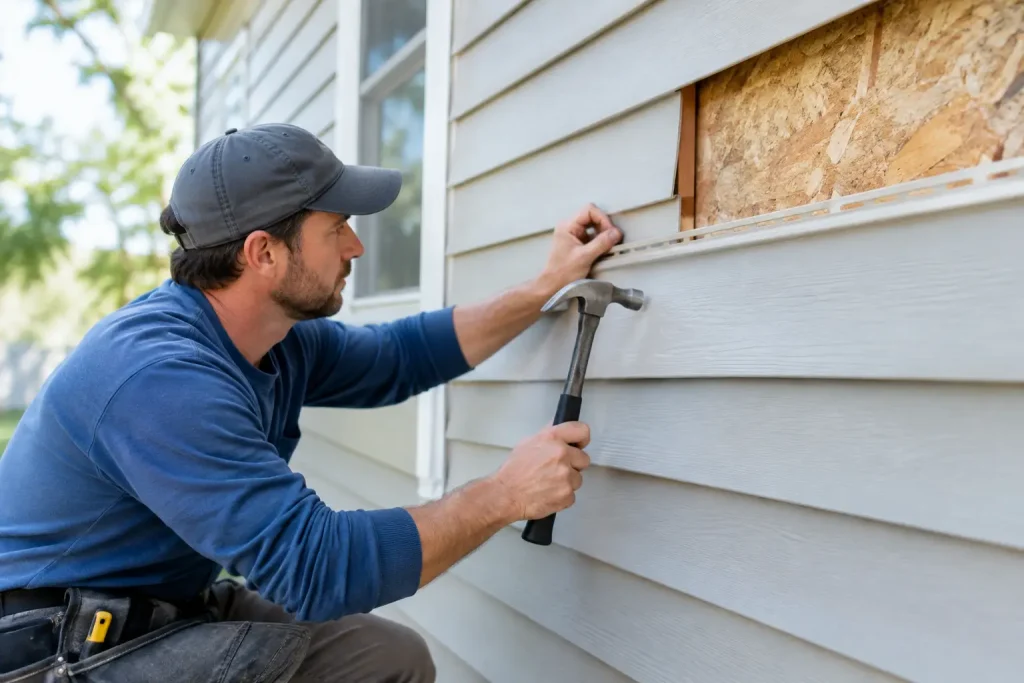
A windstorm can leave more behind than scattered branches and a messy yard. A loose panel, lifted corner, or small crack in your siding can give water a direct path behind your home’s exterior. Repairing wind damaged siding promptly protects the wall system underneath and helps prevent a manageable repair from becoming a costly moisture problem.
For Utah homeowners, the right next step depends on the type of siding, the extent of the damage, and whether wind also affected the roof, gutters, fascia, or soffit. The goal is not just to make the exterior look better. It is to restore a weather-tight barrier around your home.
Start With a Safe Exterior Check
After the wind has passed and conditions are safe, walk around your home from the ground. Look for siding panels that are hanging loose, warped, cracked, missing, or pulled away at seams. On vinyl siding, wind commonly lifts a panel from its locking edge or pulls it loose around corners and trim. With fiber cement, engineered wood, or wood siding, you may see cracks, split boards, loose nails, or damaged caulk.
Pay close attention to areas where siding meets windows, doors, rooflines, chimneys, and utility fixtures. These transitions are more vulnerable to wind-driven rain. Also check the lower sections of exterior walls, where displaced siding may allow water to run behind the panels.
Do not climb ladders or pull at loose materials during your initial inspection. A panel that looks slightly out of place may be connected to damage higher up the wall, and a compromised exterior can create a fall hazard. Take clear photos from several angles instead. They can help a contractor assess the problem and may be useful if you file an insurance claim.
Signs Wind Damage Needs Attention Now
Not every siding issue requires an emergency repair, but some conditions should be addressed as soon as possible. A single panel that has come unlatched might be a straightforward fix. Missing sections, exposed house wrap, or visible gaps around openings need faster protection from rain and snow.
Watch for these signs after a storm:
- Siding panels missing, flapping, or separating from the wall
- Cracks, punctures, or broken corners that expose material beneath the siding
- Loose trim around windows, doors, vents, or garage openings
- Water stains, damp drywall, peeling interior paint, or musty smells inside the home
- Bent gutters, loose fascia, or roof damage near the affected wall
Interior signs matter just as much as exterior ones. Water can travel behind siding before it shows up indoors. If you notice a stain on a wall or ceiling after wind-driven rain, the source may be higher or farther away than the visible stain suggests.
Why Repairing Wind Damaged Siding Is More Than a Cosmetic Fix
Siding is your home’s first layer of protection from wind, rain, sun, and temperature swings. Behind it are other components that do important work: flashing, weather-resistant barrier, sheathing, insulation, and framing. When wind breaks that outer layer, each of those materials can be exposed to moisture.
That exposure does not always lead to immediate damage. It depends on how much rain entered, how long the area remained open, and whether the underlying barrier stayed intact. Still, waiting can raise the stakes. Repeated wetting can lead to deteriorated wood, mold growth, damaged insulation, and repairs that extend beyond the siding itself.
There is also the issue of future storms. A panel that has loosened once is more likely to catch the wind again. What begins as a small gap can turn into a missing section during the next strong gust.
Can You Repair the Siding Yourself?
Some homeowners can reattach one undamaged vinyl panel if they have the correct tools, understand the locking system, and can safely reach the area from the ground. This is typically best reserved for a low, accessible section with no cracks, bent edges, or signs of water entry.
The trade-off is that a quick repair can hide a bigger issue. Vinyl panels can look secure while the fasteners, trim, or house wrap behind them are damaged. Driving nails too tightly can also prevent siding from expanding and contracting properly, which may cause buckling later.
DIY repairs are usually not the best choice when siding is missing, multiple panels are loose, trim is damaged, or the affected wall sits near the roofline. The same is true if you have fiber cement, wood, stucco, or metal siding. Those materials often require more specialized repair methods to keep water out and maintain the manufacturer’s installation requirements.
What a Professional Siding Inspection Should Include
A qualified exterior contractor should inspect more than the panel you can see from the yard. The inspection should identify whether the damage is isolated or part of a wider storm event affecting your roof and exterior components.
For repairing wind damaged siding, the contractor may check the condition of the panels, nails, seams, starter strips, corner posts, trim, caulking, flashing, and wall areas beneath the damaged section. They should also look at gutters, fascia, soffit, and roof edges, since wind can lift or loosen several connected materials at once.
If water has entered behind the siding, a proper repair may involve removing affected pieces, examining the weather barrier and sheathing, replacing damaged materials, and reinstalling siding with the correct spacing and fastening. That approach takes more care than simply snapping a panel back into place, but it helps protect your home for the long term.
Color matching is another practical consideration. If your existing siding is older or faded from Utah sun exposure, a replacement panel may not match perfectly. A contractor can explain whether a close match is available, whether panels can be taken from a less-visible wall, or whether the damage makes a larger replacement section worthwhile.
Understanding Insurance Coverage After Wind Damage
Homeowners insurance may cover sudden wind damage, but coverage depends on your specific policy, deductible, cause of loss, and the insurer’s assessment. Normal wear, poor installation, and long-term maintenance issues are usually treated differently from damage caused by a documented storm.
Start by documenting the condition of your home before temporary work is performed whenever possible. Save photos, videos, storm-date information, and notes about any interior moisture. If a loose panel needs immediate securing to prevent further damage, take photos first and keep receipts for reasonable temporary protection.
A contractor can provide a detailed damage assessment and repair estimate, which can make conversations with your insurance carrier clearer. Be cautious about assuming every repair should become a claim. If the repair cost is close to your deductible, paying directly may be the simpler option. If wind damaged several exterior systems, however, a claim may be worth exploring.
Protect the Rest of the Exterior While Repairs Are Scheduled
If siding is open or missing, temporary weather protection may be necessary. This should be done carefully so water is directed away from the wall rather than trapped against it. Avoid covering large areas with plastic for an extended period, especially if moisture may already be behind the siding. Trapped moisture can make drying harder.
Keep an eye on the area during the next rainstorm. From inside the home, check nearby walls, windows, and ceilings for dampness. Outside, make sure downspouts are moving water away from the foundation and that loose gutters or trim are not creating another entry point.
It is also wise to have the roof inspected after significant wind. Roof-edge damage, lifted shingles, and displaced flashing can occur alongside siding damage, particularly around gables and eaves. A full exterior assessment can prevent you from repairing one visible issue while another remains hidden.
Choose a Repair That Fits Your Home and Budget
The least expensive repair is not always the best value. Reattaching a panel may be appropriate when there is no underlying damage and the siding is otherwise in good shape. Replacing a larger section may make more sense if several panels are brittle, faded, repeatedly coming loose, or difficult to match.
A trusted local contractor should explain those options plainly, including what is urgent, what can wait, and what each repair is designed to prevent. At Big West Roofing, that means treating your home with the same care we would want for our own family and helping you make a decision without pressure.
If wind has left your siding loose, cracked, or missing, do not wait for the next storm to find out how exposed the wall really is. A timely inspection can bring clarity, protect your home from further water damage, and give you a practical path forward.