
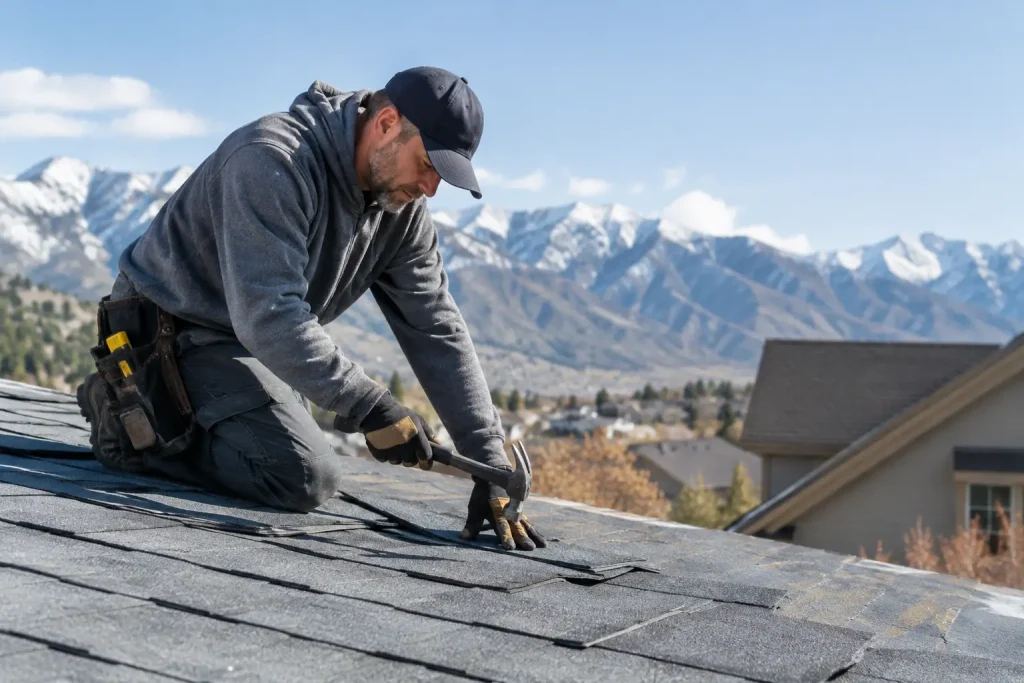
A roof leak rarely waits for a convenient time. It may show up as a wet ceiling spot during a Utah spring storm, shingles scattered across the yard after high winds, or water dripping near a light fixture at midnight. This emergency roof repair guide explains what to do first, what not to risk, and how to protect your home until a qualified roofer can make lasting repairs.
Put Safety Ahead of the Roof
The first goal is not to get on the roof. It is to keep people safe and stop interior damage from spreading. A wet roof is slippery even for experienced professionals, and wind, hail, ice, damaged decking, or loose power lines make conditions more dangerous. Do not climb onto a roof during an active storm or attempt a repair if you are not trained and equipped to do it safely.
If water is entering near a ceiling light, electrical outlet, panel, or appliance, stay clear of the area. Turn off power to that affected circuit only if you can do so safely from a dry location. If the ceiling is bulging heavily, move people and valuables away from it. A ceiling holding a large amount of water can collapse without much warning.
Call emergency services if there is a fire risk, a downed power line, major structural movement, or an immediate threat to anyone inside the building. Roofing repairs can wait a few hours when needed. Personal safety cannot.
Limit Water Damage From Inside
Once everyone is safe, focus on controlling the water already inside. Place buckets, storage bins, or other sturdy containers beneath active drips. Put old towels around the containers to catch splashing, and move furniture, electronics, rugs, and personal belongings out of the area.
For a water-filled ceiling bubble, homeowners sometimes carefully puncture the lowest point with a screwdriver to release water into a bucket. This can prevent water from spreading across the ceiling and causing a wider collapse. Only consider this if the area is away from electrical hazards, the ceiling is stable enough to approach, and you can do it without standing beneath the heaviest part of the bulge. When in doubt, keep clear and call for help.
Open cabinet doors and closet doors near the leak so trapped moisture can dry. Use fans after the weather has passed, but do not run electrical equipment near standing water. Fast drying matters because drywall, insulation, wood framing, and flooring can hold moisture long after the visible drip stops.
Document the Damage Before Cleanup Goes Too Far
Storm damage is stressful, but good documentation can make the repair and insurance process much clearer. Take photos and short videos from safe locations. Capture ceiling stains, dripping water, damaged insulation, broken windows, fallen branches, missing shingles visible from the ground, and any debris around the property.
Write down when you first noticed the problem and what was happening outside at the time. Was there hail, strong wind, heavy rain, ice buildup, or a branch impact? Keep receipts for emergency supplies and any temporary mitigation work. These details may be useful if you file a homeowner’s insurance claim.
Do not throw away damaged materials until you have spoken with your insurance carrier or roofing contractor, unless leaving them in place creates a safety issue. At the same time, do not wait to protect the home simply because a claim may be involved. Most policies expect homeowners to take reasonable steps to prevent additional damage.
Know What a Roof Emergency Looks Like
Not every roof issue needs a middle-of-the-night response, but some problems should be addressed quickly to prevent a small repair from becoming a larger restoration project. Active leaking, missing shingles after wind, exposed roof decking, a torn membrane roof, lifted flashing, or impact damage from a fallen limb all deserve prompt attention.
A stain on the ceiling without active dripping is less urgent, but it still needs a professional inspection. Water can travel along rafters or decking before it appears indoors, so the stain may not sit directly below the source. A leak that seems small can also worsen with the next storm or freeze-thaw cycle.
Commercial property owners should act quickly when water enters near tenant spaces, inventory, electrical systems, or flat-roof drains. Standing water on a membrane roof, open seams, or storm-blown edge metal can lead to extensive moisture damage if ignored.
Temporary Protection Is Not a Permanent Repair
After severe weather has passed, a roofing professional may install an emergency tarp or temporary covering to keep water out until permanent repairs can be completed. This is often the right first step when shingles or roof components have been blown away, but it is not a long-term solution.
Homeowners should be cautious with do-it-yourself tarping. A tarp that is not properly secured can tear loose in wind, trap water, damage shingles further, or create a fall hazard. Never nail a tarp through areas that are not already damaged if it can be avoided. Unnecessary fasteners can create new leak points.
There is also a trade-off with temporary patches. Roofing cement, sealants, and store-bought patch products may slow a minor leak in dry conditions, but they can make later diagnosis harder if applied over wet or dirty surfaces. They are rarely appropriate for widespread storm damage, damaged flashing, rotten decking, or leaks around penetrations such as vents, skylights, and chimneys.
What a Professional Emergency Inspection Should Cover
A reliable roof inspection looks beyond the visible missing shingle or wet ceiling. The roofer should assess the condition of shingles, metal panels, flashing, pipe boots, valleys, ridge areas, gutters, fascia, soffit, roof vents, and the roof deck where accessible. They should also look for storm-related damage that may not be obvious from the ground.
The best repair depends on the cause and extent of the issue. A few wind-damaged shingles may call for a focused repair. Worn flashing around a chimney may need replacement and proper sealing. If water has reached the decking or insulation, the damaged materials may need to be removed and replaced before new roofing is installed.
Ask for a clear explanation of what failed, what needs immediate attention, and what can reasonably wait. A trustworthy contractor will explain the options without pressuring you into a full replacement when a repair is the better fit. On the other hand, an aging roof with widespread wear or repeated leaks may make replacement the more cost-effective choice over time.
Be Careful With Storm-Chasing Contractors
After a major storm, it is common to see unfamiliar companies going door to door. Some may be legitimate, but homeowners should take time to verify who they are dealing with before signing anything. Avoid contractors who demand a large upfront payment, pressure you to sign immediately, or promise to cover your insurance deductible in a way that does not match local requirements.
Choose a local contractor with a clear business presence, appropriate licensing and insurance, written estimates, and a reputation for standing behind completed work. Big West Roofing works with Utah homeowners to assess storm damage, provide straightforward repair recommendations, and help make the insurance process easier to understand.
Work With Insurance Without Giving Up Control
If storm damage may be covered, contact your insurance carrier soon after documenting the issue. Report the facts, share your photos, and ask about the next steps. Your insurer may send an adjuster to review the property, but you can also have a roofing contractor inspect the roof and provide an estimate based on the actual repairs needed.
Do not assume every leak is covered. Coverage depends on the cause of damage, the age and condition of the roof, your policy terms, and your deductible. Sudden wind or hail damage is handled differently from long-term wear, deferred maintenance, or an older leak that has been present for months.
Read any contractor agreement before signing. You should understand whether it is an estimate, a repair authorization, or an agreement related to insurance proceeds. Clear paperwork protects everyone and helps prevent surprises once the work begins.
Reduce the Chance of the Next Emergency
Utah roofs deal with sun exposure, wind, snow, hail, and sharp temperature changes. Routine maintenance will not prevent every storm emergency, but it can reduce the chance that a small weak point becomes a major leak. Have your roof inspected after significant hail or wind events and whenever you notice loose materials, granules in gutters, rusted flashing, or staining inside the home.
Keep gutters and downspouts clear so water can move away from the roofline and foundation. Trim dead or overhanging branches before they become projectiles in high winds. Pay attention to attic ventilation as well, since excess heat and moisture can shorten the life of roofing materials from below.
When water finds its way inside, a calm response makes a real difference. Protect the people in your home, contain the water, document what happened, and get a clear professional assessment before a temporary problem grows into a costly one.