
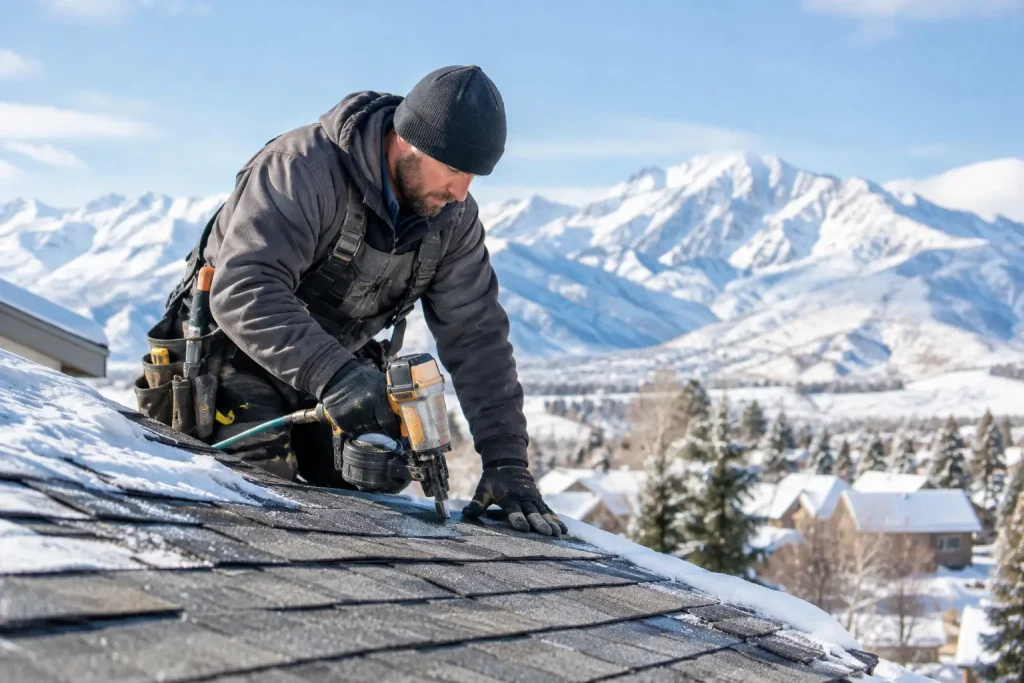
A roof leak rarely waits for a warm spring day. When snow is on the ground or a cold front is moving through Utah, homeowners often ask: can roofers work in winter? In many cases, yes. Professional roofers can complete repairs and even full replacements during winter, but the weather, roofing material, and condition of your home determine what can be done safely and correctly.
The goal is never to rush work just because a problem feels urgent. A dependable contractor balances fast response with the right installation conditions, protecting your home now without compromising the quality of the finished roof.
Can Roofers Work in Winter Safely?
Roofers can work in winter when temperatures, wind, moisture, and roof conditions allow it. A clear, dry day in January may be perfectly workable. On the other hand, an icy roof, active snowfall, high winds, or freezing rain can make roofing unsafe for both the crew and your property.
Safety comes first. Roofing crews need stable footing, dry work areas, and safe access to the roof. Cold weather also affects certain materials and adhesives, so experienced roofers plan the job around both manufacturer requirements and the daily forecast.
For homeowners, this means winter roofing is not an all-or-nothing decision. Some work can happen immediately, while other portions may need to wait for a safer weather window.
When Winter Roof Repairs Make Sense
Emergency repairs are often necessary regardless of the season. A missing shingle, damaged flashing, punctured membrane, or leaking roof can allow water into the attic, insulation, ceilings, and walls. Delaying service may turn a manageable repair into mold growth, damaged framing, or a larger insurance claim.
A roofing professional can often make targeted repairs during winter if the surface is dry enough to work on and conditions are safe. This may include replacing wind-damaged shingles, securing loose metal, repairing flashing around vents or chimneys, or addressing a small area where water is entering.
If a permanent repair cannot be completed that day, a temporary weatherproofing solution may protect the home until conditions improve. The right temporary repair should stop water intrusion without creating new damage or covering up the underlying issue.
Signs you should not wait for spring
Call for an inspection promptly if you notice water stains on ceilings, dripping in the attic, loose or missing shingles after wind, exposed roof decking, or ice buildup near a recurring leak. A roof that has already started leaking needs attention, even if the final repair must be scheduled around the weather.
It is also wise to act quickly after a windstorm or hail event. Damage may not be obvious from the ground, and a free inspection can help you understand whether you need a repair, a temporary solution, or documentation for an insurance claim.
Can a Roof Be Replaced in Winter?
Yes, roof replacement can be completed in winter, especially during a stretch of dry, calm weather. Utah winters often include workable days between storms, and an experienced local crew knows how to use those windows effectively.
That said, winter replacement requires more planning than a project completed in mild weather. Roofers watch the forecast closely, protect exposed areas as sections are removed, and schedule material delivery and installation around precipitation. A quality crew should never leave your home unnecessarily exposed to snow or rain.
The best choice depends on the roofing system, the temperature, and the scope of the project. Metal roofing and many commercial membrane systems may be good winter options under the right conditions. Asphalt shingles can also be installed in cold weather, but they need special care.
Cold-weather considerations for asphalt shingles
Asphalt shingles become less flexible as temperatures drop. If they are handled roughly when cold, they can crack or break. Shingle sealant strips also need warmth and sunlight to fully bond together, so they may take longer to seal during winter.
This does not automatically mean shingles cannot be installed. It means the installer must follow the manufacturer’s cold-weather requirements. Depending on the product and temperature, that may involve hand-sealing shingles, using approved fasteners and sealants, or waiting for a warmer day.
A contractor who promises to install any roof in any weather without discussing these details is not giving you the full picture. Honest recommendations should account for your roof system, local conditions, and the long-term performance you expect from the investment.
The Benefits of Scheduling Roofing Work in Winter
Winter roofing is not only about emergencies. For some property owners, it can be a smart time to plan a replacement or address aging materials before spring storms arrive.
Scheduling flexibility can be a real advantage. Roofing demand is often higher in late spring, summer, and early fall. If weather allows, winter projects may offer more scheduling options and faster turnaround times than peak season.
Winter also reveals problems that stay hidden during dry weather. Snowmelt, ice dams, wind, and temperature swings can expose weak flashing, poor attic ventilation, damaged shingles, and drainage issues. Addressing those concerns now may help prevent more extensive damage during the next storm season.
For commercial property owners, winter inspections can be especially valuable. Flat and low-slope roofs need reliable drainage, intact seams, and secure penetrations to manage standing water and snowmelt. A small membrane issue can become a costly interior disruption if it is left unchecked.
When It Is Better to Wait
There are times when waiting is the responsible choice. Roofing should pause during active snowfall, freezing rain, dangerous winds, lightning, or conditions that leave the roof icy and slick. Crews may also need to delay work if materials cannot be installed according to manufacturer specifications.
Waiting does not mean doing nothing. A professional can inspect the roof when it is safe, document damage, recommend temporary protection, and prepare a plan for the next suitable weather window. That approach gives you a clear path forward instead of asking you to gamble on the next storm.
Homeowners should also be cautious about do-it-yourself winter roof repairs. Climbing onto a snow-covered or icy roof is dangerous, and temporary fixes applied incorrectly can trap moisture or make a later repair more difficult. It is safer to call a qualified roofer, especially when a leak or storm damage is involved.
How to Protect Your Roof Through a Utah Winter
A few practical steps can reduce the chance of winter roofing problems. Keep gutters and downspouts clear enough for snowmelt to drain away from the roofline. Watch for large icicles, but do not pull them down from the roof or climb a ladder in icy conditions.
Inside the home, look in the attic for damp insulation, dark wood, musty odors, or visible drips after a storm. Check ceilings around chimneys, skylights, bathrooms, and exterior walls for discoloration. These signs can point to a roof leak, ventilation issue, or condensation problem.
If you are concerned about ice dams, avoid attacking them with sharp tools or chemicals that can damage shingles, gutters, and landscaping. Ice dams are often connected to heat escaping into the attic, inadequate insulation, or blocked roof drainage. A roofing professional can help identify the cause and recommend a lasting fix.
What to Expect From a Winter Roof Inspection
A thorough inspection should give you answers, not pressure. The contractor should assess visible roof damage, flashing, vents, gutters, attic ventilation, and areas where water may be entering. They should explain what is urgent, what can wait, and what the repair or replacement process will look like in current weather conditions.
If storm damage may be covered by insurance, clear photos and documentation can be helpful. A local contractor can also help you understand the repair scope so you can communicate confidently with your insurance provider.
At Big West Roofing, we believe homeowners deserve straightforward guidance when the weather is working against them. Whether your roof needs a quick repair, a temporary protective measure, or a planned replacement, the right next step is a careful inspection and an honest conversation. A small concern handled early can help keep your home dry, safe, and ready for whatever the rest of winter brings.