
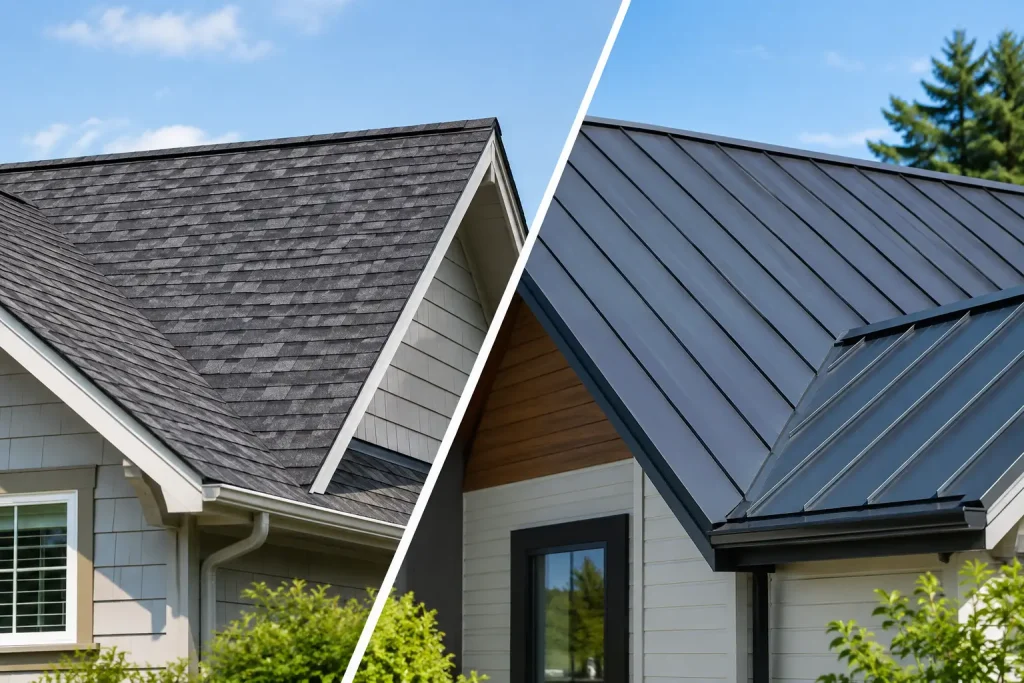
A roof replacement is not a purchase most homeowners want to make twice. When comparing a shingle roof versus metal roof, the right answer comes down to more than appearance or the first number on an estimate. Utah homes face intense sun, cold winters, wind, hail, snow loads, and fast-changing weather. Your budget, roof design, long-term plans, and neighborhood requirements all deserve a place in the decision.
Both roofing systems can protect a home well when they are installed correctly. The key is choosing the material that fits your home and priorities, then working with a contractor who explains the details clearly.
Shingle Roof Versus Metal Roof: The Main Difference
Asphalt shingles remain the most common residential roofing material because they offer dependable protection, a wide range of colors, and a more accessible upfront price. Modern architectural shingles can provide a dimensional appearance and strong wind performance while complementing nearly any home style.
Metal roofing typically costs more at installation, but it is built for longevity. Available in standing seam panels, metal shingles, and other profiles, it offers a clean appearance and excellent resistance to the elements. Many homeowners choose metal when they expect to stay in their home for decades or want fewer full roof replacements over time.
Neither option is automatically better. A well-installed shingle roof may be the practical choice for one family, while a metal roof can be the better long-term investment for another.
Upfront Cost and Long-Term Value
For many homeowners, cost is the first consideration. Shingle roofing generally has a lower initial cost than metal roofing. That can make it an excellent option for a homeowner managing a necessary replacement, preparing to sell, or working within a defined insurance settlement.
Metal roofing requires a larger initial investment because of material costs, specialized fabrication, and installation labor. The roof deck, flashing, trim, ventilation, and panel layout all need careful attention. A low metal-roof bid is not always a bargain if important installation details are missing.
The long-term picture can look different. A quality asphalt shingle roof often lasts roughly 20 to 30 years, depending on the product, installation, ventilation, weather exposure, and maintenance. A properly installed metal roof can last 40 to 70 years or more. If you plan to own the home for a long time, metal may reduce the likelihood of paying for another complete replacement later.
Still, longevity does not mean metal is always the lower-cost choice. If you may move within several years, the additional upfront expense may not provide the same financial return. Your roof’s current condition, the value of your home, and your timing matter just as much as material lifespan.
How Each Roof Handles Utah Weather
Utah weather asks a lot of a roof. Summer sun can age roofing materials, winter storms can create ice and snow concerns, and wind or hail can cause damage in a matter of minutes.
Hail and Wind Resistance
Metal roofing is highly resistant to wind and will not lose granules the way asphalt shingles can. It can withstand hail well, although hail may leave cosmetic dents in some metal profiles or finishes. Whether that damage is covered can depend on the policy and the specific material selected.
Architectural shingles can also perform very well in wind and storms, particularly impact-resistant products designed for harsher weather. Hail can bruise, crack, or remove granules from shingles, which may shorten the roof’s service life. After a major storm, a professional inspection is the best way to identify damage that is not visible from the ground.
Snow, Ice, and Winter Conditions
Metal sheds snow efficiently. That can help prevent heavy snow buildup, but it also creates a consideration homeowners sometimes overlook: snow can slide off a metal roof quickly. Snow retention systems may be needed above entrances, walkways, driveways, decks, and areas where falling snow could create a hazard.
Shingle roofs tend to hold snow longer because of their textured surface. That is not necessarily a problem when the roof is properly designed and ventilated, but ice dams can develop when heat escapes into the attic and melts snow unevenly. Good insulation, ventilation, and correct installation details are essential for either roof type.
Sun and Heat
Metal roofing can reflect more solar heat than many dark asphalt shingles, which may help with summer cooling costs. Color, coating, attic insulation, and ventilation all affect real-world energy performance, so homeowners should avoid assuming that one material alone will dramatically change utility bills.
Asphalt shingles absorb more heat, especially in darker colors. However, quality shingles paired with a properly ventilated attic remain a proven and practical system for Utah homes.
Appearance, Color, and Neighborhood Fit
A roof should protect the home, but it also has a major effect on curb appeal. Asphalt shingles offer broad design flexibility, from classic charcoal and weathered wood tones to bold, high-contrast colors. They work well with traditional, craftsman, ranch, and many newer home styles.
Standing seam metal roofing has a crisp, modern look that is especially popular on contemporary homes, cabins, farm-style designs, and accent roofs. Metal shingles and stone-coated metal options can create a more traditional appearance while retaining metal’s durability benefits.
Before choosing a color or profile, review your homeowners association rules if applicable. Some neighborhoods limit approved materials, colors, or visible metal profiles. It is much easier to confirm those requirements before placing an order than to address them after work begins.
Maintenance and Repairs
No roof is completely maintenance-free. Shingle roofs should be checked for lifted tabs, missing shingles, exposed nail heads, granule loss, and aging around penetrations such as vents and chimneys. Repairs are often straightforward because individual shingles can be replaced when matching materials are available.
Metal roofs need periodic inspection of fasteners, sealants, flashing, panel edges, and penetrations. Standing seam systems have concealed fasteners, while exposed-fastener panels require particular attention as washers and fasteners age. Repairs can be more specialized than shingle repairs, especially when panels must be removed or custom-matched.
For either material, keep gutters clear, trim branches away from the roof, and schedule an inspection after significant wind or hail. Small problems are usually easier and less expensive to fix before water reaches the decking or interior of the home.
When a Shingle Roof Makes the Most Sense
A shingle roof is often a strong choice when you need reliable protection at a manageable upfront cost. It may be especially practical if your roof has a complex layout with many valleys, dormers, skylights, or transitions, since shingles can be installed efficiently around detailed roof features.
It can also be the right fit when you want a traditional look, need to match nearby homes, are working through an insurance claim with a defined budget, or do not expect to stay in the home for several decades. Choosing a quality architectural or impact-resistant shingle can add meaningful durability without moving to a full metal system.
When Metal Roofing Is Worth Considering
Metal roofing is worth serious consideration when longevity is your top priority. It can be a smart option for homeowners who plan to remain in their home long term, want strong wind resistance, prefer a modern or distinctive appearance, or are replacing a roof on a simpler structure where panels can be installed efficiently.
It may also be a good fit for certain commercial properties, detached garages, barns, cabins, and homes in exposed locations. The best metal roof is not simply the thickest panel or the highest price. It is a complete system with proper underlayment, flashing, ventilation, trim, and installation practices suited to the roof design.
Start With the Condition of Your Current Roof
Material selection should begin with an honest assessment of what is happening on your roof now. A roof near the end of its life may need a full replacement, while isolated damage from wind, hail, or a leak may be repairable. The condition of the decking, attic ventilation, gutters, fascia, and soffit can also affect the scope of work.
A free roof inspection gives you a chance to ask direct questions about both options: What is causing the problem? Is repair realistic? Which material fits the roof structure? What will the estimate include? How might insurance or financing help? Clear answers matter more than pressure or a rushed decision.
Big West Roofing helps Utah homeowners compare roofing options with straightforward recommendations, quality workmanship, and respect for the budget behind every project. Whether shingles or metal make more sense for your home, choose the system that gives your family confidence when the next storm rolls in.