
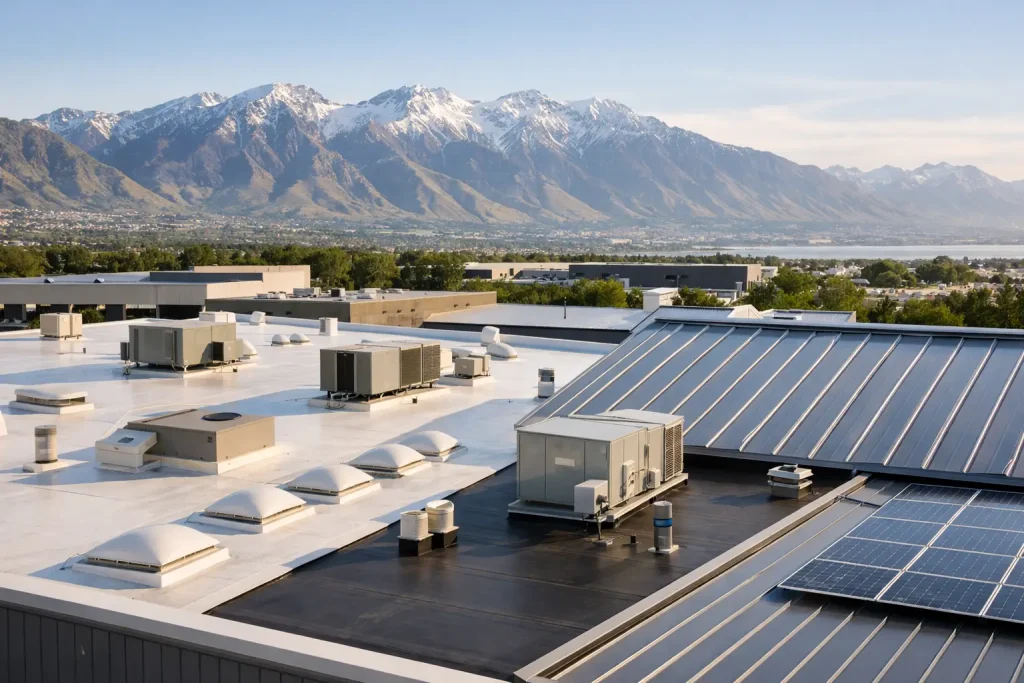
A commercial roof has to do more than keep rain out. It has to handle intense Utah sun, winter snow loads, wind, temperature swings, rooftop equipment, and the daily realities of running a business. The best commercial roofing systems are not the same for every building. The right choice depends on your roof’s slope, condition, traffic, drainage, budget, and how long you plan to own the property.
For a retail center, warehouse, office building, multifamily property, or industrial facility, choosing a roofing system is a long-term business decision. A lower installation cost may look appealing, but frequent repairs, poor drainage, or reduced energy efficiency can make it more expensive over time. A qualified commercial roofer can inspect the building, explain the trade-offs clearly, and recommend a system that fits your property instead of pushing a one-size-fits-all solution.
What Makes a Commercial Roofing System a Good Fit?
Commercial roofs are often low-slope or flat, which means water management is one of the biggest concerns. Even a small area of ponding water can stress seams, flashings, and drains over time. The roof also needs to work around HVAC units, vents, skylights, pipes, parapet walls, and other penetrations that can become leak points if they are not properly detailed.
The best system for your property should balance durability, installation needs, energy performance, repairability, and cost. A building with heavy foot traffic from maintenance crews may need a tougher surface than a property with limited rooftop access. A roof nearing the end of its life may need a full replacement, while a structurally sound roof with isolated wear may be a candidate for restoration or coating.
Local weather matters, too. Utah roofs deal with strong UV exposure in summer and freeze-thaw cycles in winter. Materials that resist heat, remain flexible in changing temperatures, and shed water effectively can help protect the building for years to come.
The Best Commercial Roofing Systems to Consider
TPO Roofing
TPO, or thermoplastic polyolefin, is one of the most common commercial membrane systems for low-slope buildings. It is usually white or light-colored, which helps reflect sunlight and can reduce heat absorbed by the roof. The membrane is installed in large sheets, and the seams are heat-welded to create a continuous water-resistant surface.
TPO is often a strong choice for offices, warehouses, retail buildings, and multifamily properties because it offers a practical mix of performance and value. It is also compatible with tapered insulation systems that improve drainage and energy efficiency.
Like any membrane roof, TPO installation quality matters. Seams, penetrations, edge metal, and flashing details all need careful attention. A properly installed TPO system can perform very well, but poor workmanship around those critical areas can lead to leaks long before the membrane itself wears out.
PVC Roofing
PVC is another single-ply membrane system, and it shares many benefits with TPO, including reflective color options and heat-welded seams. Where PVC often stands apart is its resistance to chemicals, oils, grease, and certain industrial contaminants.
That makes PVC worth considering for restaurants, commercial kitchens, manufacturing facilities, and buildings where rooftop exhaust may carry grease or chemicals. It is generally priced higher than TPO, so the added cost should make sense for the property’s specific exposure and operating needs.
For a standard office building without chemical exposure, TPO may provide the better value. For a restaurant or industrial property, PVC’s added resistance can be well worth the investment.
EPDM Roofing
EPDM is a synthetic rubber membrane that has been used on commercial buildings for decades. It is commonly black, though lighter options are available. EPDM is known for flexibility and durability, particularly in climates with changing temperatures.
This system can be a dependable choice for large, low-slope roofs, especially when a property owner wants a proven membrane option. Its dark surface can absorb more heat than a white reflective roof, which may be a consideration during Utah’s hot summers. However, that same surface can be beneficial in some colder conditions.
EPDM seams are typically adhered or taped rather than heat-welded. The quality of seam work, flashing, and maintenance remains central to its lifespan. It may not be the first choice for every energy-conscious building, but it is far from outdated when selected and installed for the right application.
Metal Roofing
Metal roofing is a strong option for commercial properties with sloped roof sections, visible architectural features, or owners seeking a long service life. Standing seam metal panels are especially popular because their concealed fasteners reduce the number of exposed points where water can enter.
Metal stands up well to wind, fire exposure, and Utah’s wide temperature range. It can also be an attractive choice for storefronts, churches, offices, and mixed-use buildings where appearance matters alongside performance. Many metal systems can be installed with reflective finishes that help manage heat gain.
The trade-off is cost. Metal roofing usually requires a higher upfront investment than many membrane systems. It also needs precise installation, especially around transitions, valleys, penetrations, and snow retention components. When installed correctly and maintained over time, it can provide excellent long-term value.
Modified Bitumen and Built-Up Roofing
Modified bitumen and built-up roofing systems use layers of asphalt-based material to create a durable protective surface. These systems have a long history in commercial roofing and can work well on low-slope roofs, particularly where durability and puncture resistance are priorities.
Built-up roofs use multiple layers, while modified bitumen often uses reinforced sheets applied in one or more plies. Their layered design can offer dependable protection, and some systems are easier to repair in localized areas than certain single-ply membranes.
They can be heavier than other options, so the building structure needs to be considered. Installation methods and odors may also affect business operations. For some properties, the proven performance is worth it. For others, a lighter single-ply membrane may be more practical.
Roof Coatings and Restoration Systems
A roof coating is not a cure for a failing roof, but it can be a smart solution when the existing system is still structurally sound. Silicone, acrylic, and other coating systems can be applied over qualifying roofs to seal minor wear, improve reflectivity, and extend service life without a complete tear-off.
Coatings can be especially appealing for property owners looking to control costs and limit disruption. They may also help reduce heat absorption on a roof with a reflective finish. Before choosing this route, the roof needs a thorough inspection. Wet insulation, widespread membrane failure, major drainage problems, or failing flashings may make a replacement the safer choice.
How to Choose Between Commercial Roofing Options
Start with a professional inspection, not a material preference. A commercial roofing contractor should look at the roof deck, insulation, existing layers, drainage, flashings, penetrations, and signs of moisture below the surface. What appears to be a simple leak may be a larger issue that has traveled beneath the membrane.
Next, consider how the building is used. Restaurants may benefit from PVC. A large warehouse may be well suited to TPO or EPDM. A building with a prominent sloped roof may benefit from metal. A roof with limited remaining life but no major moisture issues may be a candidate for coating restoration.
It also helps to look beyond the installation quote. Ask about warranty coverage, insulation upgrades, drainage corrections, expected maintenance, repair options, and the contractor’s plan for protecting your operations during the project. The lowest bid is not always the lowest cost when it leaves out critical details.
Don’t Overlook Drainage and Maintenance
Even the best commercial roofing system can struggle if water has nowhere to go. Clogged drains, undersized scuppers, damaged gutters, and low spots can lead to ponding water that shortens a roof’s service life. If drainage is an issue, tapered insulation or targeted repairs may be part of the right roofing plan.
Routine inspections are also a practical investment. Checking the roof after major wind, hail, or snow events can catch punctures, loose flashing, and drain blockages before they become interior damage. For Utah property owners, that attention can make a real difference after severe weather.
At Big West Roofing, we believe commercial property owners deserve straightforward answers about what their roof needs, what it can wait on, and what should be addressed now. A free inspection can help you make that decision with clear information instead of guesswork.
The right commercial roof should protect your building without creating constant maintenance concerns. Choose the system that fits your property’s conditions, invest in skilled installation, and give the roof regular attention before small issues turn into costly disruptions.