
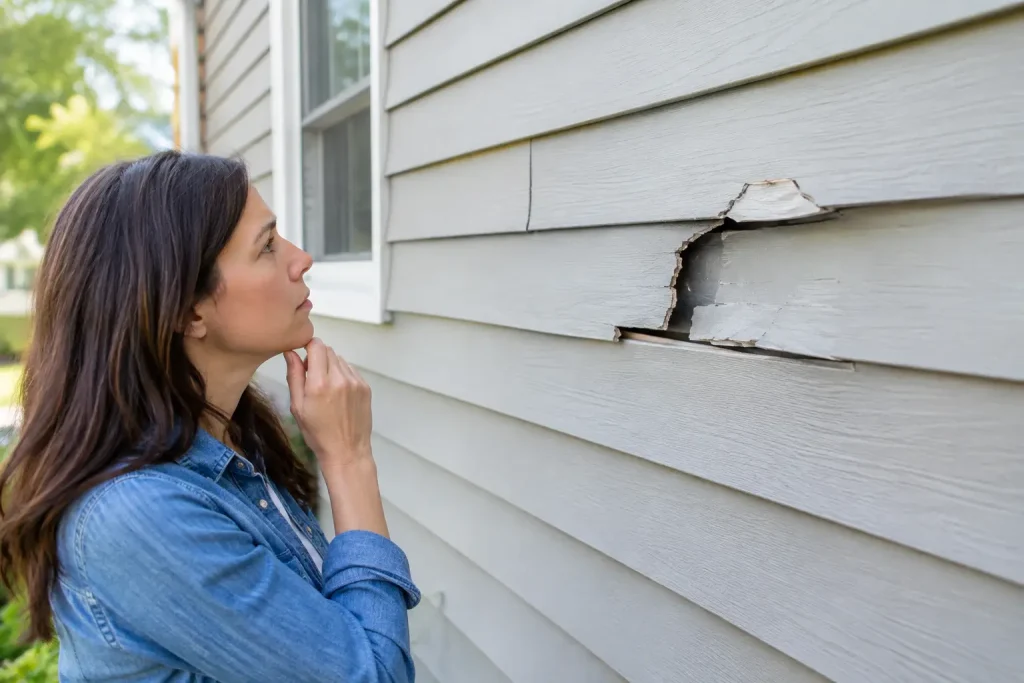
A hailstorm can leave siding cracked, dented, or loose long before the damage is obvious from the street. So, does homeowners insurance cover siding? Often, yes – when the damage comes from a sudden, covered event such as hail, wind, fire, or a falling tree. But insurance usually does not pay for siding that simply wore out, faded in the sun, or was neglected over time.
The details come down to your policy, the cause of damage, your deductible, and the condition of your siding before the event. Knowing the difference can help Utah homeowners respond quickly, protect their property, and avoid surprises during the claims process.
Does Homeowners Insurance Cover Siding From Storm Damage?
Most standard homeowners policies provide dwelling coverage for the exterior of your home, including siding. If a covered peril damages it, your insurer may pay for repair or replacement up to the limits of your policy.
Storm damage is one of the most common reasons siding claims are approved. In Utah, powerful wind gusts, hail, heavy snow, and falling branches can all create legitimate exterior damage. Hail may leave dents, chips, splits, or broken vinyl panels. Wind can pull siding loose, crack corners, or drive debris into the exterior. A tree limb can puncture siding and expose the wall beneath to moisture.
Coverage is not automatic simply because the siding is damaged. The insurer will look for evidence that a covered event caused the problem. If an adjuster finds impact marks, wind-related lifting, or damage consistent with a recent storm, the claim has a stronger foundation than one based on general aging.
Many policies cover damage caused by events such as:
- Wind and hail
- Fire and smoke
- Lightning
- Falling trees or other falling objects
- Vandalism
- Damage from certain vehicle impacts
Every policy has its own terms, exclusions, and deductible. Review your declarations page and policy language, or ask your insurance agent to explain how exterior damage is handled under your specific coverage.
What Siding Damage Is Usually Not Covered?
Homeowners insurance is designed for sudden and accidental losses, not routine maintenance. If siding has gradually deteriorated from age, weather exposure, poor installation, or lack of upkeep, the cost of replacement is generally the homeowner’s responsibility.
Common exclusions can include fading from sun exposure, normal cracking as materials age, rot caused by long-term moisture intrusion, insect damage, mold from an unresolved leak, and cosmetic issues that do not affect the siding’s function. For example, vinyl siding that has become brittle after many years may crack during a mild wind event. The insurer may determine that the underlying age and condition, rather than the wind, caused the failure.
Cosmetic damage can be especially complicated. Some policies limit or exclude coverage for dents that affect appearance but do not impair the siding’s ability to protect the home. This comes up frequently with hail claims. A visible dent may be frustrating, but whether it is covered depends on the policy and the adjuster’s findings.
Poor workmanship may also create a coverage problem. If siding was improperly installed and water got behind it over several seasons, insurance may deny the claim because the damage developed gradually. That does not mean the issue should wait. Prompt repairs can prevent a small siding concern from becoming costly wall, insulation, or framing damage.
Repairing One Wall vs. Replacing All the Siding
A question homeowners often ask after an approved claim is whether insurance will replace all of their siding when only one elevation was damaged. The answer depends on the extent of the loss and the policy.
If matching replacement material is readily available, the insurer may pay to repair only the damaged area. This can be difficult with older vinyl, aluminum, fiber cement, or painted siding that has faded over time. A new panel can look noticeably different from existing panels even when it is technically the same color.
Some policies include matching coverage or provisions that address reasonably uniform appearance. Others do not. Local building requirements and policy endorsements can also affect the outcome. Do not assume a full replacement is guaranteed, but do ask your adjuster how matching, color variation, and code-related upgrades are handled.
A qualified exterior contractor can document the damage, identify whether matching materials are available, and provide a clear repair or replacement estimate. The contractor’s role is to explain the condition of your home and scope the work accurately. Your insurance company makes the final coverage decision.
Deductibles, Depreciation, and What You May Pay
Even when a siding claim is covered, insurance does not necessarily pay the full project cost upfront. Your deductible is your share of the covered loss. If your repair estimate is $6,000 and your deductible is $2,000, the insurer may pay the remaining covered amount, subject to policy terms.
Some homeowners also have a separate wind or hail deductible. This may be a flat dollar amount or a percentage of the home’s insured value, so it is worth checking before filing a claim.
Your policy may settle the claim based on actual cash value or replacement cost value. Actual cash value accounts for depreciation, meaning older siding may receive a lower payout. Replacement cost value policies typically pay the depreciated amount first, then release eligible depreciation after the approved work is completed and documented. Ask your adjuster what settlement method applies and whether there is a deadline to recover depreciation.
What to Do After You Notice Siding Damage
Start with safety. Do not climb ladders during unstable weather or attempt repairs that could create a fall risk. From the ground, take clear photos and videos of visible damage, including loose pieces, fallen branches, dents, cracks, and any water entering the home.
If rain or wind can get behind the siding, take reasonable temporary steps to prevent further damage. This may include safely covering an exposed area or arranging a professional temporary repair. Keep receipts for emergency mitigation work. Most policies expect homeowners to protect the property from additional loss after an event.
Next, schedule a professional inspection. Storm damage is not always easy to identify, especially on upper walls, trim, fascia, soffit, and gutters. An experienced contractor can assess the full exterior and provide photographs and an itemized estimate. At Big West Roofing, we help homeowners understand what storm-related damage is present so they can make an informed decision before moving forward.
If the damage appears consistent with a covered event and the repair cost exceeds your deductible, contact your insurance company to begin the claim. Provide the date of loss, a description of what happened, photos, and any contractor documentation you have. Be accurate and straightforward. Avoid guessing about the cause or promising work that has not been approved.
When the adjuster schedules an inspection, you may choose to have your contractor present. This can help ensure the exterior damage is visible, documented, and discussed clearly. Still, it is wise to wait for the insurer’s written scope of loss before authorizing major work beyond necessary emergency protection.
When Filing a Claim May Not Make Sense
Not every siding issue should become an insurance claim. If repairs cost only slightly more than your deductible, paying out of pocket may be more practical. The same can be true when the damage is clearly maintenance-related or when the policy has a cosmetic-damage limitation.
A professional inspection and estimate give you the information needed to make that call. You should know the likely repair cost, whether there is evidence of storm damage, and whether related areas such as gutters, fascia, soffit, or roofing were affected. Hail and wind rarely limit themselves to one surface.
If your siding has been through a Utah storm, do not wait until loose panels turn into water damage. Get a clear assessment, keep good records, and ask direct questions about your policy. A timely inspection can give you confidence in the next step, whether that means filing a claim or planning a straightforward repair.