
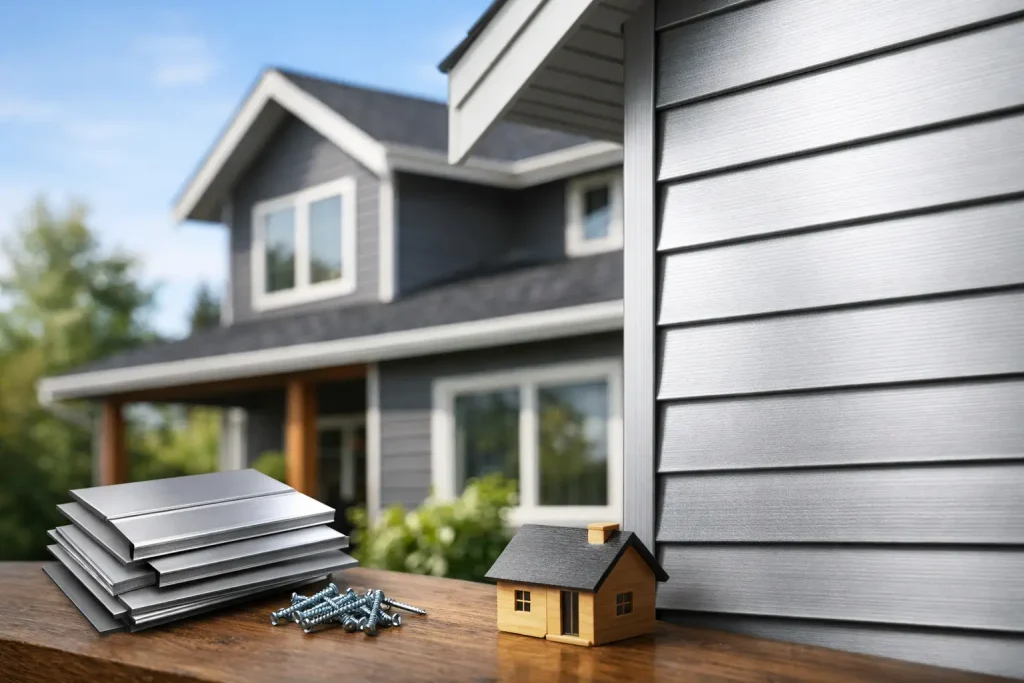
If your home’s exterior is faded, dented, or simply showing its age, aluminum siding might already be on your shortlist. For many Utah homeowners, it sits in that middle ground between affordability and durability – lighter than fiber cement, lower maintenance than wood, and worth a serious look if you want solid protection without chasing constant upkeep.
The catch is that aluminum siding is not the right answer for every home. It handles some conditions very well, struggles in others, and the quality of the installation matters just as much as the material itself. If you are weighing siding options for a repair, replacement, or exterior upgrade, it helps to know where aluminum stands before you make the investment.
What aluminum siding does well
Aluminum siding earned its reputation because it is practical. It does not rot, it does not invite termites, and it holds up well against moisture. In a place like Utah, where homes deal with dry heat, cold winters, strong sun, and occasional storms, that kind of reliability matters.
Another advantage is weight. Aluminum is lighter than many other siding materials, which can make installation easier and sometimes more cost-effective depending on the project. It also performs well from a fire-resistance standpoint, which gives some homeowners extra peace of mind.
For busy families and property owners, maintenance is a big part of the appeal. Aluminum siding does not need the same level of attention as wood, and it can last for decades when it is installed correctly and cared for over time. A basic cleaning and occasional repainting or touch-up may be enough to keep it looking respectable.
Where aluminum siding falls short
The biggest drawback is denting. Hail, thrown balls, ladder bumps, and everyday impact can leave visible marks. That does not always affect performance, but it can affect curb appeal. In areas that see storm activity, this is one of the first trade-offs to think through.
It can also fade over time, especially on elevations that get hard sun exposure. Modern finishes are better than older ones, but fading is still possible. If your goal is a color that stays almost unchanged for years, vinyl or fiber cement may offer a better fit depending on the product line.
Noise is another factor. Aluminum siding can be a little louder than heavier materials during wind or rain. Some homeowners barely notice it. Others do, especially if the siding is installed over a wall assembly with limited insulation or sound control.
Is aluminum siding a good fit for Utah homes?
Often, yes – but it depends on the home and the priorities of the homeowner.
Utah weather asks a lot from an exterior. Intense UV exposure can wear down finishes. Winter freeze-thaw cycles test seals and trim details. Wind and hail can expose weak points fast. Aluminum siding handles moisture well and does not crack the way some materials can in cold conditions, but it is more vulnerable to dent damage than tougher cladding products.
That means aluminum siding can make sense if you want a lower-maintenance exterior, value fire resistance, and are comfortable with the possibility of cosmetic dents over time. It may be a less ideal option if your neighborhood sees frequent hail or if a perfectly smooth appearance matters to you.
For many homeowners, the real decision is not whether aluminum is good or bad. It is whether its strengths line up with the conditions around your property.
Aluminum siding vs. vinyl and fiber cement
This is where most homeowners get stuck, and fairly so. All three options can work well. The better question is what you care about most.
Vinyl is often chosen for affordability and color variety. It usually costs less upfront and does not need painting, but lower-end vinyl products can warp or look less substantial. Aluminum tends to feel a bit tougher in some situations, though it dents more easily.
Fiber cement is known for durability, fire resistance, and a more premium appearance. It also tends to be heavier, more labor-intensive to install, and more expensive. If you want a stronger, more impact-resistant product and have room in the budget, fiber cement may win. If you want a practical balance of cost and performance, aluminum can still hold its own.
Wood has obvious curb appeal, but it asks for more maintenance and more vigilance against moisture and pests. For homeowners who want less upkeep, aluminum is usually the simpler long-term choice.
What aluminum siding costs
Cost depends on the gauge of the metal, the style of the siding, whether old materials need to be removed, and how complex the house is. A simple single-story home is one thing. A larger two-story home with multiple gables, trim details, and accessibility challenges is another.
In general, aluminum siding often falls into a moderate price range. It is commonly more expensive than basic vinyl but less expensive than many fiber cement or engineered wood installations. Repair costs can also vary. If a few sections are damaged, a targeted repair may be possible. If the finish is heavily faded or matching old panels is difficult, replacement may make more financial sense.
Homeowners should also factor in trim, soffit, fascia, moisture barriers, and the condition of the wall underneath. Siding projects are rarely just about the face material. Sometimes the bigger value comes from correcting hidden issues before they become expensive problems.
Installation matters more than many people realize
Even quality aluminum siding can underperform if the installation is rushed or the wall system underneath is not addressed. Proper flashing, trim integration, fastening, and moisture management all affect how well the exterior performs over time.
This is especially important around windows, doors, rooflines, and transitions where siding meets fascia or soffit. If those details are handled poorly, water can work its way behind the panels and create problems you do not see right away.
A good contractor will look beyond the surface. That means checking for underlying wood damage, reviewing ventilation and trim conditions, and making sure the siding is part of a complete exterior system rather than a cosmetic cover-up.
When repair makes sense and when replacement is smarter
If your aluminum siding has isolated dents, minor chalking, or a small area of storm damage, repair may be enough. This is often the most cost-effective path when the rest of the exterior is still in good shape.
Replacement becomes the better option when damage is widespread, panels are loose or warped, color matching is no longer realistic, or moisture issues are showing up underneath. If the siding is older and the home also needs fascia, soffit, or gutter work, it can make sense to address everything together instead of fixing one problem at a time.
For storm-related damage, documentation matters. A contractor who understands exterior damage inspections can help you sort out what is cosmetic, what is functional, and what may qualify for an insurance claim.
How to get the best long-term value from aluminum siding
The smartest approach is to think past the initial price. Lower cost upfront does not always mean better value if the product is thin, poorly installed, or mismatched to the home’s exposure. On the other hand, a well-installed aluminum siding system can give you years of solid performance with manageable maintenance.
Ask practical questions. How thick is the material? What kind of finish warranty is included? How will corners, trim, and transitions be handled? Will damaged sheathing be replaced if found during the job? These are the details that separate a quick install from work that actually protects the home.
If your roof, gutters, soffit, or fascia are also showing wear, it is worth evaluating the full exterior at the same time. Big West Roofing often sees how one weak point affects another, especially after wind, hail, or long-term exposure. Taking a system-wide view usually leads to better results than chasing repairs one by one.
Should you choose aluminum siding?
If you want an exterior that is durable, relatively low maintenance, and well suited for homeowners who value function over fuss, aluminum siding deserves a close look. If hail resistance, premium texture, or the latest design styles are your top priorities, another material may fit better.
The right choice comes down to your home, your budget, and the kind of upkeep you want to deal with over the next 20 years. A good exterior decision should make life easier, not create another project to worry about. The best next step is not guessing from photos online – it is getting a clear look at the condition of your current exterior and choosing a solution that fits the way your home actually lives.