
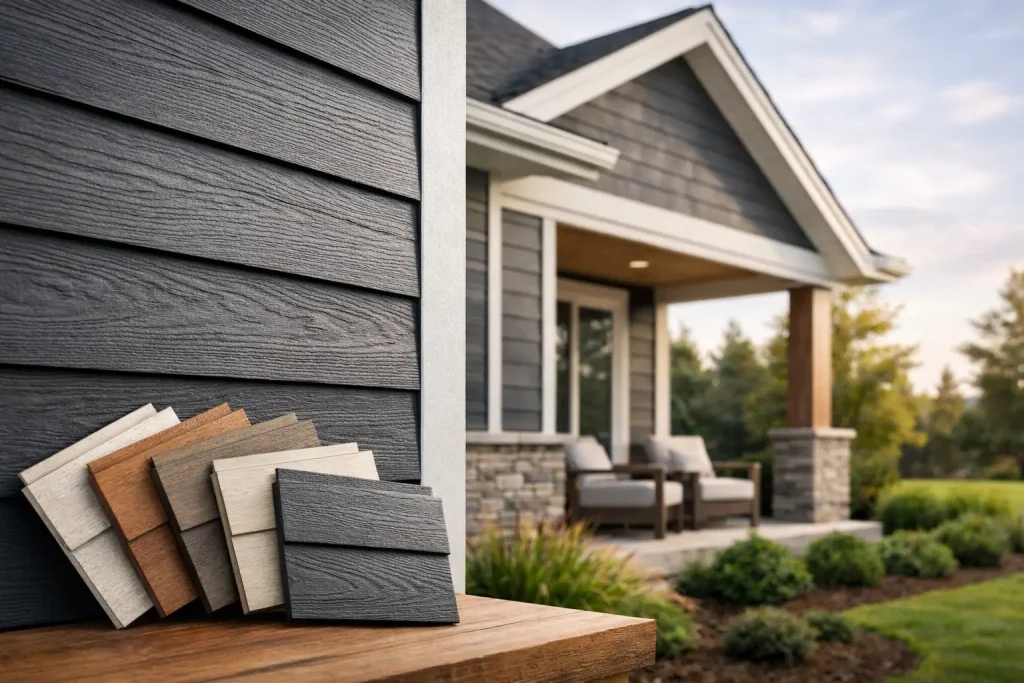
A lot of siding decisions get made after something has already gone wrong. Paint is peeling. Wind has loosened panels. Moisture has started to show up where it should not. When homeowners start comparing options, composite siding usually comes up fast because it promises the look of real wood with less maintenance and better durability.
That promise is appealing, especially in Utah, where siding has to handle strong sun, temperature swings, wind, and seasonal storms. But like any exterior product, composite siding is not a one-size-fits-all answer. The right choice depends on your budget, the style of your home, how much upkeep you want to deal with, and how long you plan to stay in the property.
What composite siding actually is
Composite siding is made from engineered materials rather than a single natural product. Depending on the manufacturer, that can mean wood fibers, resins, polymers, recycled content, or a blend designed to resist moisture and impact better than traditional wood. It is built to give you a finished exterior that looks clean and consistent while reducing some of the common problems homeowners face with older siding materials.
In practical terms, many people choose it because they want the appearance of painted wood siding without the same level of repainting, swelling, cracking, or insect concerns. It is available in a range of profiles and textures, so it can work on newer builds as well as homes that need an exterior refresh without changing the overall character of the property.
Why composite siding appeals to homeowners
The biggest selling point is balance. Composite siding often sits in the middle ground between premium looks and manageable maintenance. For homeowners who do not want to be scraping, repainting, or replacing damaged boards every few years, that matters.
It also tends to hold up well visually. Many products are designed to resist fading, chipping, and everyday wear better than standard painted wood. If curb appeal matters to you, and for most homeowners it does, that consistency can make a real difference.
Another reason people look closely at composite is durability. A well-made product installed correctly can stand up to weather, insects, and moisture better than some traditional materials. That does not mean it is indestructible, but it can reduce the chances of the kind of recurring repairs that wear homeowners down over time.
How it performs in Utah weather
This is where material choice gets more specific. Utah homes deal with intense UV exposure, hot summers, cold winters, and storms that can bring wind and hail. Siding needs to do more than look good on installation day. It needs to keep performing after years of expansion, contraction, and direct sun.
Composite siding can be a strong option in this climate because many products are engineered for dimensional stability and moisture resistance. That helps reduce issues like warping or premature deterioration. Some products also offer better impact resistance than homeowners expect, which can be helpful in storm-prone areas.
Still, product quality matters. So does installation. Even a strong siding material can underperform if the wall assembly is not prepared correctly, flashing details are missed, or moisture management is treated like an afterthought. The material and the workmanship have to work together.
The main pros of composite siding
Composite siding earns attention for good reason. It can offer a clean, high-end appearance, lower maintenance than wood, and better resistance to rot and pests. For busy homeowners, that combination is hard to ignore.
It is also versatile. If you want horizontal lap siding, vertical panels, shake-style accents, or a more contemporary look, there are composite options that fit. That flexibility gives homeowners room to improve appearance without being boxed into one style.
There can also be long-term value in fewer repairs and a longer service life, depending on the product you choose. Paying more upfront sometimes makes sense when it helps avoid ongoing repainting or repeated patch jobs.
The trade-offs to keep in mind
No siding material is perfect, and composite siding is no exception. Cost is often the first concern. It can be more expensive than basic vinyl, especially when you choose premium profiles or factory-finished products.
Weight can be another factor. Some composite products are heavier than homeowners expect, which can affect installation labor and project planning. Not every contractor handles engineered exterior materials with the same level of care, so experience matters.
You should also know that performance varies by manufacturer. “Composite siding” is a broad category, not a single product standard. Some lines are more moisture-resistant, more impact-resistant, or better finished than others. That is why it helps to compare real product details instead of assuming every composite option performs the same way.
Composite siding vs. vinyl, fiber cement, and wood
For many homeowners, the real question is not whether composite siding is good. It is whether it is better for their home than the other common choices.
Compared with vinyl, composite usually offers a more solid feel and a more premium appearance. It may also provide better resistance to cracking or warping in some conditions, though that depends on the product. Vinyl is often cheaper, which makes it attractive for tighter budgets, but it may not deliver the same look or durability expectations.
Compared with fiber cement, composite can be lighter and easier to install. Some homeowners also prefer its texture and finish options. Fiber cement remains a strong performer, especially for fire resistance and long-term stability, but it can be more labor-intensive and may require a different maintenance approach.
Compared with real wood, composite is usually the lower-maintenance choice. You lose some of the natural character that true wood offers, but you also avoid much of the upkeep that comes with it. For most busy families, that trade-off is worth serious consideration.
What installation quality means for long-term results
A good siding product can only do so much if the installation is rushed. Proper fastening, moisture barriers, trim integration, flashing, and ventilation details all affect how the siding performs over time. Problems like water intrusion often start at transitions, not in the field of the siding itself.
That is one reason homeowners should look at siding as part of the full exterior system. Fascia, soffit, gutters, rooflines, and wall penetrations all work together. If one area is failing, replacing siding without addressing the surrounding components may not solve the bigger issue.
An experienced exterior contractor will usually inspect more than the visible panels. They will look at what is happening underneath and around the siding so the new installation has a better chance of lasting.
Is composite siding worth the cost?
For the right homeowner, yes. If you plan to stay in your home for years, want a strong curb appeal upgrade, and prefer lower maintenance than wood, composite siding can be a smart investment. The value tends to show up over time in durability, appearance, and fewer repair headaches.
If your main priority is the lowest possible upfront cost, composite may not be the first option you choose. In that case, other materials may fit the budget better. But the cheapest installation is not always the least expensive over the life of the home.
This is where clear estimates and honest guidance matter. A contractor should be able to explain not just the project price, but what you are getting in return for that investment.
Signs your home may be a good fit for composite siding
If your current siding is aging unevenly, needs frequent paint work, or has started showing moisture-related damage, composite may be worth a closer look. It can also make sense if you are already replacing gutters, fascia, soffit, or roofing and want the exterior to be updated as one coordinated system.
Homeowners who care about appearance but do not want constant upkeep are often strong candidates. The same goes for owners preparing a long-term home improvement plan instead of chasing short-term patch repairs.
At Big West Roofing, those are the conversations that matter most – understanding what your home needs now, what problems you want to avoid later, and which exterior solution makes sense for your budget.
Choosing siding is not just about picking a color or profile. It is about protecting your home with a material that fits your climate, your goals, and the way you actually live. If composite siding checks those boxes, it is worth taking seriously before the next small exterior issue turns into a larger repair.