
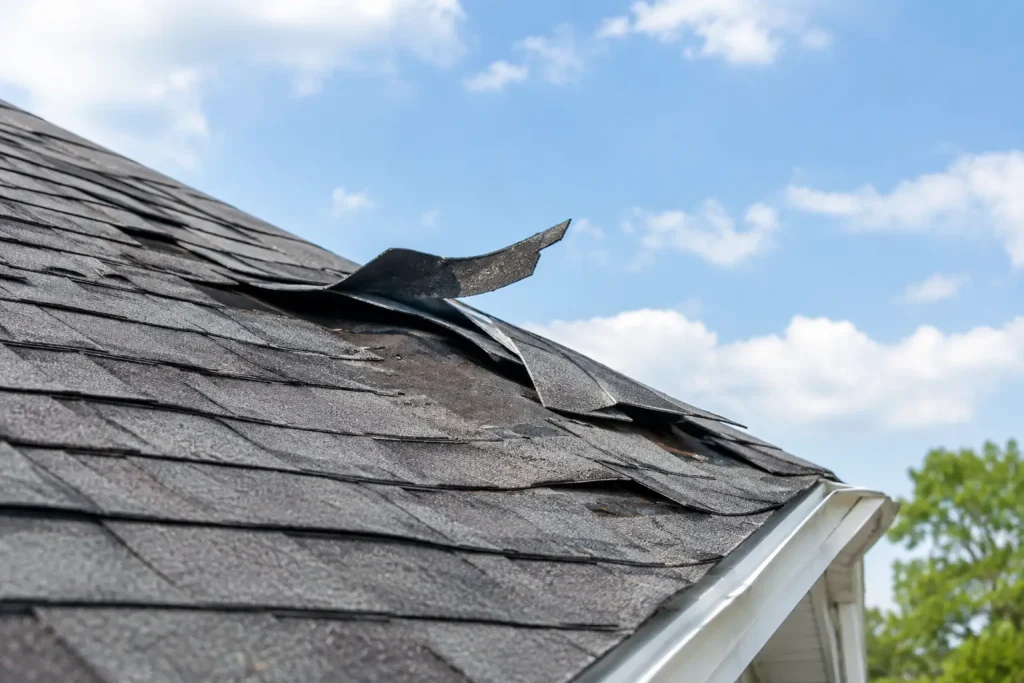
A few loose shingles after a hard Utah windstorm can look like a small problem. But if you are asking, why are shingles blowing off your roof, the answer may be more than the storm itself. Wind often exposes a weakness that was already developing – aging materials, incorrect fastening, damaged roof decking, or a vulnerable edge detail.
A missing shingle leaves the layers beneath it exposed to rain, snow, and more wind. Acting early can prevent a simple repair from turning into a leak, damaged insulation, or a larger roof replacement decision.
Why Are Shingles Blowing Off? Common Causes
Wind is the immediate cause, but shingles that are properly installed and still in good condition are designed to handle normal weather. When shingles lift, crease, tear, or disappear, a roofing professional looks at both the storm conditions and the condition of the roof.
Strong wind gusts and roof-edge exposure
Wind does not press evenly across a roof. It creates uplift, especially along eaves, rakes, ridges, corners, and around roof features such as chimneys and vents. These areas are more likely to lose shingles first because the wind can get underneath the exposed edge and pull upward.
Utah weather can bring sudden gusts, thunderstorms, and winter storms. A roof may look fine from the ground after one event, then lose more shingles during the next storm because the seal beneath nearby shingles has already been weakened.
Aging shingles and failed adhesive seals
Asphalt shingles rely on a factory-applied adhesive strip that bonds shingles together after installation. Over time, sun exposure, temperature swings, and normal wear can weaken that seal. Older shingles can also become dry, brittle, curled, or cracked, making them easier for wind to lift.
Age alone does not mean every roof needs replacement. However, when missing shingles are paired with widespread granule loss, curling, cracking, or repeated repairs, a repair may only be a short-term solution. An inspection can help determine whether the roof still has reliable service life left.
Improper nailing or installation
Nail placement matters more than most homeowners realize. Nails driven too high may miss the reinforced nailing area. Nails driven too low can leave the shingle vulnerable. Nails that are overdriven can cut through the shingle mat, while underdriven nails can prevent shingles from lying flat.
Too few fasteners, the wrong fasteners, or poorly installed starter shingles can also lead to wind damage. In these cases, the missing shingle is often a symptom of an installation issue rather than a one-time weather event. This is why a close inspection is valuable before simply replacing what blew off.
Missing or weak starter shingles
Starter shingles are installed at the roof edges before the main field shingles. They create a secure base and help stop wind from getting beneath the first row. If the starter course is missing, improperly installed, or deteriorated, the edge shingles may begin lifting during gusty weather.
This type of problem often starts at the perimeter and can spread. Once wind gets below one shingle, it can pull at the shingles above and beside it.
Decking, ventilation, and moisture problems
Roof shingles need a solid, dry surface beneath them. If roof decking has softened from a past leak, nails may no longer hold as securely as they should. Moisture trapped in the roof system can also contribute to deterioration over time.
Poor attic ventilation does not usually blow shingles off by itself, but it can shorten shingle life. Excess heat and moisture can age roofing materials faster and create conditions that make wind damage more likely. A complete roof evaluation should consider the shingles, flashing, decking, attic ventilation, and drainage system together.
Signs the Wind Damage May Be More Serious
A missing shingle is easy to spot. Other warning signs can be less obvious from the ground. Look for shingles that are lifted at the corners, creased across the middle, cracked, or lying unevenly. Granules in gutters or at the base of downspouts can also signal that shingles have taken a hit.
Inside the home, check for new water stains on ceilings, damp attic insulation, musty odors, or visible daylight in the attic. These signs do not always mean the roof is failing, but they deserve prompt attention.
Do not climb onto a steep or damaged roof to investigate. Walking on compromised shingles can cause more damage and creates a real fall risk. A professional can inspect the roof safely and identify wind damage that is not visible from the yard.
What to Do When Shingles Blow Off
Start by documenting what you can safely see. Take photos from the ground, note the date of the storm, and save any shingles or roofing material that land in your yard. This information can be helpful if you need to speak with your insurance company.
Next, arrange a roof inspection as soon as practical. A contractor can identify how many shingles are missing, whether surrounding shingles are loose, and whether exposed areas need temporary protection. Fast repairs are especially important before rain or snow arrives.
If you see active leaking, water entering the attic, or a large section of roofing missing, treat it as urgent. Temporary covering may help limit further damage, but it should be installed by a qualified roofing professional. Tarps are not a substitute for a proper repair and can become a hazard in high wind if they are not secured correctly.
Repair or replacement: how to decide
A targeted repair can be the right answer when the damage is limited, the roof is otherwise in good condition, and matching shingles are available. Replacing a few wind-damaged shingles quickly can restore protection and preserve the rest of the roof.
Replacement may make more financial sense when wind damage is widespread, shingles are brittle throughout the roof, repeated repairs have been needed, or the roof is near the end of its expected life. Matching older shingles can also be difficult because colors fade over time. A good contractor should explain both options clearly, including the cost, expected durability, and appearance trade-offs.
Insurance considerations
Wind damage may be covered under a homeowner’s insurance policy, but coverage depends on your policy, deductible, cause of loss, and the insurer’s assessment. Avoid assuming that a missing shingle automatically means a full roof replacement will be approved.
A detailed inspection, photos, and a clear repair or replacement estimate can make the claims process easier to understand. If you decide to file a claim, keep records of storm dates, conversations, receipts, and any emergency work completed to protect the home.
How to Reduce Future Wind Damage
No roof is completely immune to severe weather, but regular maintenance can reduce the chances of a small issue becoming a major one. Have the roof inspected after significant wind or hail events, particularly if it is older or has had previous repairs. Keep gutters clear so water drains properly, and address loose flashing, damaged fascia, and failing sealant before storms find their way in.
When replacing a roof, ask about shingles rated for higher wind resistance and about the full installation system. Quality underlayment, properly installed starter shingles, correct fastener placement, ridge materials, ventilation, and flashing all work together. The lowest initial estimate is not always the best value if it leaves out the details that help a roof stand up to Utah weather.
At Big West Roofing, we believe homeowners deserve a straightforward answer, not pressure. If shingles have blown off your roof, a professional inspection can show what happened, what needs attention now, and the most practical path to protecting your home before the next storm arrives.