
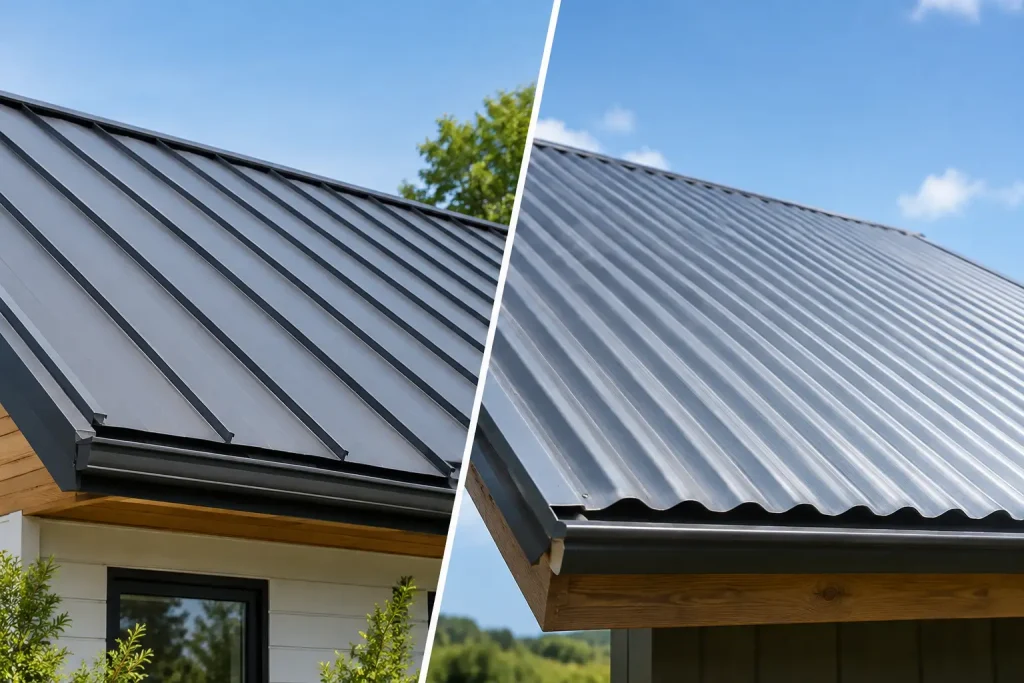
A metal roof needs to do more than look good from the street. In Utah, it may face intense sun, fast temperature swings, wind, snow buildup, and hail. When homeowners compare standing seam versus corrugated metal, the real question is not which profile is better in every situation. It is which system fits the home, budget, roof design, and level of long-term maintenance you are comfortable with.
Both options can provide a long-lasting alternative to asphalt shingles when they are properly designed and installed. Their biggest differences come down to fastening method, appearance, upfront cost, and how they handle movement, water, and maintenance over time.
What Is Standing Seam Metal Roofing?
Standing seam roofing uses wide, flat metal panels joined by raised vertical seams. The panels are typically secured with concealed clips or fasteners beneath those seams, so there are no exposed screws across the main roof surface.
That hidden-fastener design is a major reason standing seam is often viewed as the premium residential metal roofing option. It creates clean lines, limits common leak points, and allows the metal to expand and contract with changing temperatures. For a home with a modern design, a mountain-style exterior, or a simple roofline that deserves a polished finish, standing seam can be an excellent match.
Standing seam is also commonly specified for low-slope applications, although every roof system has minimum slope requirements. The panel profile, underlayment, flashing, and installation details all matter as much as the panel itself.
What Is Corrugated Metal Roofing?
Corrugated metal roofing has a repeating wavy profile. Many people recognize it from barns, sheds, workshops, and agricultural buildings, but corrugated panels are also used on homes that call for a more rustic, industrial, or Western look.
Most corrugated roofing panels are installed with exposed fasteners. Screws are driven through the panel and fitted with sealing washers to help keep water out. This installation method is straightforward and typically costs less than a standing seam system.
Corrugated roofing can be a practical choice for outbuildings, covered patios, detached garages, and certain residential roof replacements. It is not automatically a lower-quality product. However, exposed fasteners require more attention over the life of the roof because washers and screws are part of the weather barrier.
Standing Seam Versus Corrugated Metal: The Key Differences
The most visible difference is the look. Standing seam has long, crisp vertical lines and a refined finish that works well with contemporary, traditional, and upscale home designs. Corrugated metal has more texture and shadow lines, giving it a distinct character that can feel casual, rustic, or agricultural.
Underneath that appearance is a more meaningful difference: how the roof is fastened. Standing seam panels hide their fasteners under raised seams. Corrugated panels generally use visible screws through the face of the metal. Both systems can perform well, but concealed fasteners reduce the number of penetrations exposed to sun, water, and weather.
Cost and Installation Complexity
Corrugated metal generally has a lower material and installation cost. The panels are often easier to handle and install, making them a sensible option when budget is the leading concern or when roofing a simpler structure.
Standing seam costs more because the panels, clips, trim, and installation process are more specialized. Roof penetrations, valleys, transitions, chimneys, skylights, and wall flashings require careful detail work. The investment can be worthwhile for homeowners who want a longer-term system with a more upscale appearance and fewer exposed fasteners to monitor.
Price should never be compared by panel cost alone. A dependable roof also requires correct underlayment, edge metal, ventilation, flashing, pipe boots, and installation by a contractor who understands the system. An inexpensive metal panel can become an expensive problem if those details are skipped.
Maintenance Expectations
Every roof should be inspected periodically, especially after major wind, hail, or snow events. With corrugated metal, the exposed screws deserve extra attention. Over time, fasteners can loosen slightly as the roof moves, and the sealing washers can wear from sun exposure. A qualified roofer can identify screws that need replacement or adjustment before they become a leak source.
Standing seam has fewer exposed fasteners in the field of the roof, which often means less routine fastener-related maintenance. That does not mean it is maintenance-free. Flashings, sealants, penetrations, gutters, and areas around rooftop equipment still need inspection. If a standing seam panel is damaged, repairs may also be more specialized than replacing a small section of corrugated panel.
Snow, Ice, and Utah Weather
Metal sheds snow more readily than many other roofing materials. That can help prevent deep snow loads from lingering, but it also creates a safety consideration. Snow can release suddenly from a smooth metal roof, especially above walkways, doors, driveways, decks, or lower roof sections.
Standing seam systems are especially well suited for engineered snow retention because snow guards can often be clamped to the seams without piercing the panel. Corrugated systems can also use snow retention, but attachment details need to be selected carefully to preserve the roof’s weather resistance.
Neither profile is automatically hail-proof. Metal roofs can resist impact well, but hail may still leave cosmetic dents depending on the metal type, thickness, panel shape, and storm severity. Homeowners should ask about the specific product’s impact rating and finish warranty rather than assuming all metal roofs offer identical protection.
Energy Efficiency and Comfort
A light-colored or reflective metal roof can help reduce heat absorption during sunny weather. That benefit is influenced by the paint finish, attic insulation, ventilation, roof assembly, and the home’s overall design. Metal panels alone do not solve an under-insulated attic or poor ventilation.
Sound is another common concern. When metal roofing is installed over proper decking and underlayment, rain noise inside the home is often far less dramatic than people expect. A detached garage or open-framed structure may sound different because it lacks the insulation and ceiling layers of a finished home.
Which Roof Looks Right on Your Property?
Standing seam is often the better visual choice when the roof is a prominent architectural feature. It complements clean-lined homes, newer construction, and properties where homeowners want the roof to add to resale appeal. Its vertical design can also make a steep roof look taller and more intentional.
Corrugated metal can be the right choice when the architecture supports it. It pairs naturally with cabins, rural homes, workshops, barns, and homes with a more relaxed exterior style. It can also be a smart way to carry a consistent metal look from a main structure to a garage, patio cover, or accessory building without putting a premium system everywhere.
The roof shape matters, too. Simple gable roofs are generally more cost-effective for either metal profile. Complex roofs with many valleys, dormers, and penetrations increase labor and material waste. On a highly complicated roof, the right choice may depend more on installation details and budget than on the panel profile alone.
How to Make the Right Choice
Choose standing seam when long-term performance, concealed fasteners, clean appearance, and snow-retention compatibility are priorities. It is often a strong fit for a primary residence where the roof is expected to serve for decades and appearance carries real value.
Choose corrugated metal when you want the durability and character of metal at a more approachable upfront cost, especially for a garage, barn, shop, patio cover, or a home designed around a rustic look. Just plan for periodic fastener inspections as part of normal roof care.
Before signing a contract, ask what metal type and thickness will be used, whether the system has a finish warranty, how penetrations will be flashed, and what underlayment is included. Also ask how the contractor will address ventilation, snow retention, gutters, and transitions to siding or masonry. Clear answers on these details are a good sign that the proposal covers the whole roofing system, not just the panels.
A free inspection can help turn a broad material comparison into a decision that fits your actual roof. Big West Roofing can evaluate your roof’s slope, condition, drainage, and exposure, then explain the practical options in plain language. The best metal roof is the one installed with the right details for the way your home handles Utah weather – and the way your family uses it every day.