
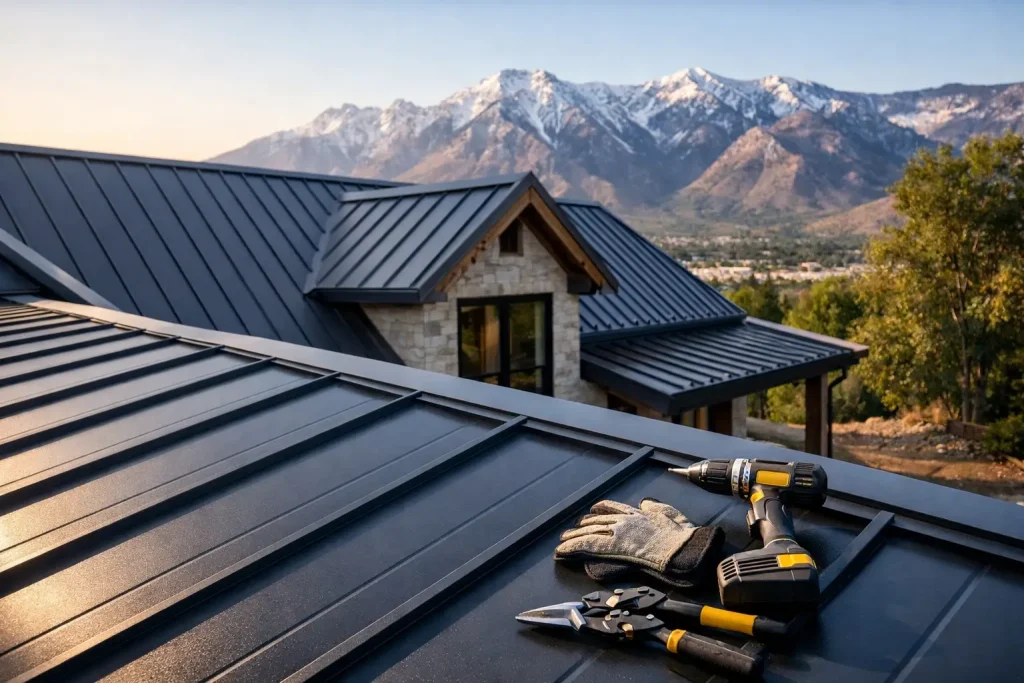
A roof can look great on a sunny day and still leave a homeowner wondering how it will handle the next heavy snowfall, windstorm, or hail season. This standing seam metal roof review looks past the clean lines and modern curb appeal to help Utah homeowners decide whether this premium roofing option makes sense for their home, budget, and long-term plans.
What Is a Standing Seam Metal Roof?
Standing seam metal roofing uses long metal panels that run from the roof ridge to the eaves. The panel edges connect at raised vertical seams, while most fasteners are hidden beneath the panels rather than exposed to weather.
That design is a major reason standing seam roofs are known for durability. On many traditional metal roofs, exposed screws must be monitored and maintained as washers age and fasteners can loosen. A standing seam system protects the attachment points from direct sun, rain, snow, and ice.
The finished appearance is clean and intentional. It works well on contemporary homes, farmhouses, mountain properties, and many traditional Utah homes that need a roof with stronger snow-shedding performance.
Standing Seam Metal Roof Review: The Real Benefits
A standing seam roof is not the least expensive roofing choice, but it has practical advantages that can make the investment worthwhile.
Long service life
A professionally installed standing seam roof can often last 40 to 70 years, depending on the metal type, panel thickness, finish, maintenance, and local conditions. That is significantly longer than a typical asphalt shingle roof.
For homeowners who expect to stay in their house for many years, avoiding one or two future roof replacements can change the value calculation. It can also be a strong selling feature if you plan to sell a well-maintained home later.
Strong performance in snow and rain
Utah weather demands a roof that can manage changing conditions. Standing seam panels have fewer horizontal joints than many other roof systems, and their smooth surface helps snow slide off more readily than it does on rough-textured shingles.
Snow shedding can reduce the weight sitting on the roof, but it also creates a planning consideration. Snow guards may be needed above walkways, entry doors, decks, garage doors, or areas where falling snow could damage landscaping or create a safety hazard. The roof system should be designed for the property, not simply installed panel by panel.
Excellent wind and weather resistance
Because the panels are secured with concealed clips or fasteners, standing seam systems can perform very well in high winds when installed correctly. The raised seams also help direct water down the roof rather than allowing it to collect around exposed fasteners.
No roof is damage-proof. Large hail can dent metal panels, and wind-driven debris can still cause problems. However, quality metal roofing is generally a strong choice for homeowners who want dependable protection through changing seasons.
Lower day-to-day maintenance
Standing seam metal roofs need periodic inspections, especially after storms, but they do not require the regular replacement of cracked, curled, or missing shingles. Homeowners should keep valleys and gutters clear, watch for branches rubbing the panels, and have flashing checked when needed.
The key word is lower, not zero. A roof still needs professional attention if there is storm damage, damaged sealant, loose trim, or a concern around a penetration such as a vent, chimney, or skylight.
Energy and exterior benefits
Metal roofing can reflect a portion of the sun’s heat, particularly when paired with an appropriate finish and attic ventilation. This may help reduce cooling demands during hot Utah summers. Actual savings depend on the roof color, insulation, ventilation, home design, and how the household uses energy.
Standing seam panels are also a practical fit for many solar installations. The raised seams can allow certain solar mounting systems to attach without drilling through the metal panels. Each solar and roofing plan should still be reviewed carefully to protect warranties and prevent leaks.
The Trade-Offs Homeowners Should Know
The biggest drawback is upfront cost. Standing seam metal costs more than standard asphalt shingles because of the material, specialized trim, labor, roof preparation, and installation skill required. Complex roofs with steep pitches, multiple valleys, skylights, chimneys, or difficult access will cost more than simple gable roofs.
Noise is another common concern, but it is often misunderstood. A metal roof installed over proper decking, underlayment, and attic insulation is not usually much louder than another roof during rain. The sound can be more noticeable in homes with limited insulation or in structures where panels are installed over open framing.
Appearance is personal. Some homeowners love the crisp lines of vertical panels, while others prefer the texture and softer look of shingles. Color selection also matters in Utah. Dark colors can create a bold look and encourage snow melt, but they may absorb more heat. Lighter colors can offer a different exterior style and reflect more sunlight.
Finally, metal panels can show dents from severe hail or falling branches. A dent may be cosmetic rather than a leak risk, but it can still matter to homeowners who expect a flawless appearance. The metal gauge, panel profile, and finish should be discussed before choosing a system.
Is Standing Seam Worth the Cost in Utah?
It depends on what you need from your next roof. Standing seam is often a strong value for homeowners who plan to stay put, want a long-lasting exterior upgrade, have recurring snow or wind concerns, or are considering solar. It can also make sense for homes where the roof is highly visible and curb appeal is a priority.
It may not be the best fit for every budget. If you need a reliable roof replacement at the lowest initial price, quality architectural shingles may be the more practical choice. A good contractor should explain both options honestly, including expected lifespan, warranty coverage, ventilation needs, and the full installed cost.
Be careful when comparing estimates. One quote may include thicker metal, better underlayment, custom flashing, snow retention, or upgraded ventilation, while another may leave those details out. A lower number does not always represent the same roof system.
Installation Details Matter More Than the Panel Color
A standing seam roof performs best when the details are handled correctly. Flashing around chimneys, walls, valleys, vents, and skylights is where many roofing problems begin. Proper underlayment is especially important in areas that see snow and ice, and attic ventilation helps manage moisture and heat beneath the roof.
Expansion and contraction also need to be considered. Metal moves as temperatures change, so the panel system and attachment method must allow for that movement. Installing panels too tightly or using the wrong fasteners can lead to oil-canning, noise, or premature issues.
Ask your contractor how they will address roof penetrations, pipe boots, valleys, edge metal, and snow guards. You do not need to become a roofing expert, but clear answers are a sign that the installer understands the system beyond the visible panels.
Questions to Ask Before Choosing a Metal Roof
Before signing a contract, ask what metal gauge and panel profile are being proposed, whether fasteners will be concealed, and what underlayment will be used. Confirm how existing decking will be inspected and whether damaged wood is included in the estimate or billed separately.
You should also ask about manufacturer and workmanship warranties, expected project timing, cleanup procedures, and how the contractor will protect landscaping and siding during installation. If your roof has been affected by hail or wind, ask whether the contractor can document damage for an insurance claim.
For local homeowners, it is also helpful to ask whether the proposed system is designed with Utah snow loads, wind exposure, attic ventilation, and solar plans in mind. Big West Roofing believes a roof recommendation should fit the home and the family, not just the product that happens to be available.
A standing seam roof is a serious investment, but it can be one of the most durable and attractive improvements you make to your property. Start with a careful roof inspection and a straightforward conversation about your goals, then choose the system that gives you confidence when the weather turns.