
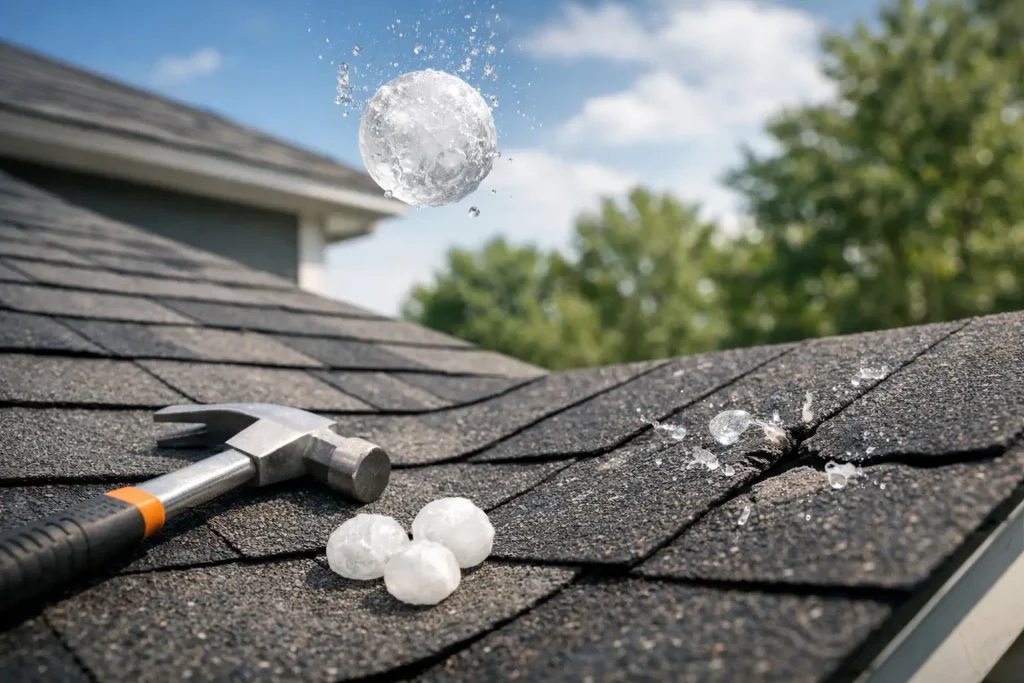
A Utah hailstorm can leave a roof looking almost unchanged from the driveway while causing damage that shortens its life. Bruised asphalt, loosened granules, and small fractures may not create an immediate leak, but they can weaken the shingles that protect your home through the next storm. That is why many homeowners ask about the benefits of impact resistant shingles when it is time for a roof replacement.
Impact resistant shingles are designed to stand up better to hail and flying debris than standard asphalt shingles. They are not indestructible, and they are not the right answer for every budget or roof. But for homeowners in areas that see frequent hail, wind, and fast-changing weather, they can be a practical investment in fewer repairs and greater peace of mind.
What Makes a Shingle Impact Resistant?
Most impact resistant asphalt shingles are tested against the UL 2218 standard, which measures how a roofing product performs when struck by steel balls meant to simulate hail impact. Products that earn a Class 4 rating, the highest rating in this test, have shown the strongest resistance to cracking under that controlled impact test.
Manufacturers achieve this performance in different ways. Some use a reinforced asphalt layer, while others use a polymer-modified asphalt that is more flexible when struck. The goal is to help the shingle absorb impact instead of cracking or losing a heavy amount of protective granules.
A Class 4 rating is a useful benchmark, but it does not mean a roof cannot be damaged. Large hail, severe wind, improper installation, aging materials, and roof conditions all matter. It does mean the shingles have been engineered and tested for better impact performance than conventional options.
Benefits of Impact Resistant Shingles for Utah Homes
The most valuable benefit is simple: a roof that is more prepared for the weather that can hit Utah neighborhoods. Hail can develop quickly, especially during spring and summer storm seasons, and wind-driven debris can affect homes year-round.
Better protection from hail damage
Traditional asphalt shingles can crack or lose granules after hail strikes. Granules are not just decorative. They help shield the asphalt from UV exposure and everyday weathering. When enough granules are displaced, the shingle can deteriorate faster.
Impact resistant shingles are built to reduce the likelihood of that damage. They may help a roof keep its protective surface after a moderate hail event, reducing the chance that a homeowner will need a premature replacement. This can be especially helpful for homes in exposed locations with limited tree cover or properties that have experienced repeated storm claims.
Fewer repair concerns after storms
No homeowner wants to climb a ladder after every storm or wonder whether a few dark spots on the roof mean trouble. A stronger shingle can reduce the risk of small impacts turning into cracks, splits, or weak points that require repair.
That does not eliminate the need for a professional inspection after a significant hailstorm. Storm damage can affect flashing, vents, gutters, and other roof components even when shingles look fine. Still, choosing a material that is less prone to impact damage can mean fewer roofing concerns over the life of the roof.
Potential insurance savings
Some insurance carriers offer discounts for homes with qualifying Class 4 impact resistant roofing. The discount and eligibility requirements vary by carrier, policy, location, and roofing product, so homeowners should verify the details with their insurance provider before making a decision.
The savings should not be the only reason to upgrade. A discount may change at renewal, and not every policy offers one. However, a potential premium reduction can help offset part of the upfront cost over time, particularly when combined with the lower likelihood of storm-related repairs.
Longer-lasting appearance
A roof takes up a large portion of your home’s exterior. When a shingle sheds granules or develops visible hail marks, it can make a relatively young roof look worn out. Impact resistant shingles can help preserve a more consistent appearance by resisting surface damage that often follows storms.
Many of these shingles are also available in architectural styles and colors that offer more dimension than basic three-tab shingles. Homeowners do not have to choose between a stronger roof and a roof that complements their siding, gutters, stone, or exterior paint.
More confidence during unpredictable weather
The value of a roof is not limited to the repair bills it may prevent. A durable roof helps protect the interior of your home, your belongings, and the time you would otherwise spend managing damage after a storm.
For busy families, that confidence matters. A quality roof replacement with impact resistant shingles can reduce the worry that comes with dark clouds, strong wind, and hail alerts. It is one more layer of protection for a home you have worked hard to maintain.
When the Upgrade Makes the Most Sense
Impact resistant shingles tend to make the most sense when you are already planning a roof replacement. Adding the upgrade during a full installation is usually more cost-effective than replacing a newer roof solely because a stronger shingle is available.
They are also worth serious consideration if your home has a history of hail claims, sits in an area exposed to wind and open weather, or has experienced repeated shingle repairs. Property owners who plan to stay in their homes for several years may have more time to benefit from the material’s durability and any available insurance discount.
For rental properties and commercial buildings with sloped shingle roofs, reduced maintenance interruptions can be another advantage. Fewer storm-related repairs can help owners avoid tenant disruption and protect long-term operating costs.
The Trade-Offs to Consider
Impact resistant shingles generally cost more than standard asphalt shingles. The exact difference depends on the manufacturer, style, roof size, tear-off needs, ventilation requirements, and the condition of the roof deck. For some homeowners, a quality standard architectural shingle is the better fit for the available budget.
It is also important to compare the full roofing system, not only the shingle label. Underlayment, ice and water protection, flashing, ventilation, workmanship, and proper fastening all play a role in how a roof performs. A premium shingle installed poorly will not provide the protection a homeowner expects.
Color can be another consideration. Darker shingles may show some scuffing or residue after storms more noticeably than lighter colors, even if the material remains intact. Reviewing real samples and discussing the options with an experienced contractor can help you choose a style that fits both your home and your priorities.
How to Choose the Right Impact Resistant Shingle
Start by asking whether the product has a UL 2218 Class 4 rating and request documentation for the specific shingle you are considering. Ratings are product-specific, so a manufacturer’s name alone does not confirm that every line meets the same impact standard.
Then look beyond the rating. Consider the manufacturer’s warranty, the expected wind rating, available colors, ventilation needs, and whether your insurer recognizes the product for a possible discount. If you are filing a storm damage claim, keep your insurance company involved and make sure you understand what your policy covers before work begins.
A free roof inspection can give you a clearer starting point. An experienced local roofer can assess whether your current roof has active hail damage, explain whether repair or replacement makes more sense, and provide straightforward pricing for standard and impact resistant options.
Your roof should fit the weather, your budget, and the way you plan to care for your home. If hail protection is high on your list, Big West Roofing can help you compare your options with clear answers and workmanship built to protect what matters most.