
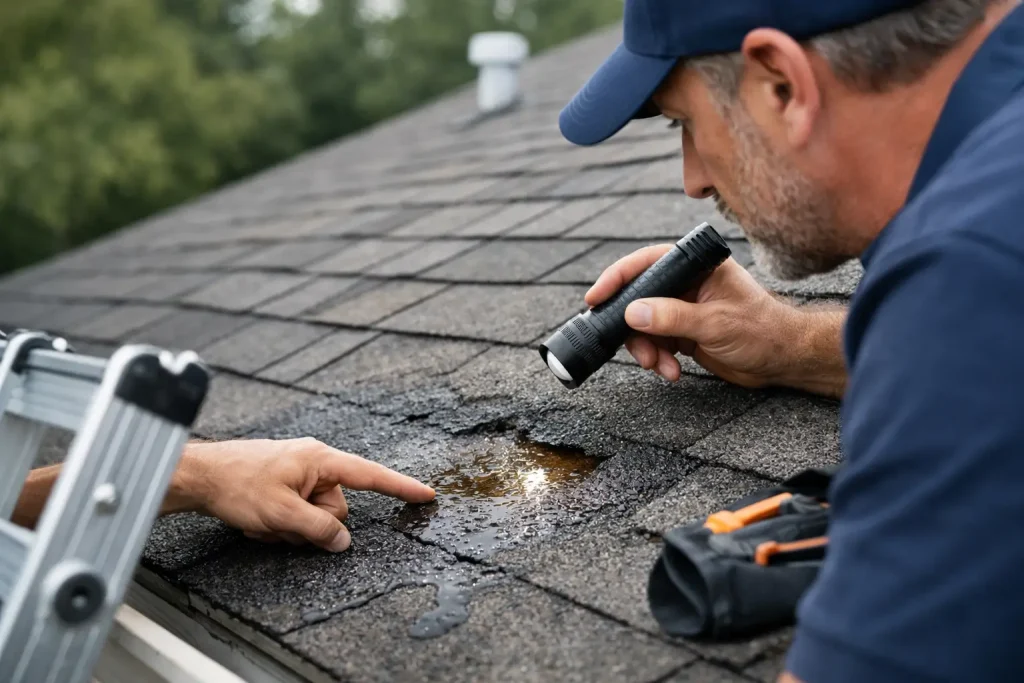
A roof leak rarely announces itself with a dramatic drip in the middle of the room. More often, it starts with a faint stain on the ceiling, a musty smell in the attic, or shingles that do not look quite right after a Utah storm. If you are wondering how to spot roof leaks before they turn into drywall damage, insulation problems, or mold, the key is knowing where leaks usually show up first and what warning signs homeowners tend to miss.
In Utah, roofs take a beating from snow, ice, wind, hail, and strong summer sun. That means a small problem can grow fast, especially around flashing, vents, valleys, and older shingles. Catching the issue early can save money, protect your home, and make repairs much simpler.
As a roofing company in Saratoga Springs, Big West Roofing understands the ins and outs of roof leaks, and when it’s time to repair or replace. So continue reading and learn today how to spot roof leaks before it turns into a big problem!
How to spot roof leaks inside your home
The first signs of a roof leak often show up indoors, but not always directly under the damaged area. Water can travel along rafters, decking, and insulation before it becomes visible, so the stain you see may not be exactly where the roof is failing.
Ceiling stains are one of the most common warning signs. These usually appear as yellow, brown, or copper-colored spots that slowly grow over time. If the paint starts bubbling or the drywall looks soft, there is a good chance moisture has been getting in for a while.
Walls can also tell you a lot. Peeling paint, warped trim, and discolored drywall near the top of an exterior wall often point to moisture intrusion from above. In upper-floor bedrooms, hallways, and bonus rooms, these signs should never be ignored.
A musty odor is another clue homeowners sometimes overlook. If your attic, closet, or upstairs room smells damp even when nothing looks wet, trapped moisture may be present. Roof leaks do not always create obvious puddles right away. Sometimes the first sign is simply that the air smells off.
If you have attic access, take a careful look during daylight hours. Dark spots on the wood, wet insulation, mold growth, or even tiny beams of sunlight coming through the roof deck can all point to trouble. If you check after a storm, you may be more likely to catch fresh moisture before it dries.
Exterior signs a roof may be leaking
You do not need to climb onto your roof to notice that something is wrong. In fact, for most homeowners, a ground-level visual check is the safer and smarter choice.
Start by looking for missing, cracked, or curling shingles. Shingles that are lifting or appear uneven can let water get underneath, especially during wind-driven rain. On an older roof, bald spots where granules have worn away may also signal that the shingles are nearing the end of their life.
Flashing problems are another major cause of leaks. Flashing is the metal material installed around chimneys, skylights, vents, and roof transitions. If it looks rusted, bent, loose, or separated from the roof surface, water can work its way into those gaps.
Pay close attention to roof valleys, where two roof slopes meet. These areas handle a lot of water runoff, so they are especially vulnerable. Debris buildup in a valley can trap moisture and push water where it does not belong.
Your gutters can also give away roof trouble. If you notice a large amount of shingle granules collecting in the gutters, that may mean the roof surface is wearing down. Overflowing gutters or downspouts can also force water back toward the roofline, which increases the risk of leaks along the edges and fascia.
The spots where roof leaks usually begin
Some parts of a roof fail more often than others. Knowing the usual problem areas makes it easier to inspect your home with purpose.
Roof penetrations are a common starting point. Plumbing vents, exhaust vents, skylights, satellite mounts, and solar attachments all create openings that must be sealed correctly. If the sealant cracks or the flashing shifts, water can get in.
Chimneys are another frequent issue. The flashing around a chimney expands and contracts with weather changes, and mortar can deteriorate over time. What looks like a small gap from the outside can allow a surprising amount of moisture inside.
Ice dams can also cause leaks in colder months. When snow melts and refreezes at the roof edge, water may back up under the shingles. Homeowners sometimes assume winter moisture is from condensation, but roof leaks related to ice are very real in Utah.
Then there is the simple factor of age. Even a well-installed roof will not last forever. If your roof is older and you are seeing repeated small issues, those are often signs that the system as a whole needs attention rather than another temporary patch.
When leaks are hardest to identify
One of the trickiest parts of roof leak detection is timing. Some leaks only show up under very specific conditions.
A leak may appear during wind-driven rain but not during a calm storm. It may happen when snow melts quickly, but not when temperatures stay below freezing. It may only show up after several days of steady moisture. That is why homeowners sometimes think the problem is gone, only to see it return weeks later.
Intermittent leaks are still leaks. If you see a stain once, even if it dries out, the source should be investigated. Water usually does not enter a home by accident just one time.
What you can check safely and what to leave to a pro
There is a difference between being proactive and putting yourself at risk. You can absolutely inspect ceilings, attic spaces, gutters, and the roofline from the ground. You can take photos after a storm and note where stains appear or whether they are growing.
What you should not do is get on a steep, wet, icy, or visibly damaged roof. That is where many homeowners turn a repair issue into a safety issue. Roof leak detection often requires close inspection of flashing details, underlayment problems, and areas that are not obvious without experience.
A professional inspection is especially important if you have a two-story home, storm damage, a leak near electrical fixtures, or signs of sagging. In those cases, the goal is not just finding the water entry point. It is also checking how far the damage has spread.
How to spot roof leaks after a storm
After hail, heavy rain, or strong wind, it is smart to do a quick check the same day if conditions are safe. Look at your ceilings, attic, and exterior roofline. Watch for fresh stains, fallen shingles, dented metal, clogged valleys, or debris impact near flashing and vents.
If your home suddenly develops a drafty feeling in the attic or upper floor after a storm, that can also be a clue. Wind damage sometimes loosens roofing materials before water damage becomes visible.
This is where local experience matters. Utah weather can create roofing issues that are easy to miss if you are only looking for obvious holes. Hail bruising, lifted shingles, and flashing separation may not stand out from the driveway, but they can still lead to leaks over time.
Don’t wait for a small leak to become a big repair
Many homeowners put off calling because the leak seems minor. A small stain does not feel urgent when life is busy. But roof leaks tend to spread quietly. Water can damage decking, insulation, drywall, paint, framing, and even flooring before the full problem is visible.
The good news is that early action usually gives you more options. A targeted repair is far easier on your budget than waiting until the damage affects multiple parts of your home. If the leak is tied to storm damage, acting quickly also helps when documenting the issue for insurance purposes.
If you have noticed even one of these warning signs, a professional roof inspection can give you clarity. Big West Roofing works with homeowners across Utah to identify roof problems early, explain the next steps clearly, and make repairs before more damage sets in.
Your roof does not need to be pouring water to need attention. If something feels off, it is worth checking now rather than discovering later how far that moisture traveled. Get in touch with Big West Roofing today for your free roof inspection!