
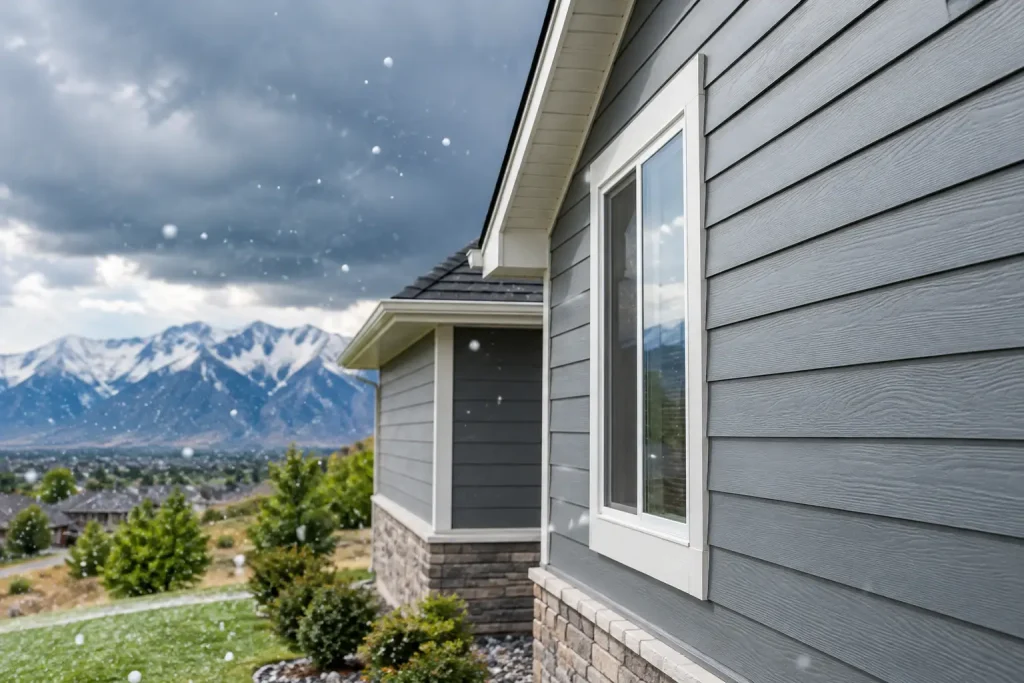
A Utah hailstorm can leave more than a few dents in the gutters. It can crack siding, expose wall sheathing to moisture, and turn a small exterior concern into an insurance claim. Choosing the best siding for hail resistance means looking beyond color and curb appeal to find a material that can handle the impact, temperature swings, and wind that come with Wasatch Front weather.
For many homeowners, fiber cement and quality engineered wood are the strongest all-around choices. Metal siding can also perform very well, while vinyl may be a practical option when budget and product quality are carefully considered. The right answer depends on your home, your neighborhood’s storm exposure, and how much maintenance you want to take on over time.
What Makes Siding Resist Hail?
Hail resistance is not just about whether a panel is hard. A hard material may resist a small impact but crack under a larger, direct hit. A more flexible material may avoid cracking but dent or puncture. The goal is siding that can absorb or withstand impact without losing its ability to keep water away from the wall system.
Several details affect real-world performance. Material thickness, panel profile, backing, fastening, and installation all matter. So does age. Siding that has become brittle from years of sun exposure can be much more likely to crack during a storm than newer material from the same product line.
When comparing products, ask for manufacturer documentation on impact testing rather than relying on a broad label such as “hail resistant.” Class 4 impact ratings are commonly discussed for roofing, but siding products use different tests and standards. A qualified exterior contractor can help you compare the actual product specifications, not just marketing language.
Best Siding for Hail Resistance: Material by Material
Fiber cement siding
Fiber cement is often one of the best choices for Utah homeowners seeking a durable, low-maintenance exterior. Made from cement, sand, cellulose fibers, and water, it has a solid feel and does not become as brittle as standard vinyl can in cold conditions. It is also noncombustible, resists rot and insects, and holds paint well when properly maintained.
Its main advantage in hail country is its strength. Quality fiber cement can handle ordinary hail better than many lightweight siding options. However, it is not indestructible. Very large hail or a sharp impact can chip or crack a board, especially at edges. Proper installation is critical because incorrect fastener placement, poor clearances, or unsealed cuts can shorten its service life.
Fiber cement typically costs more than basic vinyl, and installation requires experienced crews due to the weight and cutting requirements. For homeowners who plan to stay in their home and want dependable long-term protection, that upfront investment can make sense.
Engineered wood siding
Engineered wood siding gives homeowners the warmer look of wood with added strength and weather protection. It is manufactured from wood strands and treated resins, then finished with a protective overlay. Many premium products are designed for high-impact performance and can be an excellent fit for homes that need both curb appeal and storm durability.
Compared with traditional wood, engineered wood is less likely to split, warp, or attract pests when it is installed and maintained correctly. It can also be easier to repair than fiber cement if one section is damaged. Its impact resistance varies by product, so ask about the specific panel thickness, warranty, and tested performance before making a decision.
The trade-off is maintenance. Though engineered wood is highly durable, paint, caulking, and trim details still need periodic attention. Any damaged coating or exposed edge should be addressed quickly to keep moisture from reaching the material underneath.
Steel siding
Steel siding is a serious contender for hail-prone properties. It will not crack like vinyl or fiber cement, and it offers excellent resistance to wind, fire, insects, and moisture. Steel can be especially appealing for modern homes, mountain properties, garages, commercial buildings, and homeowners who prefer a clean, durable finish.
The concern with metal is denting. Smaller hail may leave little or no visible mark, but larger stones can dent thinner panels. Thicker-gauge steel and textured profiles can help reduce the appearance of dents, while a quality coating helps protect against corrosion if the surface is scratched.
Steel siding can have a higher initial cost, and matching a damaged panel years later may be difficult if the color has faded or a profile is discontinued. Still, for homeowners who want exceptional durability without worrying about rot, steel is worth a close look.
Vinyl siding
Vinyl remains popular because it is affordable, widely available, and easy to maintain. It performs well in normal weather, but its hail performance is more variable than fiber cement, engineered wood, or steel. Lower-grade vinyl may crack or puncture during a hard impact, particularly in colder temperatures when the material becomes less flexible.
That does not mean every vinyl option is a poor choice. Heavier, premium vinyl products are more durable than thin entry-level panels, and some are specifically built for better impact resistance. Insulated vinyl can add support behind the panel, although it should not be treated as a guarantee against hail damage.
Vinyl may be a reasonable option when budget is the leading concern, especially if you choose a quality product and have it installed correctly. If your area has seen repeated large-hail events, it is wise to compare the long-term replacement risk against the savings at installation.
Traditional wood siding
Natural wood offers character that is hard to duplicate, but it is generally not the first choice for hail resistance. Depending on the species, thickness, and condition, wood can dent, split, chip, or crack when hit. It also needs ongoing painting or staining to guard against moisture.
Well-maintained cedar or wood siding can still be a beautiful choice for the right home. Just go into the decision with clear expectations: it requires more care, and it may need more frequent repairs after severe weather than modern alternatives.
Do Not Overlook Installation and Wall Protection
The strongest siding product can underperform when it is installed poorly. Gaps around windows, improperly flashed penetrations, loose panels, and missing weather-resistive barriers can allow water behind the siding after a storm. Once moisture gets into the wall assembly, hidden damage can be more expensive than the visible crack or dent outside.
A professional installation should include correct flashing around windows and doors, properly placed fasteners, adequate expansion space where required, and careful sealing at trim transitions. For replacement projects, the crew should also inspect the sheathing and house wrap before covering the wall again. Hail can damage more than the siding itself.
Color and profile deserve some thought as well. Dark, smooth metal panels can make dents easier to see in certain light. Textured finishes, lighter colors, and lap profiles may hide minor cosmetic impacts better. This does not change a product’s structural performance, but it can affect how satisfied you are after a storm.
How Utah Homeowners Should Choose
Start with the storm history around your property. Homes in open areas, near foothills, or along wind-exposed corridors may need more impact resistance than a sheltered neighborhood. Consider the roof at the same time. If hail has damaged shingles, gutters, fascia, and siding, coordinating the exterior work can provide a more consistent finish and prevent missed damage.
Next, balance your budget against how long you expect to own the home. Vinyl may be the practical short-term choice. Engineered wood can offer a strong balance of appearance and impact performance. Fiber cement is a proven long-term option for many homes, while steel may be the best fit when maximum durability and a modern exterior are priorities.
Finally, review your insurance policy before a storm happens. Coverage for cosmetic damage, deductibles, depreciation, and matching materials can vary. After hail, take photos from the ground, avoid climbing onto the roof or ladder work, and schedule a professional inspection. Damage is not always obvious from the driveway.
If you are weighing siding replacement after a storm, Big West Roofing can help you assess the full exterior, explain your material options clearly, and identify damage that may support an insurance claim. A well-chosen siding system should give your home more than a fresh appearance – it should give your family greater confidence when the next Utah storm rolls through.