
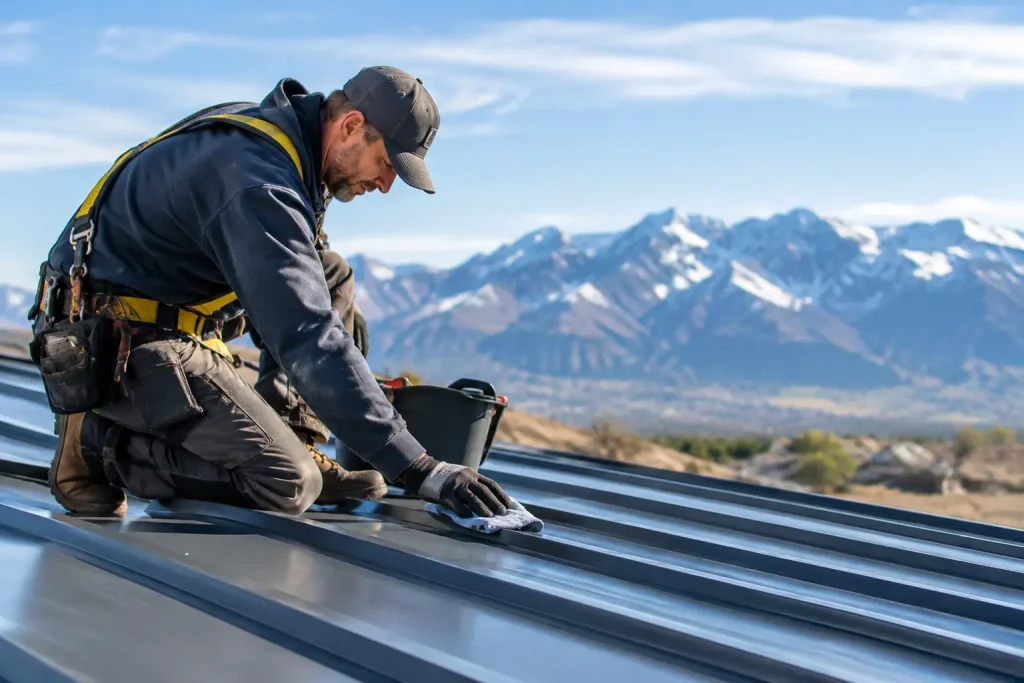
A metal roof can handle a lot, but Utah weather gives it plenty to prove. Heavy snow, spring runoff, strong winds, hail, and intense summer sun can all expose small issues before they become visible from inside the home. Knowing how to maintain metal roofing helps you protect a long-lasting investment, avoid surprise leaks, and keep your home looking cared for year after year.
Metal roofing generally requires less upkeep than many other roofing materials. That does not mean it should be ignored. A few routine checks, paired with prompt professional repairs when needed, can help your roof perform as designed for decades.
Start With Safe, Regular Visual Inspections
Most homeowners can spot early warning signs from the ground. Walk around the home a few times each year, especially after a major wind, hail, or snowstorm. Look for panels that appear lifted, bent, loose, or out of alignment. Pay attention to flashing around chimneys, vents, skylights, and roof transitions, since these areas handle a lot of water and are common places for leaks to begin.
You should also look for scratched paint, exposed metal, rust-colored staining, loose screws, and sealant that appears cracked or pulled away. On a standing-seam roof, fasteners may be hidden, but seams and edge details can still show signs of movement. On exposed-fastener metal panels, a loose or deteriorated screw washer deserves attention before water finds its way beneath the panel.
Avoid walking on the roof unless you know the correct path, have the right safety equipment, and understand the panel system. Metal can be slippery, particularly with dust, rain, frost, or morning dew. A ground-level inspection or professional roof inspection is the safer choice for most homeowners.
Keep the Roof Clear of Debris
Leaves, pine needles, branches, and windblown debris tend to gather in valleys, behind chimneys, around vents, and near gutters. Metal itself does not absorb moisture, but trapped debris can hold water against finishes, block drainage, and create conditions where corrosion may eventually develop.
Use a soft broom or low-pressure water only if it can be done safely from an appropriate location. Do not use abrasive tools, harsh chemicals, or a pressure washer close to panel seams, flashing, or fasteners. High pressure can force water into areas where it does not belong and may damage protective coatings.
Tree limbs deserve attention, too. Branches rubbing against a metal roof can scratch the finish over time. Trim back limbs that touch the roof or hang directly above it, but use a qualified tree professional for large, high, or difficult branches.
Clean Gutters and Protect Drainage Paths
A roof sheds water well only when the gutters and downspouts can carry it away. Clogged gutters can cause water to back up at the roof edge, spill near the foundation, and contribute to ice buildup in winter. This is especially relevant in Utah, where rapid temperature changes can turn daytime snowmelt into overnight ice.
Clean gutters in spring and fall at a minimum. Homes near mature trees may need more frequent cleaning. Check that downspouts are securely attached and direct water away from the house. If you notice water running behind gutters, overflowing at one spot, or staining fascia boards, have the system evaluated. The issue may be a simple blockage, but it can also point to a gutter slope or flashing problem.
Watch Closely After Storms
Metal roofs are known for wind and hail resistance, yet severe weather can still damage panels, coatings, flashing, fasteners, and sealant. After a storm, check your yard for fallen branches, examine gutters for dents, and look for obvious changes to the roof from the ground.
Hail damage is not always dramatic. Small dents may be largely cosmetic, while larger impacts or damage near seams and penetrations can affect performance. Wind can loosen trim or flashing without pulling an entire panel free. If your roof has been through a strong storm, a professional inspection provides a clear picture of its condition and creates documentation that may be useful for an insurance claim.
Do not wait for a ceiling stain to take storm damage seriously. By then, moisture may already have affected insulation, decking, or interior finishes.
Manage Snow and Ice Carefully
Snow on a metal roof is normal, and metal’s smooth surface often helps it shed naturally. The trade-off is that accumulated snow can release quickly when temperatures rise. Snow guards, when properly designed and installed for the roof system, can help control snow movement above entryways, walkways, decks, and equipment.
Never chip ice from a metal roof with a shovel, axe, or metal rake. It is easy to scratch protective finishes, bend panels, or damage flashing. If ice dams form repeatedly near eaves, the root cause may involve ventilation, insulation, heat loss, or drainage. The best fix depends on the home, not just the roof surface.
If heavy snow appears to be placing unusual stress on the roof, or if you see ice backing up around vents and valleys, call a roofing professional. Safe snow removal is not a job to improvise from a ladder.
Address Scratches, Rust, and Loose Hardware Early
A quality metal roof has protective coatings designed to resist fading and corrosion. Still, deep scratches from branches, debris, or improper work can expose bare metal. A small scratch may not be urgent, but it should be assessed and touched up with a manufacturer-approved product when appropriate. Using the wrong paint or coating can create a mismatched appearance or interfere with warranty requirements.
Rust is another issue that should be handled early. Surface discoloration near a cut edge, fastener, or flashing detail may be repairable before it spreads. Widespread corrosion, however, may indicate an installation issue, incompatible materials, poor drainage, or a roof nearing the end of its useful service life.
For exposed-fastener systems, fasteners can loosen as panels expand and contract through changing temperatures. They should not simply be tightened at random. Over-tightening can crush the washer and create a leak point, while under-tightening leaves an opening. A trained roofer can identify which fasteners need replacement and whether the surrounding panel or sealant needs attention.
Be Careful With Roof Penetrations and Other Trades
Many metal roof leaks begin after another project takes place. Satellite installations, solar work, new vents, plumbing repairs, chimney work, and HVAC additions can all involve roof penetrations or foot traffic. Every penetration needs the correct flashing detail for that specific metal roofing system.
Before any contractor works on your roof, make sure they understand metal roofing. A shortcut that might be acceptable on another roof type can cause ongoing problems on metal panels. Ask how they will protect the finish, seal penetrations, and preserve drainage paths. Keep records of the work, including photos and warranty information.
Solar can be an excellent fit for many Utah homes, but mounting methods matter. The installation should be planned around seams, panel layout, flashing, and the roof manufacturer’s requirements. Coordinating roofing and solar work from the beginning helps prevent unnecessary penetrations and future repairs.
Schedule a Professional Inspection Each Year
A yearly inspection is one of the simplest ways to maintain a metal roof with confidence. A roofing professional can safely examine seams, flashing, fasteners, panel movement, sealants, gutters, and areas that are difficult to see from the ground. This is also a good time to discuss small concerns before they turn into a larger repair.
Annual service is particularly worthwhile for older roofs, homes exposed to frequent wind, properties near trees, and commercial buildings with rooftop equipment. It also gives homeowners a documented maintenance history, which can be helpful when selling the property or reviewing a storm-related insurance claim.
If you notice a leak, missing trim, loose panels, rust, or damage after a storm, do not put off the call. Big West Roofing can provide a clear, honest inspection and explain whether your metal roof needs a minor repair, maintenance work, or a more involved solution. A little attention at the right time can keep a dependable roof doing its job through every Utah season.