
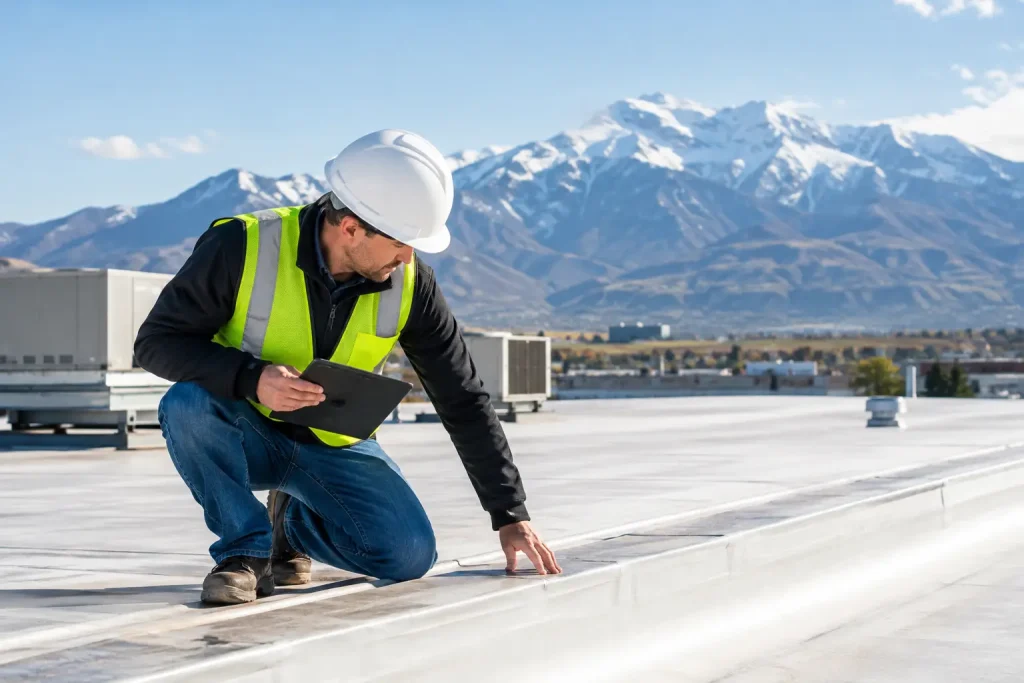
A leak above a tenant space, a loose membrane seam, or storm damage on a flat roof can turn into a business interruption fast. This commercial roofing contractor checklist helps Utah property owners ask the right questions before signing a contract, so the repair or replacement protects the building, the people inside it, and the budget.
Commercial roofing is not a one-size-fits-all service. A contractor may be a good fit for an emergency repair but not for a large replacement with complicated drainage, rooftop equipment, tenant access, or phased work. The goal is not simply to find the lowest number. It is to find a qualified local team that can clearly explain the work, perform it safely, and stand behind the result.
Start With Experience That Matches Your Roof
Ask what kinds of commercial roofs the contractor works on most often. Membrane systems, metal roofing, modified bitumen, low-slope roofs, and roof coatings each require different installation methods, materials, and repair approaches. Experience with residential shingles alone does not automatically translate to experience on a commercial building.
A qualified contractor should be able to look at your roof and explain what they see in plain language. That includes the condition of the roofing surface, flashing, drains, penetrations, edge metal, seams, and areas around HVAC units or other rooftop equipment. They should also explain whether a targeted repair makes sense or whether the roof is nearing the point where replacement is the better long-term investment.
Utah weather makes this conversation especially important. Snow loads, freeze-thaw cycles, high winds, intense summer sun, and hail can each affect a roof differently. Ask whether the recommended system and repair details are appropriate for the building’s exposure, slope, drainage, and expected use.
Verify Licensing, Insurance, and Safety Practices
Before comparing materials or prices, verify the basics. A reputable commercial roofer should readily provide proof of current licensing as required for the work, general liability insurance, and workers’ compensation coverage. Do not assume these protections are in place because a proposal looks professional.
Insurance matters because commercial roofing carries real risks. If a worker is injured or the building is damaged during the project, proper coverage helps protect everyone involved. Ask for documentation and take time to review it. If something is unclear, call the insurance provider listed on the certificate to confirm the policy is active.
Safety deserves the same attention. Commercial roofs often involve greater heights, open edges, equipment, traffic below, and occupied spaces beneath the work area. Ask how the crew will protect employees, tenants, visitors, landscaping, vehicles, and building entrances. A professional contractor should have a site-specific plan for access, fall protection, debris control, and daily cleanup.
Use This Commercial Roofing Contractor Checklist Before Hiring
A detailed proposal is one of the strongest signs that a contractor has inspected the property carefully. It should do more than state a total price and a general description such as “roof repair.” You need to understand what is included, what may change, and who is responsible if hidden damage is found.
Before approving work, make sure you can answer these questions:
- Has the contractor inspected the roof in person and identified the source of the problem?
- Does the written scope list the roofing system, materials, affected areas, flashing, drainage work, and cleanup?
- Are permits, disposal, delivery, site protection, and any needed temporary weather protection addressed?
- Does the proposal explain how rotten decking, wet insulation, or other concealed conditions will be documented and priced?
- Are project timing, payment schedule, warranty terms, and the primary point of contact clearly stated?
If a contractor cannot answer these questions clearly before work begins, it will be harder to get clarity once the project is underway. You should never feel rushed to sign a vague agreement because the contractor says the price is only good today.
Compare Bids by Scope, Not Just Price
Two bids can differ by thousands of dollars while describing what appears to be the same job. Often, the difference is in the details. One contractor may include removal and replacement of wet insulation, new flashing at penetrations, proper edge metal, or additional drain work. Another may exclude those items, use a thinner material, or leave the costs buried in allowances.
Ask every bidder to explain the roof assembly they are proposing. For a replacement, that may include tear-off or recover options, insulation, cover board, membrane type and thickness, seam treatment, flashing, and termination details. For repairs, it should identify the exact areas to be addressed and the repair method being used.
The lowest bid can be a smart choice if the scope is complete and the contractor has the right experience. But a low number is not a savings if it skips the work that prevents the next leak. On the other hand, the most expensive estimate is not automatically the best either. A trustworthy contractor can explain why their recommendation costs what it does and offer practical options when available.
Ask About Materials, Warranties, and Maintenance
A commercial roof warranty has value only when you understand what it covers. Ask whether the warranty is provided by the contractor, the manufacturer, or both. Find out how long it lasts, what maintenance is required, and what circumstances could limit coverage.
Material warranties and workmanship warranties are not the same. A manufacturer may cover a product defect, while the contractor’s workmanship warranty addresses installation-related issues. You should also ask whether the proposed system qualifies for a manufacturer-backed warranty and whether the contractor is approved to install that system.
Maintenance is part of protecting your investment. Roof drains can clog, sealants around rooftop penetrations can age, and storm debris can create standing water. For many properties, a scheduled inspection after winter and after major storms can catch smaller problems before they reach the interior. A good contractor will offer useful maintenance guidance without using fear to pressure you into unnecessary work.
Evaluate Communication Before the Project Starts
The way a contractor communicates during the estimate process often tells you what the project experience will be like. Are calls returned promptly? Do they explain options without talking over you? Do they provide photos, measurements, or clear notes from the inspection? Are they honest when an answer depends on opening the roof or reviewing building conditions?
For occupied commercial properties, communication needs to go beyond the property owner. Ask how the crew will coordinate with tenants, managers, maintenance staff, and other trades. If the roof has solar panels, HVAC equipment, satellite systems, or delicate landscaping below, confirm who will coordinate that work and whether any specialists are needed.
You should also know who will manage the job on site. A clear point of contact can help resolve questions about access, noise, deliveries, weather delays, and change orders before they become frustrations.
Watch for Red Flags
Some warning signs are easy to spot. Be cautious with contractors who demand a large upfront payment, will not provide written documentation, pressure you to make an immediate decision, or offer to handle insurance in ways that sound misleading. You should also be wary of anyone who diagnoses a major replacement without a thorough inspection.
Another red flag is a proposal that promises a permanent fix without identifying the cause of the leak. Water can travel beneath roofing materials, around curbs, and along structural components. The stain inside the building is not always directly below the roof entry point. A careful inspection and clear diagnosis matter.
Local reputation is worth considering as well. Read reviews with an eye for patterns: punctuality, jobsite cleanliness, communication, response after the sale, and how concerns were handled. A family-run local contractor such as Big West Roofing should be willing to earn trust through straightforward answers, quality workmanship, and a clear plan for your property.
Make the Final Decision With Confidence
Once you have narrowed the options, review the written scope one more time and make sure your questions have been answered. Confirm the start window, expected duration, payment terms, access needs, and what happens if weather changes the schedule. Keep copies of the contract, warranty documents, photos, invoices, and any approved change orders.
The right commercial roofing contractor will not make a complex project feel confusing. They will help you understand the condition of your roof, give you realistic options, and treat your building with the same care they would expect for their own business. That kind of clarity is the best place to start when your roof needs attention.