
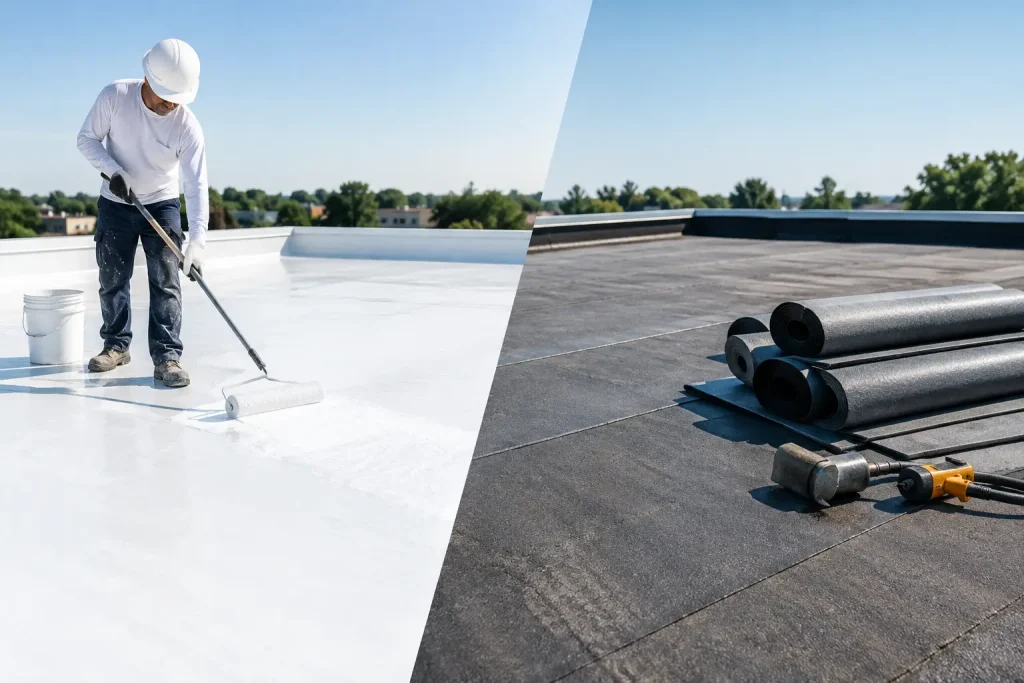
A roof can look tired long before it has reached the end of its useful life. That is why the choice between roof coating versus replacement deserves more than a quick price comparison. For Utah homeowners and commercial property owners, the right answer depends on the roof’s condition, material, age, leak history, and ability to handle snow, sun, wind, and seasonal temperature swings.
A coating may extend the life of a qualifying roof at a lower upfront cost. A replacement may be the safer investment when the roof system has widespread damage or hidden moisture. The goal is not to sell the biggest project. It is to choose the repair path that protects your property, budget, and peace of mind.
What a Roof Coating Actually Does
A roof coating is a liquid-applied protective layer installed over an existing roof surface. Once cured, it creates a continuous membrane designed to help seal the roof, reflect sunlight, and protect the underlying material from weather exposure.
Coatings are most commonly used on low-slope commercial roofs, including metal, modified bitumen, built-up roofing, and certain single-ply membrane systems. They can also be appropriate for some residential flat or low-slope sections. They are not a universal solution for every roofing material, particularly aging asphalt shingle roofs.
A quality coating system is much more than a coat of paint. Proper preparation matters. The roof needs to be cleaned, repaired, dried, and primed when required. Seams, penetrations, drains, flashings, and existing problem areas need careful attention before the coating goes on.
When the existing roof is structurally sound, a coating can help reduce UV wear and add years of service life. Reflective coatings may also help lower heat absorption during Utah’s hot, sunny months, which can be especially helpful for larger commercial buildings.
When Roof Coating Is the Smarter Choice
Roof coating is often worth considering when a roof has surface wear but remains fundamentally sound. The roof deck should be dry and stable, insulation should not be saturated, and the existing membrane or metal panels should still have reliable attachment.
A coating may make sense if the roof has minor cracking, aging surface protection, small repairable leaks, or fading caused by sun exposure. It can also be a practical option when a business wants to avoid the disruption of a full tear-off, provided the roof is still a good candidate.
For commercial property owners, reducing downtime can be a major benefit. A coating project is often less disruptive than replacement, although access, weather, roof complexity, and required repairs can affect the schedule. It may also reduce material sent to the landfill because the existing roofing system stays in place.
Cost is another reason property owners consider coating. In many cases, it costs less upfront than a full replacement. But lower cost does not automatically mean better value. If the roof needs repeated repairs or has moisture trapped below the surface, coating it can delay a problem rather than solve it.
Signs Your Roof May Be a Coating Candidate
A professional inspection may point toward coating when the roof has limited, repairable damage; the decking and insulation are dry; drainage is manageable; and the roof still has useful life remaining. Metal roofs with weathered finishes and sound panels can also be strong candidates when rust is treated and seams are properly sealed.
The key word is “candidate.” A coating should be selected based on the roof’s actual condition, not simply because it is less expensive than replacement.
When Roof Replacement Is the Better Investment
Replacement is usually the right call when damage reaches beyond the roof surface. If water has entered the insulation or deck, if leaks keep returning, or if the roof has multiple failing areas, a new roofing system can provide a more dependable long-term result.
For homeowners, replacement is often necessary when asphalt shingles are curling, cracking, losing granules heavily, or nearing the end of their expected service life. Missing shingles, soft spots, damaged flashing, and water stains inside the home all deserve prompt attention. A surface coating cannot repair rotten decking, failing underlayment, or storm damage beneath the shingles.
Commercial roofs may need replacement when the membrane is badly deteriorated, seams are failing across large areas, ponding water has caused extensive breakdown, or moisture scans show wet insulation. Installing a coating over trapped moisture can lead to adhesion failure and continued leaks.
Replacement also gives property owners the chance to correct underlying issues. That might include improving ventilation, upgrading insulation, repairing deck damage, correcting drainage, or choosing a material better suited to the building. For a Utah home exposed to snow loads, high winds, hail, and intense sun, those improvements can make a meaningful difference over time.
Roof Coating Versus Replacement: Cost Beyond the Quote
The initial proposal is important, but it should not be the only number guiding your decision. Roof coating generally costs less than a full replacement because it may avoid tear-off, disposal, and installation of a new roof system. It can be a responsible way to gain additional years from a roof that is still in good shape.
Replacement costs more because it addresses the entire roofing system. It may involve removing old materials, repairing the deck, replacing underlayment or insulation, and installing new flashing and roofing material. That larger investment can be easier to justify when it prevents ongoing repair bills, interior water damage, and unexpected failures.
Think about the likely cost over the next several years. A coating can be the better financial choice if it extends a sound roof’s life and reduces maintenance needs. Replacement can be the better value if the existing roof is already unreliable and likely to need frequent repairs.
Insurance may also affect the decision after hail or wind damage. Coverage depends on the policy, cause of loss, age of the roof, and the adjuster’s findings. Document damage quickly, keep records of repairs, and ask a knowledgeable roofing contractor to explain what they see before making a major decision.
Utah Weather Changes the Calculation
Utah roofs deal with more than one kind of weather stress. Summer sun can break down exposed materials over time. Winter snow and freeze-thaw cycles can worsen small cracks and create ice-related water intrusion. Wind and hail can damage shingles, metal panels, flashings, and membranes in a single storm.
That is why a visual inspection alone is not always enough. A roof may appear acceptable from the ground while hiding compromised seams, wet insulation, or damage around vents and penetrations. On low-slope roofs, professional moisture testing can be especially valuable before applying a coating.
Drainage also matters. Standing water can shorten the life of many roof systems and may limit which coating products are appropriate. If the roof’s slope, drains, scuppers, or gutters are not working properly, those issues should be addressed as part of the solution.
Questions to Ask Before You Decide
Before approving either option, ask what condition the deck and insulation are in, whether moisture testing is recommended, and how existing leaks will be repaired. You should also understand the expected service life of the proposed solution, what maintenance it requires, and what warranty coverage applies.
For a coating, ask whether the product is compatible with your existing roof material and whether all seams, flashing details, and penetrations will be reinforced. For replacement, ask what will happen if damaged decking or other concealed problems are found after tear-off. Clear answers help prevent unwelcome surprises.
A trustworthy contractor should explain why one option is recommended over the other in plain language. You should never feel pressured into replacement if targeted repairs or a coating can responsibly serve your roof. At the same time, you should not be sold a coating as a shortcut when the roof has reached the point where replacement is needed.
Start With a Clear Roof Assessment
The best decision starts with an honest inspection, not an assumption. Big West Roofing can assess visible damage, leak concerns, material condition, and storm-related issues, then explain whether repair, coating, or replacement makes the most sense for your property.
If your roof is aging, leaking, or showing signs of hail and wind damage, schedule an inspection before the next season adds to the problem. A clear assessment now can help you protect your home or building with the solution that truly fits.