
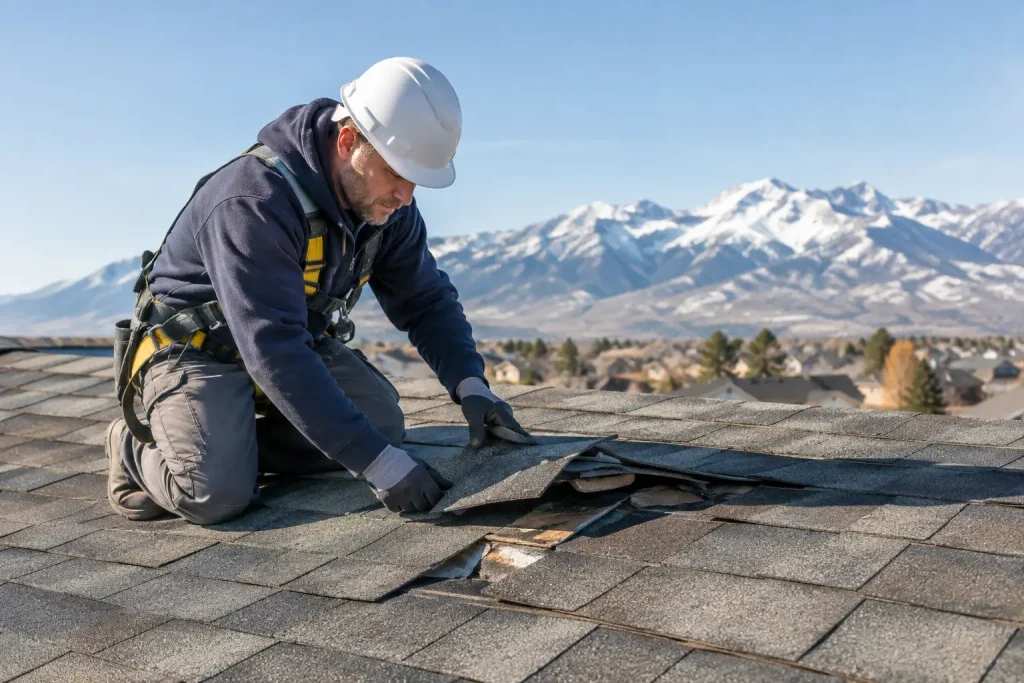
A few lifted shingles can look like a small problem from the driveway. After a strong Utah windstorm, though, that small gap can let water reach the underlayment, roof deck, insulation, and ceiling below. This wind damage roof repair example shows how a careful inspection and timely repair can prevent a larger, more expensive issue.
The details of every roof are different. Roof age, shingle condition, slope, previous repairs, and the extent of the storm all matter. Still, seeing how a typical repair moves from discovery to completion can help homeowners know what to expect and when to call for help.
A Wind Damage Roof Repair Example: From Loose Shingles to a Watertight Roof
Imagine a homeowner in northern Utah notices a few dark shingles in the yard the morning after a night of heavy wind. From the ground, the roof appears mostly intact. There is no ceiling stain yet, and no obvious hole. It would be easy to assume the missing shingles are only cosmetic.
During a professional roof inspection, however, the problem becomes clearer. Wind has lifted a section of shingles along the rear roof slope near a ridge line. Some shingles are creased, meaning the seal strip has broken and the shingles may no longer lie flat in future wind. Several exposed nails and a small section of damaged underlayment are also found beneath the lifted area.
This is a common wind pattern. Gusts catch an edge, work beneath the shingle, and weaken the seal. Once one shingle loosens, neighboring shingles can become more vulnerable. A roof may not leak immediately, but it has lost part of its first line of defense against rain, snowmelt, and wind-driven moisture.
Step 1: Inspect the Entire Roof, Not Just the Missing Shingles
A good repair starts with more than replacing the shingles that blew off. The roofer checks the affected slope, ridge caps, flashing around vents and chimneys, gutters, and nearby shingles for lifted edges or creases. The attic or interior may also be checked for moisture, staining, or daylight around penetrations.
In this example, the roof is about 12 years old and most of the shingles remain in serviceable condition. The decking is dry and solid. That matters because it supports a focused repair instead of a full replacement. If the shingles were brittle across the whole roof, or if there were widespread wind creases and active leaks, replacement could be the more dependable long-term choice.
The homeowner receives photos of the damaged area and a clear explanation of what was found. That documentation helps remove the guesswork. It also gives the homeowner useful information if they decide to ask their insurance carrier whether the damage may be covered.
Step 2: Protect the Roof Before More Weather Arrives
If rain or snow is expected before the scheduled repair, temporary protection may be needed. Depending on the damage, that can include securing loose materials or covering an exposed section to reduce the risk of water intrusion. Temporary measures are not a substitute for a complete repair, but they can help protect the home while the permanent work is arranged.
Fast action is especially valuable in Utah, where weather can change quickly. Wind damage that seems minor on a dry day may become a leak after the next storm. Homeowners should avoid climbing onto the roof themselves, particularly when shingles are loose or the surface is wet. A fall can turn a roofing concern into a serious safety emergency.
Step 3: Remove Damaged Materials and Repair the Roof System
For this repair, the crew carefully removes the wind-damaged shingles rather than simply nailing them back down. A shingle that has creased or lost its seal may look acceptable for a short time, but it can lift again in the next storm.
The damaged underlayment is replaced, and the crew checks the exposed roof deck before installing new materials. Because the deck is sound, no wood replacement is necessary. New shingles are then installed to match the existing roof as closely as possible, with proper fastening and overlapping so water is directed down and off the roof.
A color match can vary, especially when an older roof has faded in the sun. The goal is to create a secure, weather-resistant repair first. In many cases, a close visual match is available. When the existing shingle has been discontinued or is significantly weathered, homeowners should understand that a repaired section may be somewhat noticeable from certain angles.
Step 4: Check Flashing, Edges, and Cleanup
Wind does not only affect field shingles. It can loosen ridge caps, damage drip edge, pull at flashing, or shift metal around vents. These details matter because they protect the roof’s vulnerable transitions.
In this example, the vent flashing remains secure, but a section of ridge cap needs to be reset and properly fastened. The crew completes the repair, removes debris and stray nails, and performs a final visual check of the work area. The homeowner is shown what was repaired and advised to watch the interior after the next storm for any signs of moisture.
When Is Wind Damage a Repair Instead of a Replacement?
The right answer depends on the condition of the whole roof, not only the visible storm damage. A localized repair often makes sense when the roof still has useful life left, the damage is limited to one area, and the roof deck and surrounding materials are in good shape.
Replacement may be worth discussing when wind damage is spread across multiple slopes, shingles are brittle or losing granules throughout the roof, leaks have affected the decking, or the roof is already near the end of its expected service life. Insurance coverage, deductible amounts, and local building requirements can also affect the decision.
A trustworthy contractor should explain both paths without pressure. A lower upfront repair cost is helpful when the roof is otherwise sound. On the other hand, repeatedly patching an aging roof can cost more over time and leave homeowners facing another disruption sooner than expected.
What Homeowners Should Do After High Winds
Start with a safe ground-level walk around the property. Look for shingles, pieces of metal, granules near downspouts, bent gutter sections, or branches that have struck the roof. Inside, check upper-floor ceilings, attic spaces, and walls for fresh water marks or a musty odor.
Take clear photos of anything you find, including debris in the yard. Then schedule a professional inspection, even if there is no visible leak. Wind damage can hide beneath shingles or around roof penetrations where it is difficult to see from the ground.
If you plan to file an insurance claim, avoid throwing away damaged materials until you have taken photos and spoken with your carrier or contractor. A roofing professional can document storm-related conditions and help explain the repair scope, but the insurance company makes the final coverage decision.
Questions to Ask Before Approving the Repair
A repair estimate should make sense to you before work begins. Ask what damage was found, whether the deck and underlayment will be inspected, and whether the proposed repair addresses the cause of the problem instead of only the visible symptom.
It is also reasonable to ask about shingle matching, expected scheduling, cleanup, workmanship coverage, and what happens if hidden damage is discovered once materials are removed. Straight answers protect your budget and help prevent surprises during the project.
Big West Roofing provides free roof inspections and straightforward guidance for homeowners who need to understand storm damage, repair options, and possible insurance next steps. The goal is not to make a wind event more stressful. It is to help you make a confident decision based on the actual condition of your roof.
A loose shingle after a storm may be repairable, but waiting for a ceiling stain is rarely the best test. A prompt inspection can turn an uncertain roof problem into a clear plan for protecting your home before the next round of wind arrives.