
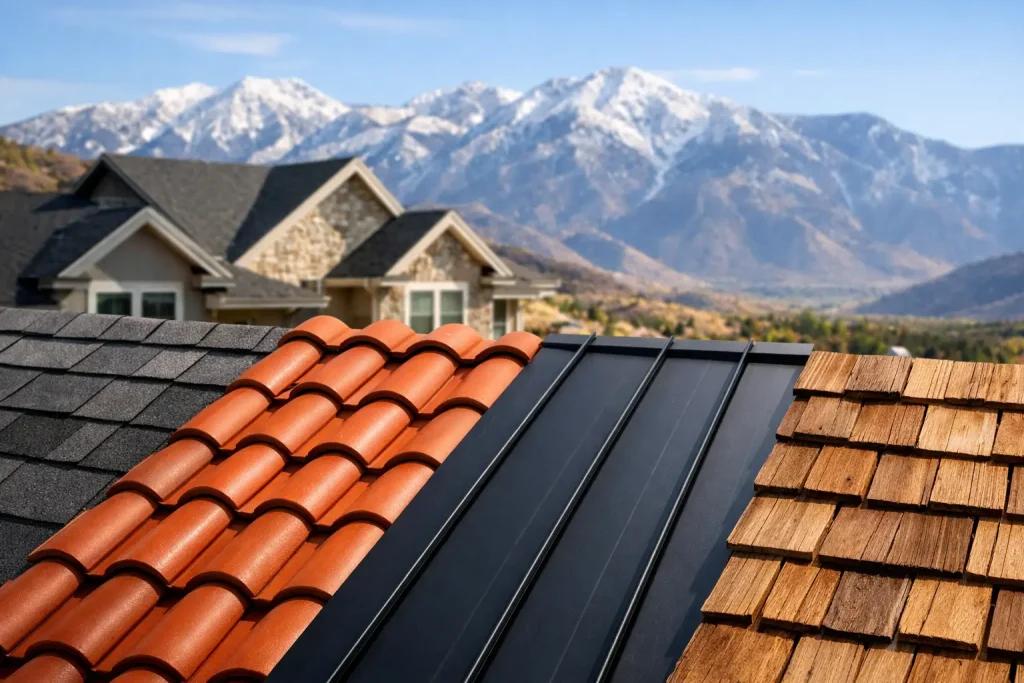
A Utah roof has to handle more than a little rain. It may face heavy snow along the Wasatch Front, intense summer UV exposure, high winds, hail, and sudden temperature swings in the same year. That is why choosing the best roofing materials for Utah homes is not simply about picking the color or the lowest bid. It is about selecting a system that fits your home, your budget, and the weather it will see for decades.
For many homeowners, asphalt shingles remain the right answer. For others, a metal roof or tile roof may offer better long-term value. The best choice depends on your roof’s slope, structure, neighborhood requirements, plans for the home, and the condition of the existing roof deck.
What a Utah Roof Needs to Handle
Utah’s climate puts different kinds of pressure on roofing materials. Winter snow can linger in shaded areas and create ice dams when warm air escapes from the attic. Spring and summer storms can bring wind-driven rain and hail. High elevation sunlight can gradually break down materials that are not designed for strong UV exposure.
Good installation matters just as much as the material itself. Proper underlayment, flashing around chimneys and vents, attic ventilation, and drainage at valleys and eaves all help a roof perform the way it should. A premium material installed poorly can still leak. A well-installed, quality shingle system can provide dependable protection for many years.
Best Roofing Materials for Utah Homes, Compared
Architectural asphalt shingles: the practical choice for most homes
Architectural asphalt shingles are the most common residential roofing material in Utah for good reason. They offer a strong balance of affordability, appearance, durability, and repairability. Compared with basic three-tab shingles, architectural shingles are thicker, dimensional, and generally better suited for wind and changing weather.
Homeowners also have plenty of color and style options, including shades that complement brick, stucco, siding, and mountain-style exteriors. When a future repair is needed, shingles are usually easier and less expensive to replace in a localized area than many specialty materials.
The trade-off is lifespan. A quality architectural shingle roof may last roughly 20 to 30 years, depending on product selection, installation quality, ventilation, weather exposure, and maintenance. Hail and severe wind can shorten that timeline. For homeowners planning to stay within a reasonable budget while still getting dependable performance, architectural shingles are often the best overall value.
Impact-resistant shingles are worth considering in areas that see frequent hail. They typically cost more upfront, but their added durability may be a smart investment for a home with a history of storm damage. Insurance discounts may be available in some cases, though homeowners should confirm coverage details directly with their insurer.
Metal roofing: built for snow, sun, and long-term ownership
Metal roofing has become a popular option for Utah homeowners who want longevity and a clean, modern appearance. Standing seam metal roofs are especially well suited to snow shedding, which can reduce the weight of snow buildup on the roof. Metal also resists fire, handles UV exposure well, and can perform strongly in wind when installed correctly.
A metal roof can last 40 to 70 years or more, depending on the material and system. That longer service life can make its higher initial price easier to justify for homeowners who expect to remain in the home for many years. It is also a good fit for homeowners who want a low-maintenance material and are willing to invest more at replacement time.
There are a few considerations. Metal roofs cost more than asphalt shingles, and installation requires experienced roofing professionals who understand panel layout, fasteners, expansion, flashing, and snow retention. Snow guards may be needed above walkways, entry doors, or areas where sliding snow could create a safety concern. Metal can also be louder during a storm if the roof assembly lacks proper insulation and decking, although a correctly built system helps reduce that concern.
Tile roofing: long-lasting protection with structural considerations
Concrete and clay tile roofs are durable, attractive, and well equipped to handle sun exposure. They bring a distinctive look to homes and can last 50 years or longer when properly maintained. Tile is resistant to rot and insects, and its natural color options can hold up well in Utah’s bright climate.
The key question is whether your home can support the weight. Tile is much heavier than shingles or most metal systems, so the roof structure may need evaluation before installation. Tile can also crack from direct impact, including severe hail or foot traffic, making careful inspection and repair important.
Because tile installation is specialized and labor-intensive, the upfront cost is significant. Tile makes the most sense for homeowners seeking a premium look, a long lifespan, and a roof structure designed to carry it. It may also be the right choice when a neighborhood’s architectural style calls for it.
Synthetic roofing: a premium alternative with style flexibility
Synthetic slate and shake products can give a home the appearance of natural cedar, slate, or other high-end materials without some of the weight and maintenance demands. Many products are engineered for impact resistance, wind resistance, and UV stability, which can be appealing in Utah’s variable climate.
This category varies widely by manufacturer, so product quality and warranty terms deserve close attention. A synthetic roof can be an excellent option when appearance is the priority and the budget allows for a premium system. It is not always necessary for every home, but it can solve specific design or performance goals that asphalt shingles cannot.
How Roof Slope and Home Design Affect the Decision
The best material is not always the best material for your particular roof. Asphalt shingles, metal, and synthetic products work on many roof types, but low-slope sections often need a different solution. On roofs with a shallow pitch, water drains more slowly, increasing the risk of leaks if the wrong material is used.
Membrane roofing is often the better choice for low-slope residential sections, patios, additions, and certain commercial buildings. It creates a continuous waterproof barrier rather than relying on overlapping shingles. If your home has both steep and low-slope areas, a mixed roofing system may be the most reliable approach.
Roof complexity matters too. A roof with many valleys, skylights, dormers, and penetrations needs careful flashing work. Material cost is only one part of the estimate. The details that move water safely off the roof are where experienced workmanship makes a real difference.
Think Beyond the Material Price
A lower initial price can be appealing, especially when a replacement is unexpected. But it helps to compare roofing options by total value, not just the first number on the estimate. Consider expected lifespan, maintenance needs, repair costs, energy performance, curb appeal, and whether the roof may help with resale.
It is also wise to ask what is included in the roofing system. A complete replacement should address tear-off when needed, decking inspection, underlayment, ice and water protection where appropriate, flashing, ventilation, and cleanup. Reusing worn components to lower the estimate can create problems that cost more later.
If storm damage is involved, document what you can safely see from the ground and schedule an inspection promptly. Hail damage is not always obvious to homeowners, and waiting too long can allow small vulnerabilities to become leaks. A knowledgeable local contractor can explain the roof’s condition clearly and help you understand the repair, replacement, insurance, and financing options available.
A Smart Way to Choose Your Next Roof
Start with a professional inspection that looks beyond the visible shingles. Your roofer should assess the roof deck, flashing, ventilation, drainage, storm damage, and the areas most likely to fail first. Then compare materials based on your real priorities: keeping replacement costs manageable, staying in the home long term, improving appearance, or getting stronger hail and wind protection.
For most Utah families, a quality architectural shingle system offers the most practical balance. Metal is often worth the added investment for long-term ownership and snow performance. Tile and synthetic materials can be excellent premium choices when the home design, structural needs, and budget align.
Big West Roofing believes homeowners deserve straightforward answers, careful workmanship, and options that make sense for their home rather than a one-size-fits-all recommendation. A free roof inspection can give you a clear starting point, whether you are planning ahead or responding to a recent storm. The right roof should leave you feeling prepared for the next Utah season, not worried about it.