
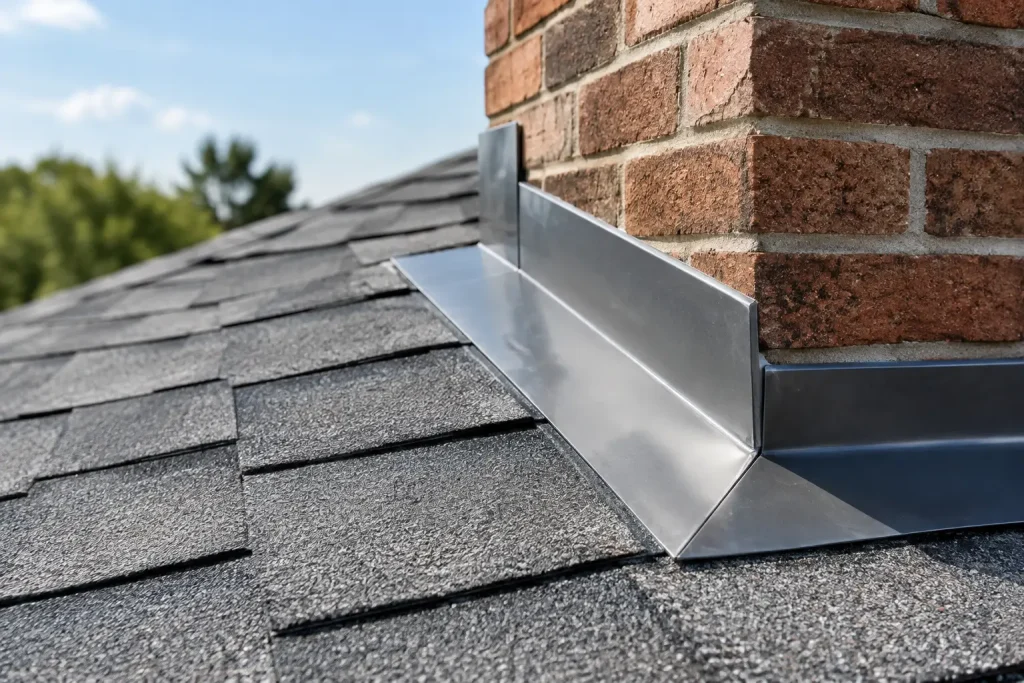
A roof rarely leaks in the middle of a wide, open field of shingles. Water usually finds its way in where materials meet: around a chimney, beside a wall, near a vent pipe, or in a roof valley. So, what does roof flashing do? It protects those vulnerable transitions by directing water safely back onto the roof and toward the gutters instead of letting it reach the roof deck or attic.
Flashing is a relatively small part of a roofing system, but it does serious work. When it is installed correctly and maintained over time, it helps protect your home from stains, rotted wood, mold growth, damaged insulation, and expensive interior repairs. When it fails, a leak can develop slowly enough to go unnoticed until the damage is much larger.
What Does Roof Flashing Do on Your Home?
Roof flashing is a thin, durable material installed at roof joints and penetrations. It is commonly made of galvanized steel, aluminum, copper, or lead, although the right material depends on the roof type, surrounding materials, local weather, and budget.
Its main purpose is simple: flashing creates a water-resistant path over areas where shingles alone cannot provide dependable protection. Shingles are designed to shed water down a sloped surface. They are not designed to seal a vertical chimney, a skylight frame, a plumbing vent, or the point where two roof slopes meet.
A properly flashed area works with gravity. Water flows across the flashing, over the shingles below it, and away from the home. The best flashing installation does not rely only on caulk or roofing cement to stop water. Sealants can be useful, but the metal and layered construction should do most of the work.
Where Roof Flashing Is Installed
Flashing appears in several places across a roof, and each location has its own purpose. The exact layout depends on your roof design, but these are the areas homeowners should understand.
Chimneys and Sidewalls
A chimney interrupts the flow of water down the roof, which makes it one of the most leak-prone areas on many homes. Flashing is placed along the sides, at the top, and at the lower edge of the chimney to send water around it. Step flashing is often used where a roof meets a wall, with individual pieces layered between shingle courses to keep water moving downward.
Counterflashing may also be installed into the chimney mortar or wall surface. This upper layer covers the top edge of base flashing and helps prevent water from getting behind it. If counterflashing pulls loose or the mortar cracks, water can enter behind the metal even when the shingles still look fine.
Roof Valleys
A valley is where two roof slopes meet. Because it collects runoff from both sides, it handles a high volume of water during rain and snowmelt. Valley flashing, or a valley membrane in certain roofing systems, provides added protection beneath or between the roofing materials.
In Utah, valleys deserve close attention after winter weather. Snow can sit in these channels, and repeated freezing and thawing can expose installation issues or worsen small gaps over time.
Vents, Pipes, and Skylights
Plumbing vent pipes, furnace vents, and other roof penetrations need flashing boots or collars. These pieces seal the opening where a pipe comes through the roof. Rubber components on older pipe boots can crack from sun exposure and temperature changes, allowing water to travel down the pipe and into the attic.
Skylights need carefully layered flashing around all sides. A skylight leak is not always caused by the skylight itself. Sometimes the glass and frame are in good condition, while the surrounding flashing or shingles have failed.
Roof Edges and Dormers
Drip edge flashing is installed along roof edges to guide water into gutters and away from fascia boards. Without it, water can wick beneath shingles or run behind the gutter, leading to peeling paint, soft wood, and damaged fascia.
Dormers and other complex roof features also require flashing because they create multiple vertical and horizontal intersections. The more transitions a roof has, the more important experienced installation becomes.
Why Flashing Problems Cause Serious Damage
A damaged shingle is often easy to spot. Flashing problems can be harder to see because the failure may be hidden beneath shingles, siding, or trim. A small gap can let in only a little water at first, but that moisture may soak the roof deck every time it rains or snow melts.
Over time, the damage can spread beyond the roof surface. Wood framing can rot, insulation can become wet and less effective, and moisture can create conditions that support mold growth. You may eventually notice a ceiling stain, bubbling paint, a musty odor, or water dripping near a chimney or exterior wall.
The timing of a leak can also be misleading. A flashing issue may not leak during a light rain but show up during wind-driven rain, heavy snowmelt, or an ice dam event. That is why a roof inspection should look beyond visible shingles.
Signs Your Roof Flashing May Need Repair
Homeowners do not need to climb on the roof to recognize every flashing concern. From the ground or inside the home, watch for water stains near chimneys, skylights, exterior walls, and bathroom vents. Rusted metal, lifted flashing edges, cracked sealant, loose siding near a roof-to-wall transition, or granules collecting below a valley can also point to an issue.
After a windstorm or hailstorm, check for obvious movement around metal components and look inside the attic for fresh water marks. If you see a stain, do not assume it started directly above that spot. Water can travel along framing or the underside of the roof deck before becoming visible indoors.
A professional inspection is the safer way to determine whether the problem is flashing, shingles, gutters, ventilation, or another part of the exterior. It also helps avoid a common mistake: applying more caulk to an area that needs proper flashing repair.
Can Roof Flashing Be Repaired, or Does It Need Replacement?
It depends on the condition of the metal, the age of the roof, and how the original system was installed. A small section of loose flashing may be resecured and sealed if the surrounding shingles and roof deck are sound. A cracked pipe boot can often be replaced without replacing the entire roof.
However, patching is not always the best long-term value. If flashing is rusted through, improperly layered, bent from storm damage, or failing in several locations, replacement is usually more dependable. On an aging roof, replacing only one visible flashing section can also disturb brittle shingles and reveal broader wear.
For a roof replacement, flashing should be evaluated as part of the complete job. Reusing old flashing may save money upfront in limited situations, but new roofing materials perform best when the critical transition details are in good condition too. A qualified contractor can explain whether repair, partial replacement, or full replacement makes the most sense for your home and budget.
Why Professional Installation Matters
Flashing has to be installed in the correct order with the underlayment, shingles, wall materials, and other roof components. If the layers are reversed, water can be directed behind the flashing instead of over it. That is why a repair that looks tidy from the ground can still leak during the next storm.
Material choice matters as well. Some metals can react with each other, and certain flashing details need to account for expansion and contraction through hot summers and cold winters. Fasteners, sealants, roof pitch, and the type of roofing system all affect the final result.
At Big West Roofing, inspections focus on finding the source of the problem, not just covering the symptom. For homeowners facing a leak or storm damage, a clear explanation of the roof condition makes it easier to choose a repair that protects the home without paying for work that is not needed.
A Small Detail Worth Checking Early
Roof flashing may not be the most noticeable part of your roof, but it is one of the most important. If you have seen a new ceiling stain, noticed loose metal near a chimney, or experienced a recent storm, addressing it early can prevent a manageable repair from becoming damage to the roof deck, walls, and interior finishes. A timely roof inspection offers peace of mind and gives you clear next steps before the next round of rain, snow, or wind arrives.