
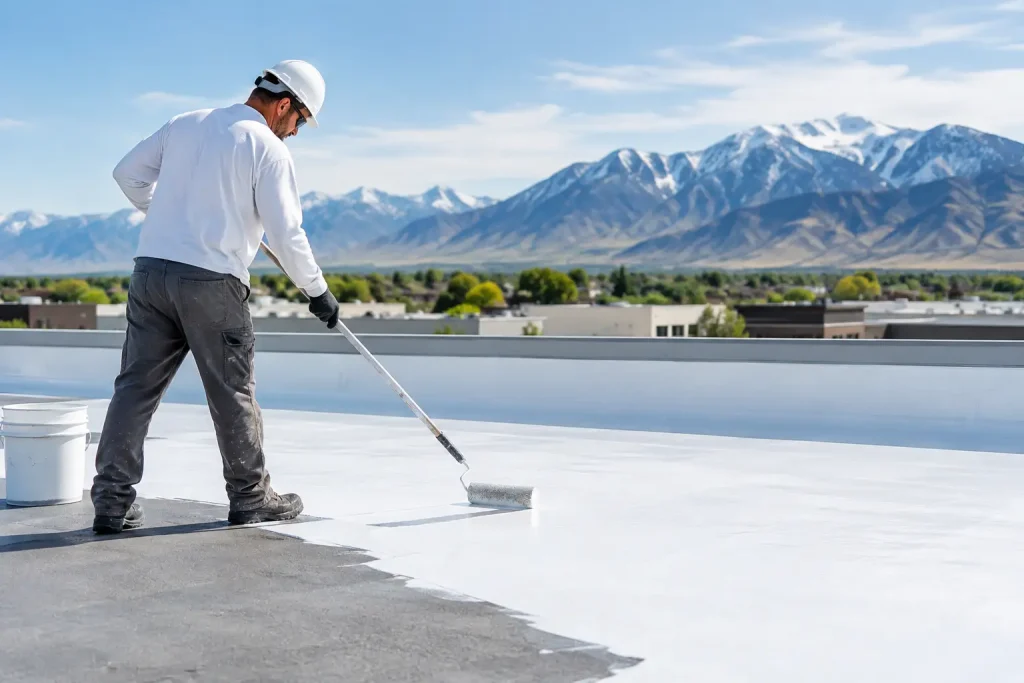
A commercial roof does not always need to be torn off to be protected. When the existing roof is still structurally sound, a professionally installed coating can extend its service life, improve weather resistance, and help manage cooling costs during Utah’s intense sunny months. This commercial roof coating guide explains when coating makes sense, what it can and cannot fix, and how to choose a system that fits your building.
For property owners, the real question is not whether a coating is cheaper than replacement. It usually is. The better question is whether the roof beneath it is a good candidate. A coating installed over trapped moisture, failing insulation, or widespread membrane damage can delay a necessary repair while allowing the underlying problem to grow.
What a Commercial Roof Coating Does
A roof coating is a fluid-applied protective layer that cures into a continuous surface over an existing commercial roof. It is commonly used on low-slope roofs, including metal, modified bitumen, single-ply membrane, and certain built-up roofing systems.
Unlike a complete roof replacement, a coating system may leave much of the existing roof assembly in place. The contractor cleans and prepares the surface, repairs seams and damaged areas, reinforces details where needed, then applies the coating at the specified thickness. The finished surface can help protect the roof from ultraviolet exposure, rain, temperature swings, and normal aging.
Many coatings are white or light-colored, which reflects more sunlight than a dark roof surface. That can reduce roof-surface temperatures and may lower cooling demand in the summer. The actual savings depend on insulation levels, building use, HVAC efficiency, roof color, and how much of the roof receives direct sun. A coating should be viewed as one part of an overall building-maintenance plan, not a guaranteed utility-cost fix.
When a Roof Coating Is a Smart Choice
Coating is often a practical option when the roof is aging but still dry, attached properly, and repairable. For example, a metal roof with surface oxidation and worn fasteners may be a strong candidate after rust treatment, fastener replacement, and seam preparation. A membrane roof with minor seam wear or localized punctures may also be restored if those issues are repaired first.
It can be especially appealing for property owners who want to avoid the disruption and cost of a full tear-off. Restaurants, retail spaces, offices, warehouses, and multifamily properties may benefit from a restoration approach because it can often be completed with less interruption to daily operations.
Utah weather makes timing and roof condition especially important. High UV exposure can dry and weaken roofing materials over time. Winter snow, freeze-thaw cycles, wind, and spring rain can expose weak seams and drainage issues. A quality coating system can add protection, but it needs a stable surface underneath it.
Signs Your Roof May Be a Candidate
A professional inspection is the best way to determine whether restoration is realistic. In general, a roof may be worth evaluating for coating if it has surface fading, minor cracking, small areas of seam deterioration, light rust on metal panels, or previous repairs that remain stable.
The roof should also drain reasonably well. Some coating products are designed to handle occasional standing water better than others, but persistent ponding water is still a warning sign. Water that sits on a roof for days can speed up wear and point to a slope, drainage, or structural concern that should be addressed first.
When Coating Is Not Enough
Roof coatings do not correct every problem. If the deck is compromised, insulation is saturated across large areas, the roof has extensive blistering or membrane failure, or leaks are occurring in multiple locations, replacement may be the more responsible investment.
A coating also cannot solve poor drainage by itself. It may protect the surface, but it will not create slope, repair a crushed drain line, or stop water from collecting around rooftop equipment. Honest recommendations matter here. A lower upfront price is not a good value if the roof needs more substantial work.
Commercial Roof Coating Guide: Choosing the Right System
The best coating depends on the roof material, its condition, drainage pattern, local weather exposure, and the manufacturer’s requirements. A contractor should not choose a coating based only on what is available or what costs the least per gallon.
Acrylic Coatings
Acrylic coatings are water-based and widely used because they are reflective, cost-conscious, and well suited to many roofs with positive drainage. They can perform well in sunny conditions and are often a practical choice for roofs where water does not pond for long periods.
Their trade-off is moisture sensitivity during application and lower resistance to long-term standing water compared with some other systems. Proper weather conditions, surface preparation, and dry time are essential.
Silicone Coatings
Silicone coatings are known for strong UV resistance and good performance where occasional ponding water is a concern. They can be a good fit for roofs that are difficult to drain perfectly or face heavy sun exposure.
However, silicone can attract dirt over time, which may affect reflectivity, and future recoating may require special preparation. It is a dependable option in the right situation, but it should be selected with a long-term maintenance plan in mind.
Polyurethane Coatings
Polyurethane coatings are often chosen for areas that receive more foot traffic or experience greater physical wear. They are durable and can be useful around service paths, mechanical equipment, and other high-use sections of a roof.
They typically cost more than acrylic products and may involve a multi-coat system. For a roof with frequent maintenance traffic, that added durability can be worthwhile.
Preparation Determines Whether the Coating Lasts
The coating itself gets most of the attention, but surface preparation is what separates a lasting project from a disappointing one. A roof must be inspected for moisture, cleaned thoroughly, and repaired before the first coat is applied.
A careful contractor will look at seams, penetrations, edge metal, drains, flashing, fasteners, rooftop units, and previous repair areas. These details are where many leaks begin. If they are skipped or coated over without proper reinforcement, water can still find its way below the roof surface.
Before approving a coating project, ask how the contractor will handle these five items:
- Moisture testing and identification of wet insulation or damaged decking
- Cleaning methods, including removal of dirt, oils, loose coating, and oxidation
- Seam, flashing, fastener, and penetration repairs before coating begins
- Required primer, reinforcement fabric, and coating thickness for the selected system
- Warranty terms, maintenance expectations, and exclusions for ponding water or neglected repairs
A written scope should clearly identify the product system, preparation steps, thickness requirements, detail work, and warranty coverage. If a proposal simply says “coat roof,” there is not enough information to compare it fairly with another bid.
Planning the Project Around Weather and Operations
Commercial coating work needs the right conditions. The roof surface must be dry, temperatures must fall within the product’s application range, and rain cannot interrupt curing. In Utah, spring and fall can offer workable installation windows, though scheduling depends on elevation, forecast, and the specific coating system.
Property managers should also plan around building operations. Contractors may need access to electrical service, roof hatches, parking areas, or interior spaces near active leak locations. If the building has sensitive operations, such as medical offices, food service, tenant spaces, or inventory that cannot get wet, discuss protection measures before work starts.
A coating project is also a good time to address related trouble spots. Clearing drains, improving scuppers, repairing damaged edge metal, and protecting heavily traveled maintenance paths can help the restored roof perform better over time.
Cost, Maintenance, and Long-Term Value
A coating system generally costs less than a full commercial roof replacement because it can reduce tear-off, disposal, and material needs. Still, price varies based on roof size, access, number of penetrations, repairs, coating type, drainage conditions, and the amount of preparation required.
The lowest proposal is not always the lowest long-term cost. An underpriced job may leave out moisture testing, detail repairs, reinforcement, or the coating thickness needed for the manufacturer’s warranty. Those omissions can shorten the roof’s life and create avoidable leak problems.
After installation, schedule regular roof inspections and keep drains free of debris. Check for damage after major wind, hail, or snow events, especially around rooftop equipment and edges. A coating system is easier to maintain when small issues are found early rather than after water reaches the building interior.
If you are weighing restoration against replacement, start with a clear inspection and an honest assessment of the roof’s remaining condition. Big West Roofing can help Utah property owners understand what their roof needs, explain the available options in plain language, and build a practical plan that protects the building without spending more than necessary.