
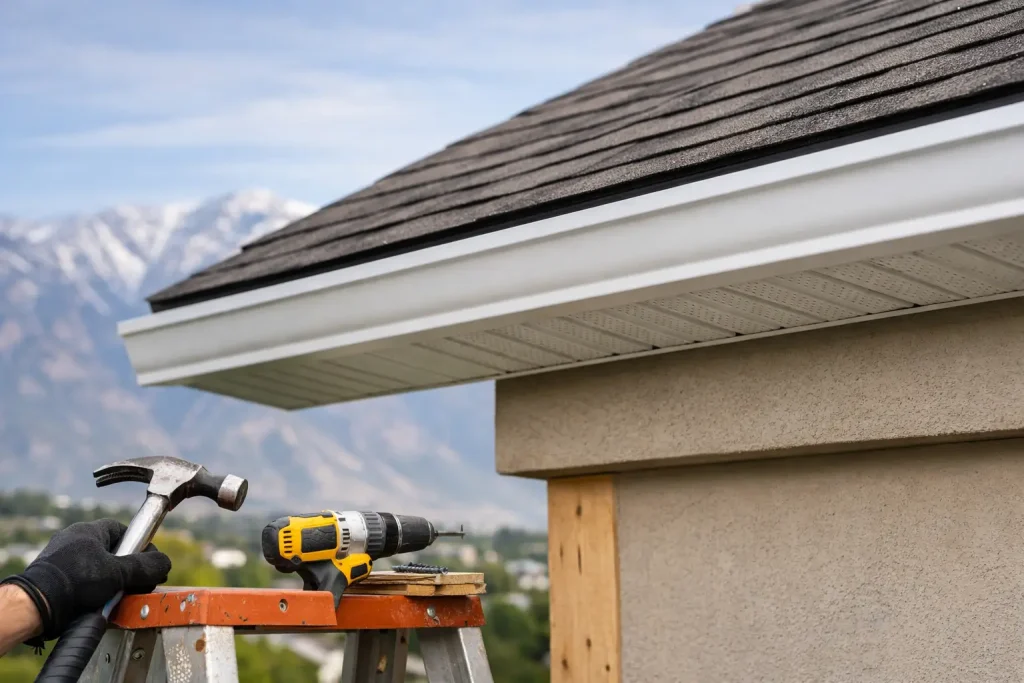
A peeling fascia board or sagging soffit may look like a small exterior issue, but it can point to moisture damage near the roofline. Understanding soffit and fascia replacement cost helps Utah homeowners make a practical decision before water, pests, or roof-edge damage turns a manageable repair into a larger project.
The price depends on more than the number of boards being replaced. Material choice, accessibility, the condition of the roof edge and gutters, and the source of the damage all matter. A clear inspection is the best way to get an accurate number and avoid paying for work that does not solve the underlying problem.
What Does Soffit and Fascia Replacement Cost in Utah?
For a smaller, isolated repair, homeowners may spend a few hundred dollars. Replacing damaged fascia and soffit along one side of a home often falls into the low thousands. A full replacement around the entire roofline can range from several thousand dollars upward, especially on a larger home with multiple stories, steep roof sections, or extensive hidden rot.
Those broad ranges are useful for early budgeting, but they are not a substitute for an on-site quote. Two homes with the same linear footage can have very different costs. One may have easy access and sound roof decking, while the other may require gutter removal, replacement of water-damaged wood, and repairs to the drip edge before the new materials can be installed correctly.
In Utah, winter snow, ice buildup, high winds, intense sun exposure, and occasional hail can all shorten the life of exterior trim. The best estimate accounts for the condition of the whole roof edge, not just the visible board that has started to peel or pull away.
What Soffit and Fascia Do for Your Home
Fascia is the long board mounted along the lower edge of the roof. It gives gutters a secure mounting surface and creates a finished appearance along the roofline. Soffit is installed underneath the roof overhang. It closes off the eaves and, when vented, helps air move through the attic.
That ventilation matters. A properly vented soffit supports balanced attic airflow, which can help limit trapped heat and moisture. It is only one part of the roofing ventilation system, but damaged or blocked soffit vents can contribute to problems such as condensation, ice dams, mold growth, and premature shingle wear.
When fascia starts to rot, gutters may loosen or slope incorrectly. Water can then spill behind the gutter rather than flow through the downspouts. That is why fascia replacement frequently overlaps with gutter work, roof repairs, or siding repairs near the eaves.
The Main Factors That Affect the Price
How much of the roofline needs work
A short run of damaged fascia near a leaking gutter costs less than replacing every board around the house. Contractors typically measure fascia and soffit by linear foot, but the final scope also includes corners, returns, trim details, vent openings, and transitions where the roof meets a wall.
It is worth asking whether the damage is isolated or repeated in several areas. Replacing one visibly rotten section can be the right call when the rest of the roofline is in good condition. If rot appears in multiple locations, a more complete replacement may offer better long-term value and a more consistent appearance.
Material selection
Wood, aluminum, vinyl, and composite materials each carry different upfront costs and maintenance needs. Wood can provide a traditional look, but it needs regular painting or sealing and is more vulnerable to moisture if the paint system fails. Aluminum is durable, low maintenance, and commonly used for fascia wrap and vented soffit systems. Vinyl can be cost-effective and moisture resistant, though color options and impact resistance vary by product.
The lowest material price is not always the lowest ownership cost. A homeowner who wants to avoid frequent painting may prefer aluminum or another low-maintenance option. On the other hand, a home with historic trim details may need a material and finish that better matches the original exterior.
Hidden water damage
Water is often the biggest wild card in a soffit and fascia project. Once damaged material is removed, a contractor may find compromised rafter tails, roof sheathing, siding, or framing behind it. These repairs add to the project, but covering damaged wood without correcting it can allow the problem to continue out of sight.
A trustworthy contractor should explain any newly discovered damage, show you what was found, and discuss the cost before moving ahead with additional work. Clear communication matters most when a repair uncovers conditions that could not be seen from the ground.
Gutters, roofing, and access
Because gutters attach to fascia, they may need to be detached and reinstalled during replacement. If the gutters are old, undersized, poorly pitched, or bent, it can make sense to address them at the same time. Doing related work together may reduce duplicate labor and helps ensure the roof edge manages water correctly when the job is finished.
Labor can also increase on two-story homes, steep rooflines, tight side yards, or areas above decks and landscaping that need protection. Complex roof designs have more corners and more cuts, which adds installation time. These are normal cost factors, not necessarily signs that a quote is inflated.
Repair or Replacement: Which Makes More Sense?
Repair is often appropriate when the damage came from a one-time issue, such as a loose gutter, a small roof leak, or a localized impact. The surrounding fascia and soffit should be dry, solid, and free from widespread peeling paint or pest damage.
Replacement is usually the better choice when rot is recurring, boards are soft over long sections, paint is failing across much of the roofline, or the existing soffit ventilation is inadequate. Replacing affected components together can create a cleaner finish and reduce the chance that a nearby weak section fails soon after the repair.
Do not make this decision based on appearance alone. A board can look weathered yet remain structurally sound, while a freshly painted board can hide significant decay. An exterior inspection should include a close look at gutters, flashing, shingles, attic ventilation, and any staining on siding or ceilings.
Can Insurance Help Cover the Cost?
Homeowners insurance may help when fascia or soffit damage results from a covered sudden event, such as wind, hail, or a fallen tree. It generally does not cover wear from age, deferred maintenance, rot that developed over time, or problems caused by poor drainage.
If storm damage is suspected, document what you see with photos and avoid making permanent repairs before the damage is evaluated, unless immediate action is needed to prevent further water intrusion. Temporary protection can be necessary, but keep records and receipts. A contractor experienced with storm restoration can help identify visible damage and provide documentation for your claim, while the insurance company makes the final coverage decision.
How to Get a Quote You Can Trust
A useful estimate should identify the affected areas, materials, labor, and any related work such as gutter removal or roof-edge repairs. It should also explain what happens if hidden damage is found after old materials are removed. Vague quotes can make it difficult to compare bids fairly.
Ask whether ventilation will be evaluated, how the new fascia will be protected from moisture, and whether the gutter system will be reinstalled with proper slope and secure fastening. These details affect how long the finished work lasts. Price matters, but a low bid can become expensive if it skips the drainage or flashing issue that caused the damage in the first place.
At Big West Roofing, we believe homeowners deserve straightforward answers about what their exterior needs and what it will cost. A free inspection can help separate a small repair from a larger roofline concern, with clear options based on the condition of your home.
If you have noticed loose gutters, stained soffits, peeling trim, pest activity near the eaves, or water marks inside your home, do not wait for the next storm to test the roof edge. A timely inspection can give you a clear plan, protect the rest of your exterior, and help you spend wisely on the repairs that truly need to be done.