
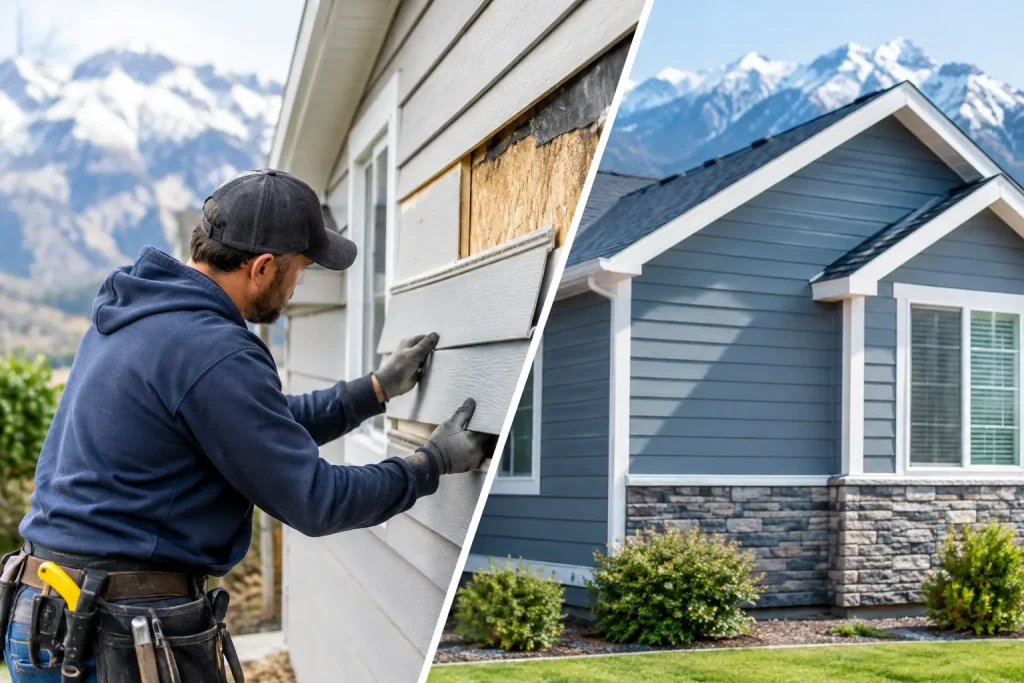
A cracked siding panel after a windstorm may look like a simple repair. But when the damage reveals soft sheathing, moisture behind the wall, or fading across every side of the home, the decision becomes bigger. Siding repair versus replacement is not only about what looks better this season. It is about protecting your home from Utah’s sun, snow, wind, hail, and changing temperatures without spending more than the problem requires.
The right answer depends on the type of siding, the age of the installation, the extent of the damage, and whether water has made its way behind the exterior. A qualified inspection can separate a localized issue from a problem that is likely to keep coming back.
When Siding Repair Is the Right Call
Repair is often the practical choice when damage is limited, the rest of the siding is in good condition, and replacement materials are available to make the repair blend in. A few loose boards, a small area of cracked vinyl, minor hail marks, or isolated rot near a gutter can frequently be addressed without replacing an entire wall.
This approach makes sense when the siding is still relatively new and has years of useful life left. Repairing one affected section can stop water intrusion, restore curb appeal, and cost far less than a full replacement. It is especially valuable after a minor storm event where the damage is concentrated in one area.
A Good Repair Starts Below the Surface
Visible siding damage is only part of the story. Loose or broken siding can allow wind-driven rain to reach the house wrap, sheathing, insulation, or framing. If those layers are dry and sound, a targeted repair may be all you need. If moisture has caused deterioration behind the siding, simply covering the surface can leave a more expensive issue in place.
A thorough contractor will check the condition around the damaged area, not just replace the piece you can see. That includes looking at trim, flashing, caulking, windows, gutters, fascia, and soffit. These components work together to direct water away from your home.
Matching Existing Siding Can Be the Deciding Factor
Even when the damage is minor, repair may not be the best visual option if a close match is unavailable. Vinyl colors can fade in Utah’s strong sun, and older siding profiles may be discontinued. A new panel in the original color can stand out against surrounding siding that has weathered for years.
Sometimes a contractor can use siding from a less-visible section of the home and install the new material there. Other times, replacing one full wall creates a cleaner appearance than patching several scattered areas. The goal is to make a repair that protects the home and looks intentional.
Signs Siding Replacement Is the Better Investment
Replacement becomes more sensible when siding problems are widespread, recurring, or connected to the age of the system. A patch can fix a small failure. It cannot reset siding that has reached the end of its service life.
Consider replacement if you are seeing several of these issues around the home:
- Cracks, holes, warping, or loose panels in multiple locations
- Rot, soft spots, mold, or repeated moisture damage
- Paint that peels quickly or wood siding that needs frequent maintenance
- Fading, chalking, or brittle vinyl that no longer holds up to weather
- Rising heating and cooling costs tied to poor exterior protection or damaged insulation
A full siding replacement gives the installer an opportunity to inspect the wall assembly, correct hidden water damage, upgrade house wrap where needed, and address failing trim or flashing. This is not just a cosmetic project. Done correctly, it can improve weather resistance, comfort, and long-term maintenance needs.
Age Matters, but Condition Matters More
Older siding does not automatically need to be replaced. Well-maintained fiber cement, metal, engineered wood, and quality vinyl can last for many years. Still, if your siding is near the expected end of its lifespan and needs repeated repairs, replacement may offer better value.
Think about the pattern, not only the latest problem. One damaged board after a branch strike is different from repairing a new section every year. When repairs start piling up, it is worth comparing the projected cost of continued maintenance with the cost of installing a complete, dependable system.
Utah Weather Changes the Equation
Homes along the Wasatch Front deal with conditions that can be hard on exterior materials. Summer UV exposure can fade and dry out siding. Winter snow and ice can add moisture around lower walls and rooflines. Wind can loosen panels and trim, while hail may leave dents, cracks, or impact damage that is easy to miss from the ground.
Rapid temperature changes also cause siding materials to expand and contract. Proper installation leaves room for this movement and keeps panels from buckling. If siding was installed incorrectly or has aged beyond its ability to flex, repairs may only offer temporary relief.
This is why homeowners should pay close attention after severe wind or hail. A few visible marks may be all that happened, but storm damage can also affect siding seams, window trim, gutters, fascia, soffit, and roofing at the same time. Addressing exterior damage early helps prevent small openings from becoming moisture problems.
Comparing the Cost of Repair and Replacement
The lower upfront price of repair is appealing, and often it is the right financial decision. But the least expensive option today is not always the least expensive option over the next five years.
Repair costs depend on access, material type, labor, the size of the damaged area, and whether underlying components need attention. Replacing a few vinyl panels is generally more straightforward than repairing custom wood siding or correcting rot around windows. If the work requires replacing sheathing, flashing, insulation, or trim, the cost can rise quickly.
Replacement requires a larger investment, but it may reduce ongoing maintenance and prevent water damage from spreading. It can also improve your home’s appearance if colors are faded or repairs are visible from the street. For homeowners planning to stay in the home for years, a replacement may provide more confidence and fewer surprise repairs.
Financing can make a larger exterior project more manageable, while storm-related damage may qualify for insurance coverage depending on the policy and cause of loss. Insurance generally does not cover normal aging or neglected maintenance, but it may help after covered wind or hail damage. Keep photos, document the date of the event, and have the damage professionally assessed before deciding how to proceed.
How to Make a Confident Decision
Start with a complete inspection rather than an estimate based on a photo or a quick look from the driveway. Ask whether the damage is isolated, whether moisture is present behind the siding, and whether a matching material is available. You should also ask what caused the damage. If the source is a leaking gutter, poor flashing, or roof runoff, that issue should be corrected along with the siding.
It also helps to be clear about your plans for the property. If you expect to sell soon, a well-executed repair may be enough to restore appearance and address inspection concerns. If this is your long-term home, replacement may be a better opportunity to improve durability, weather protection, and curb appeal.
A trustworthy contractor should explain both paths clearly, including what can be repaired, what should be replaced, and what may happen if you wait. There should be no pressure to replace siding that can be responsibly repaired, and no false reassurance when the damage is more extensive than it appears.
Your home’s exterior is its first defense against Utah weather. If you are unsure which option fits your situation, Big West Roofing can provide a careful inspection and straightforward recommendation, so you can make the next move with confidence.