
A commercial roof can look fine from the parking lot while water is slowly working beneath a membrane, around a rooftop unit, or through a compromised flashing detail. That is why understanding how commercial roof inspections work helps property owners act before a manageable repair becomes interior damage, tenant disruption, or an unexpected replacement project.
For Utah businesses, weather adds another layer of concern. Snow loads, freeze-thaw cycles, wind, intense sun, and hail can all shorten the life of a commercial roofing system. A professional inspection gives you a clear picture of the roof’s current condition, the repairs that should be prioritized, and the steps that can help protect your building budget.
How Commercial Roof Inspections Work Step by Step
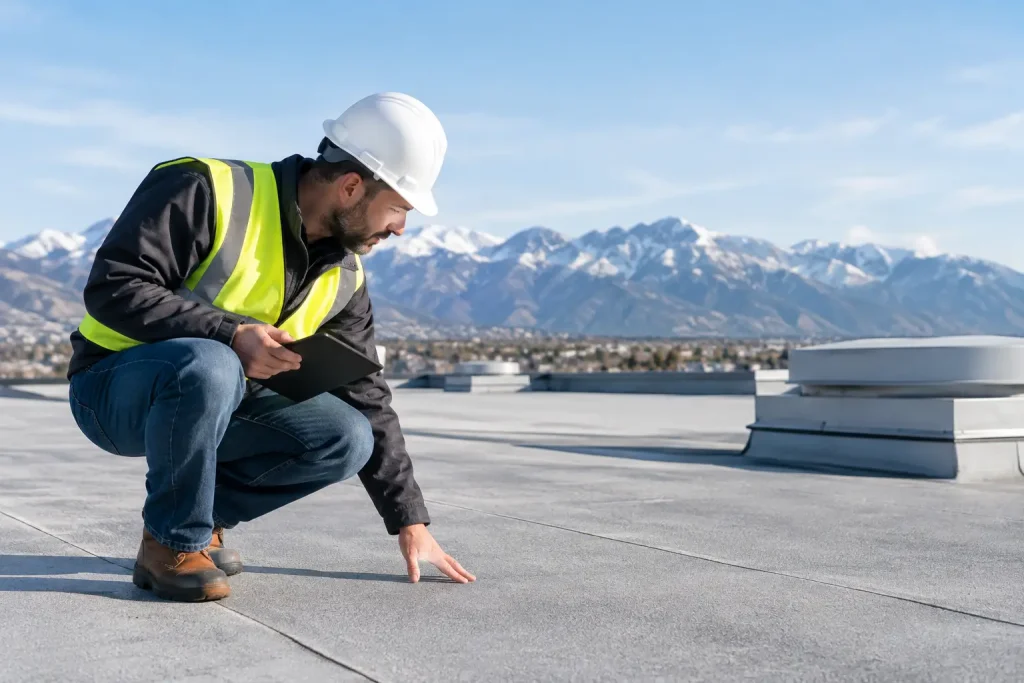
A quality inspection is more than a quick walk across the roof. A roofing professional evaluates the entire system, from drainage and surface materials to penetrations, edges, and signs of moisture inside the building. The exact process depends on the roof type, its age, accessibility, and whether there is an active leak or storm-related concern.
Reviewing the roof’s history and current concerns
The inspection often begins with a conversation. The contractor may ask when the roof was installed, what materials were used, whether repairs have been made, and where leaks or interior stains have appeared. Maintenance records, warranty information, and photos from past storms can also be useful.
This background matters because a recurring leak in the same area can point to a larger drainage, flashing, or installation issue. It also helps distinguish normal aging from sudden damage caused by wind, hail, or a recent rooftop equipment repair.
Checking the building interior
Before heading onto the roof, an inspector may look inside the building for evidence of water intrusion. Ceiling stains, wet insulation, peeling paint, musty odors, warped wall finishes, and puddles near exterior walls can all offer clues.
The source of a leak is not always directly above the visible interior damage. Water can travel along roof decking, framing, conduits, or insulation before it shows up inside. That is why an experienced inspection follows the evidence instead of assuming the first stain identifies the exact problem area.
Inspecting the roof surface and details
On the roof, the contractor examines the field of the roof as well as the details where problems are most likely to begin. Flat and low-slope commercial roofs often use membrane systems such as TPO, PVC, EPDM, or modified bitumen. Metal commercial roofs have different weak points, including fasteners, seams, panels, and sealant conditions.
The inspection looks for issues such as cracking, open seams, punctures, worn coatings, blistering, loose materials, and areas where the membrane has pulled away from edges or penetrations. The inspector also checks roof transitions, parapet walls, coping, expansion joints, skylights, vents, pipes, and rooftop HVAC curbs.
These locations deserve special attention because they interrupt the main roof surface. If flashing has deteriorated or sealant has failed, water has a direct path into the roofing assembly.
Evaluating drainage and ponding water
Drainage is one of the most important parts of a commercial roof inspection. Standing water after a storm may seem like a minor inconvenience, but prolonged ponding can add weight, accelerate material deterioration, and expose weak seams or low areas.
A contractor checks drains, scuppers, gutters, downspouts, and overflow paths for debris or damage. They also look for indications that water regularly collects in one place, including staining, algae growth, softened material, or surface wear. In some cases, clearing drains solves the immediate concern. In others, the roof may need tapered insulation, drainage improvements, or repairs to correct a persistent low spot.
Looking for hidden moisture
Not all roof damage is visible on the surface. If the inspection suggests water may be trapped below the membrane, the contractor may recommend additional diagnostic testing. Depending on the situation, this can include moisture scanning, infrared imaging, or carefully selected test cuts.
These methods help identify whether insulation or decking has become wet and how far the moisture has spread. That information is especially valuable when deciding between a localized repair, a restoration coating, a partial reroof, or full replacement. Removing more material than necessary raises costs, but covering wet materials can allow damage to continue out of sight.
What a Commercial Roof Inspection Report Should Include
After the inspection, a dependable contractor should explain findings in plain language. The report may include photographs, marked problem areas, notes about the roof material and overall condition, and recommended next steps.
The best reports separate urgent issues from maintenance items. For example, an active leak around an HVAC curb may need prompt repair, while minor surface wear can be monitored and addressed during planned maintenance. This gives building owners a practical way to prioritize spending without ignoring issues that could grow worse.
A clear estimate should also explain the scope of recommended work. If repair is appropriate, you should understand what is being repaired and why. If replacement is being discussed, ask what has led to that recommendation, how much of the roof is affected, and whether moisture or structural concerns have been confirmed.
Inspection Findings Do Not Always Mean Replacement
A commercial roof inspection is meant to provide an honest assessment, not push every property toward a replacement. Many common issues, including isolated punctures, failed sealant, loose flashing, clogged drains, and small seam openings, can often be repaired when caught early.
Replacement may be the smarter long-term choice when the roof has widespread membrane failure, recurring leaks across multiple areas, saturated insulation, or has reached the end of its expected service life. It depends on the extent of the damage, the roof system, future plans for the property, and the cost difference between repeated repairs and a new system.
There are trade-offs. Repairing a roof can reduce immediate costs and extend service life. Replacing a severely deteriorated roof can reduce ongoing maintenance, protect the building interior, and provide a more dependable warranty. A good contractor will walk through both paths clearly so you can make a decision that fits your property and budget.
How Often Should a Commercial Roof Be Inspected?
Most commercial properties benefit from a professional inspection at least once or twice each year. Spring and fall are common choices because they allow owners to assess winter damage and prepare for changing weather conditions.
An additional inspection is wise after a major hailstorm, high-wind event, unusually heavy snow, or an incident involving rooftop equipment. Property owners should also schedule service promptly if they notice ceiling stains, unexplained odors, dripping water, or pooling on the roof.
Buildings with older roofs, heavy foot traffic, multiple HVAC units, or known drainage challenges may need more frequent attention. Regular inspections are typically less expensive and less disruptive than emergency leak repairs after a storm.
How to Prepare for a Commercial Roof Inspection
You do not need to know roofing terminology to prepare. Provide access to the building, roof hatch or access point, and any areas where you have noticed leaks. If you have maintenance records, prior inspection reports, or photos of water damage, keep them available for the contractor.
It is also helpful to let tenants, employees, or maintenance staff know an inspection is scheduled. They may have seen water spots, drainage problems, or changes in the building that management has not yet noticed. Their observations can help narrow down the investigation.
Avoid sending untrained employees onto the roof to inspect damage themselves. Commercial roofs can be slippery, weak around damaged areas, and hazardous near edges or rooftop equipment. A trained roofing professional has the equipment and experience to evaluate the roof safely.
Protect Your Building Before the Next Storm
A commercial roof inspection gives you more than a list of defects. It gives you a plan for protecting your property, tenants, equipment, and operating budget. When questions arise, Big West Roofing can provide a straightforward assessment, explain repair and replacement options, and help you address concerns before weather turns a small issue into a costly interruption.