
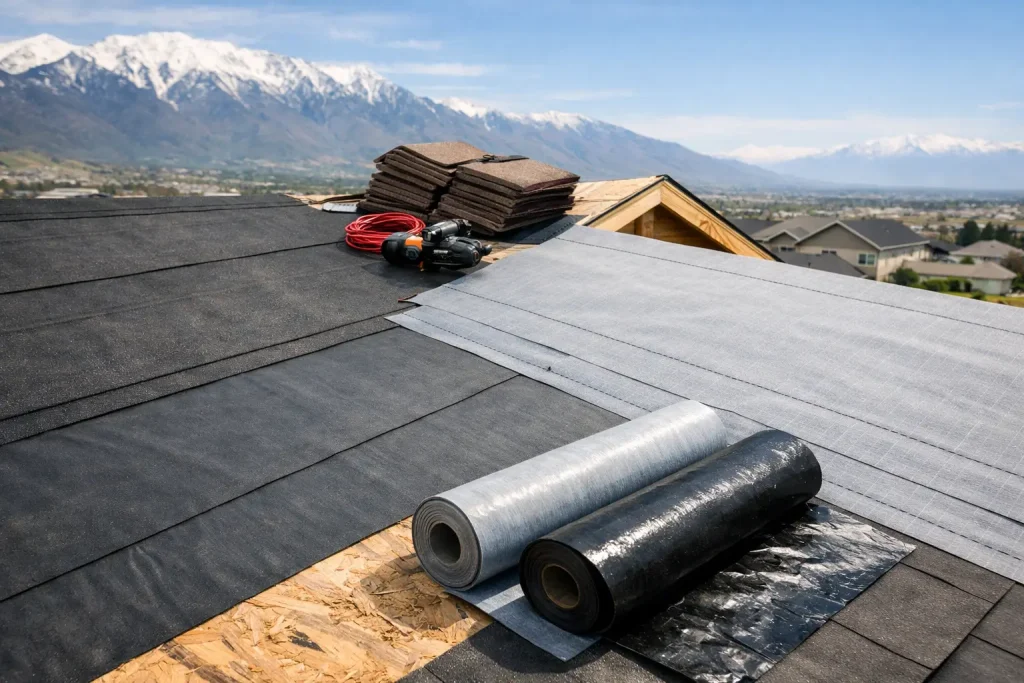
A roof can look perfectly sound from the street and still be vulnerable beneath the shingles. The layer that helps manage wind-driven rain, melting snow, and small installation gaps is the underlayment. In this guide to roof underlayment types explained, Utah homeowners can see why this less-visible material matters so much when repairing or replacing a roof.
Underlayment sits between the roof deck and the finished roofing material. It is not intended to replace shingles, metal panels, or membrane roofing, but it provides a crucial secondary layer of protection when water gets past the outer roof covering. The right product depends on your roof type, slope, local weather exposure, ventilation, and the manufacturer requirements tied to your roofing warranty.
What Roof Underlayment Does
Think of underlayment as the backup layer of your roofing system. If a shingle lifts in high wind, a flashing area is temporarily overwhelmed by rain, or snow melts and refreezes near the eaves, underlayment helps keep moisture from reaching the wood deck and the inside of your home.
It also protects the roof deck during installation, before the final roofing material is fully in place. That is especially valuable during Utah’s changing weather, when a clear morning can turn into rain, wind, or snow before the day is over.
Good underlayment supports a longer-lasting roof, but it cannot correct worn-out shingles, poor flashing, missing ventilation, or damaged decking. Roofing materials work as a system. The best choice is the one that fits the entire assembly, not simply the product with the highest price tag.
Roof Underlayment Types Explained
Most residential roofing projects use one of three main underlayment categories: asphalt-saturated felt, synthetic underlayment, or self-adhered membrane. Each has a place, and each comes with trade-offs.
Asphalt-Saturated Felt
Often called roofing felt or tar paper, asphalt-saturated felt has been used for generations. It is commonly available in lighter and heavier weights, with heavier products offering more durability during installation.
Felt remains a practical option for certain projects because it is familiar, widely available, and often more affordable upfront. It can work well under asphalt shingles when installed properly and kept dry during the roofing process.
Its limitations are worth understanding. Felt can wrinkle when it gets wet, tear more easily than synthetic material, and add noticeable weight to a roof. It also does not handle extended exposure to weather as well as many newer products. On a straightforward budget-conscious shingle replacement, it may be a reasonable choice. On a roof exposed to strong wind, frequent snow, or a longer installation window, another option may offer better protection.
Synthetic Underlayment
Synthetic underlayment is made from engineered polymers rather than paper-based felt. It has become a common choice for shingle and many metal roofing systems because it is lightweight, tear-resistant, and easier for installers to handle on larger roof areas.
A quality synthetic product typically lies flatter than felt and provides stronger resistance to moisture during installation. Many products also have a textured surface that gives roofers better footing, an important safety benefit on steeper slopes. Because a roll covers more area while weighing less, synthetic underlayment can also make installation more efficient.
Still, not every synthetic product performs the same way. Thickness, water resistance, UV exposure rating, fastener requirements, and compatibility with the final roof covering vary by manufacturer. Some products are designed for temporary exposure only, so they should never be treated as a finished roof surface. Homeowners should also know that a lower-cost synthetic underlayment may not provide the same strength or warranty support as a premium option.
For many Utah asphalt shingle replacements, synthetic underlayment offers a strong balance of cost, durability, and installation performance. It is often the practical middle ground between basic felt and a full self-adhered membrane system.
Self-Adhered Underlayment
Self-adhered underlayment, often called ice and water shield, has an adhesive backing that bonds directly to the roof deck. It is usually made with rubberized asphalt and forms a tight barrier around properly installed fasteners.
This material is especially valuable in areas prone to water backup. Along roof edges, in valleys, around chimneys, near skylights, and at other vulnerable transitions, melting snow can move under shingles or collect where roof planes meet. A self-adhered membrane provides added defense in these high-risk locations.
It is the most protective option in many situations, but it is also more expensive and more labor-intensive than felt or synthetic products. It must be installed on a clean, properly prepared deck, and high temperatures can make it more difficult to work with. Using self-adhered underlayment across an entire roof may make sense for certain low-slope sections, complex roofs, or premium assemblies. For many homes, installing it strategically at eaves, valleys, penetrations, and transitions is the smarter investment.
Why Utah Weather Changes the Decision
Utah roofs deal with more than one weather challenge. Winter snow and freeze-thaw cycles can create ice dams near eaves. Spring storms can drive rain beneath lifted shingles. Summer heat puts added stress on roofing materials, while gusty winds can test every exposed edge and fastener.
That is why underlayment selection should not be based on price alone. A home in an area with heavier snow exposure may benefit from self-adhered protection at the eaves and valleys, paired with synthetic underlayment across the main roof deck. A low-slope section may need a different approach than a steep shingle roof. Homes with multiple valleys, dormers, skylights, or solar equipment also need careful detailing around every penetration and transition.
Local building code requirements matter as well. Requirements can vary based on roof slope, climate conditions, and the roofing system being installed. A professional roofer should match the underlayment to applicable code and the roofing manufacturer’s installation instructions, protecting both the home and the product warranty.
Underlayment for Shingle, Metal, and Membrane Roofs
Asphalt shingles are commonly installed over felt or synthetic underlayment, with self-adhered membrane added where extra water protection is needed. The underlayment must be installed with the correct overlap and fastening pattern so water sheds down the roof rather than finding a path beneath the layers.
Metal roofing requires special attention. Some metal panel systems need a specific underlayment that can tolerate heat and movement, while others may require a separator layer or a high-temperature self-adhered membrane in certain areas. The wrong product can create compatibility problems, trap moisture, or affect the performance of the metal roof over time.
Low-slope and commercial roofs often use membrane systems rather than shingles. In those cases, the waterproofing membrane is a primary roofing layer, and the assembly may include insulation, cover boards, vapor control layers, or other components. It is not a simple matter of choosing felt versus synthetic material.
How to Choose the Right Option
The best question is not, “Which underlayment is best?” It is, “Which underlayment is best for this roof?” Start with the roofing material and slope, then consider snow exposure, wind exposure, roof complexity, budget, and the condition of the deck underneath.
If your roof has a history of leaks near valleys, chimneys, or skylights, replacing the visible shingles without improving the water barrier may leave the same weak spots in place. If the deck has soft areas, rot, or water staining, those repairs should be addressed before new underlayment goes down. Covering damaged wood only hides a problem that can return later.
A clear estimate should explain what type of underlayment will be used, where self-adhered protection will be installed, and whether decking repairs are included if needed. Those details help homeowners compare roofing proposals fairly. Two estimates can look similar at first glance while using very different materials below the surface.
Don’t Let the Hidden Layer Become an Afterthought
A new roof is a major investment, and underlayment is one of the details that helps protect it when Utah weather gets difficult. The right choice can reduce the risk of moisture damage, support your roofing warranty, and give the finished roof a stronger foundation.
If you are planning a repair or replacement, schedule a FREE professional roof inspection with us so we can identify vulnerable areas before work begins. Big West Roofing can walk you through the material options in plain language, explain what your roof actually needs, and help you make a decision that protects your home without paying for upgrades that do not fit the job.