
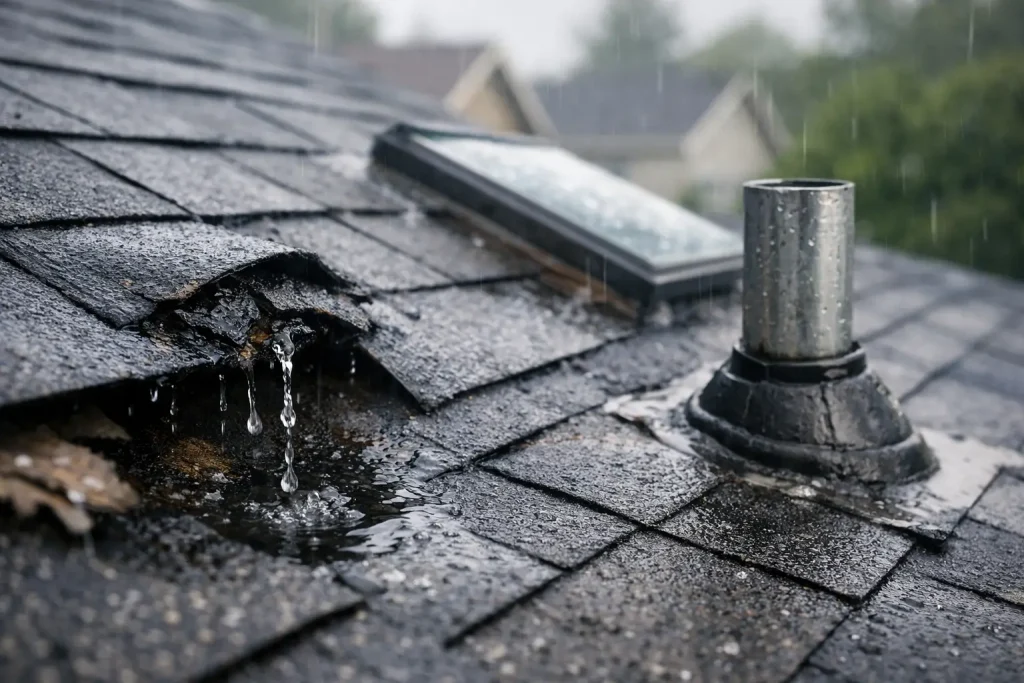
A brown spot on the ceiling after a storm can feel like an emergency, and sometimes it is. Knowing what causes roof leaks after rain helps you act quickly, protect your home, and avoid turning a small repair into damaged insulation, drywall, or framing. The visible drip is not always directly below the roof problem, which is why Big West Roofing offers a professional inspection to Utah homeowners. A roof inspection is often the fastest way to find the true source.
What Causes Roof Leaks After Rain?
Rain exposes weak points in a roofing system. Water can work beneath shingles, around vents, through worn sealant, or behind flashing. Once it gets under the outer roofing material, it may travel along the roof deck or framing before showing up inside your home.
That is why the location of a ceiling stain is a useful clue, but not a final diagnosis. A leak over a bedroom, for example, may begin several feet higher on the roof. The amount of rain, wind direction, roof slope, and age of the materials all affect where and when water enters.
1. Damaged, Missing, or Worn Shingles
Shingles are your roof’s first line of defense against rain. High winds can lift them, hail can crack or bruise them, and years of sun exposure can make them brittle. A missing shingle or a crack near a nail can give water a direct path below the roof surface.
Not every damaged shingle causes an immediate leak. However, repeated rain and wind can widen a small opening over time. If you notice loose tabs, granules collecting in gutters, curled edges, or bare-looking spots on the roof, it is worth scheduling an inspection before the next storm.
2. Failed Flashing Around Roof Openings
Flashing is the metal material installed where the roof meets a chimney, wall, skylight, valley, or vent pipe. These transition areas are especially vulnerable because water naturally collects or changes direction there.
Flashing can leak when it rusts, shifts, bends, separates from the roof, or loses its sealant. Improper installation can also cause trouble, especially around chimneys and sidewalls. A roof may look fine from the ground while a small flashing gap lets in enough water to stain a ceiling during wind-driven rain.
3. Leaks Around Pipes, Vents, and Other Penetrations
Plumbing vent pipes, attic vents, exhaust vents, satellite mounts, and solar-related roof penetrations all need proper sealing. Most pipe leaks begin at the rubber boot or collar around the pipe, not at the pipe itself. Rubber can dry out and crack in Utah’s changing weather conditions.
Sealant is useful, but it is not a permanent fix for failed flashing or damaged boots. Adding caulk over an aging problem may slow water briefly, but a lasting repair usually requires replacing the damaged component and properly integrating it with the surrounding shingles.
4. Clogged Gutters and Poor Drainage
Gutters do not create every roof leak, but neglected drainage can contribute to one. When gutters are packed with leaves, pine needles, roofing granules, or debris, rainwater can back up along the roof edge. It may then work beneath shingles, soak fascia boards, or overflow against siding and foundation areas.
This is particularly important on low slope sections and roof edges where water drains slowly. Gutters should move water away from the home, not trap it against the roofline. If you see overflowing gutters during ordinary rainfall, sagging sections, or peeling paint near the eaves, the drainage system needs attention.
5. Worn Underlayment or an Aging Roof Deck
Shingles are only part of your roofing system. Beneath them is an underlayment that provides another layer of water protection. As a roof ages, that material can deteriorate, especially if the shingles above it have been damaged or previous repairs were incomplete.
Water can also damage the plywood decking beneath the roofing materials. Soft, stained, or rotted decking may not hold fasteners securely, allowing shingles and flashing to loosen. In these cases, replacing one or two shingles may not be enough. The right repair depends on how far moisture has spread and whether the roof structure remains sound.
6. Open Valleys and Roof-to-Wall Connections
A roof valley is where two roof slopes meet. It carries a high volume of water, which makes it one of the most common places for leaks after heavy rain. Cracked valley material, loose shingles, exposed fasteners, or debris buildup can let water enter quickly.
Roof-to-wall areas also deserve close attention. Step flashing should direct water away from the wall and onto the shingles below. When flashing is missing, improperly layered, or hidden behind deteriorated siding, rain can enter behind the exterior and travel into the attic or wall cavity.
7. Storm Damage From Wind or Hail
Utah storms can create roof damage that is hard to spot from the ground. Wind may lift shingles enough to break their seal, while hail can knock off protective granules and weaken the shingle surface. Damage may not leak during the first storm, but the roof becomes more vulnerable with each season.
After a major wind or hail event, look for obvious signs such as shingles in the yard, dented metal vents, damaged gutters, or fresh granules near downspouts. Avoid climbing onto the roof yourself. A trained roofer can inspect the full system safely and document storm-related damage if an insurance claim may be appropriate.
8. Condensation That Looks Like a Roof Leak
Not every attic moisture problem comes from rain. Poor attic ventilation, inadequate insulation, bathroom fan exhaust issues, and indoor humidity can create condensation on roof decking. The symptoms can look similar to a leak, including damp insulation, mildew, or water stains.
The timing offers an important clue. If moisture appears only during or immediately after rain, a roof leak is more likely. If it develops during cold weather regardless of rainfall, condensation may be involved. In some homes, both problems exist, which is why a thorough inspection matters.
Why a Roof Leak May Appear Hours After Rain
Water does not always drip into the living space right away. It can enter through a small opening, run along the underside of the roof deck, follow a rafter, collect in insulation, and finally reach the ceiling. That delay can make homeowners assume the leak stopped when the rain ended, even though moisture is still moving through the structure.
A slow stain, bubbling paint, a musty attic smell, or a damp spot near a light fixture should be treated seriously. Water near electrical fixtures requires extra caution. If water is actively dripping near wiring, move people and valuables away from the area and contact a qualified professional promptly.
What to Do When Your Roof Leaks After Rain
Start by protecting the interior. Place a container beneath active drips, move furniture and electronics, and take clear photos of stains or visible water. If a ceiling is sagging or bulging, do not stand beneath it. Saturated drywall can fail without much warning.
Then check only what you can see safely from the ground. Notice whether shingles are missing, gutters are overflowing, or flashing appears loose around a chimney or vent. Do not use a ladder during wet or windy conditions, and do not try to cover a roof with a tarp unless it can be done safely by an experienced professional.
A roof inspection can determine whether the issue is a focused repair, storm damage, drainage trouble, or a sign that an aging roof needs replacement. Big West Roofing provides straightforward inspections and clear repair recommendations, so Utah homeowners can understand the condition of their roof before making a decision.
When a Repair Is Enough and When Replacement Makes More Sense
A localized flashing failure, damaged pipe boot, or a few wind-blown shingles can often be repaired effectively. Repair is usually the practical choice when the rest of the roof is in good condition and the materials are still serviceable.
Replacement may make more sense when leaks are recurring, shingles are broadly worn, underlayment has failed in multiple areas, or the roof is close to the end of its expected service life. A repair can stop today’s leak, but it cannot always prevent the next weak area from failing. The best option depends on the roof’s age, the extent of damage, your budget, and whether a storm claim applies.
A roof leak after rain is your home’s warning sign, not a problem to wait out. Addressing it early gives you more repair options, helps protect your interior, and brings peace of mind before the next Utah storm rolls in. So contact us today to schedule your free roof inspection!