
A roofing estimate can look straightforward until you have three of them on the table and each contractor is telling a different story. One says you need a full replacement. Another says a repair will buy you years. A third gives you a low price that seems almost too good to pass up. If you are wondering how to choose roofing contractor options without making an expensive mistake, the key is knowing what to compare beyond price.
Your roof protects everything underneath it. That means the contractor you hire matters just as much as the shingle, membrane, or metal system you choose. A good contractor helps you make a smart decision for your home, your timeline, and your budget. A bad one can leave you dealing with leaks, warranty problems, and repairs that should never have been needed in the first place.
How to choose roofing contractor without guessing
The best place to start is with the basics: legitimacy, experience, and communication. A roofing company should be properly licensed and insured for the work it performs. That is not just a box to check. It protects you if there is property damage, a worker injury, or a dispute about what was promised.
Experience matters too, but not only in terms of years in business. You want experience with your specific type of roof and your specific problem. A company that handles storm damage, leak tracing, shingle replacement, metal roofing, and flat or low-slope systems will usually ask better questions during the inspection. They are more likely to spot ventilation issues, flashing failures, decking damage, or insurance-related concerns before the project begins.
Communication is often the clearest sign of what the job will feel like. If a contractor is hard to reach before you sign, vague about the scope of work, or slow to answer simple questions, that usually does not improve once the project starts. Clear communication is not a bonus. It is part of good workmanship.
Start with an inspection, not a sales pitch
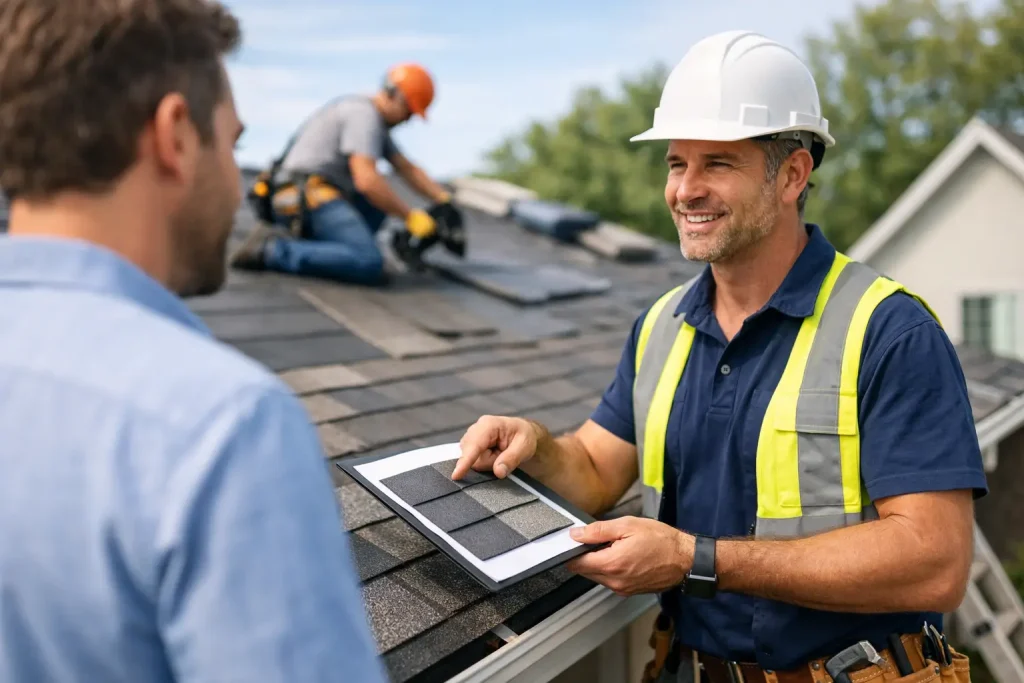
A trustworthy contractor should inspect the roof carefully before recommending repair or replacement. That means looking at more than the obvious damage. On a residential roof, they should consider shingle condition, underlayment concerns, flashing points, attic ventilation, decking issues, and any signs of storm impact or water intrusion.
This is where homeowners can get tripped up. Some contractors lead with the biggest possible project because it increases the sale. Others may recommend a quick fix that does not actually solve the root problem. The right answer depends on the age of the roof, the extent of the damage, how long you plan to stay in the home, and whether insurance is involved.
A strong inspection should leave you with a clear explanation, photos if needed, and a realistic recommendation. If the contractor cannot explain why they are suggesting a repair versus a replacement in plain language, keep looking.
What a detailed estimate should include
Once you move past the inspection, the written estimate becomes one of your best comparison tools. A quality estimate should spell out materials, labor, tear-off details, cleanup, timelines, warranty terms, and any potential extra charges. If one bid is dramatically lower than the others, there is usually a reason.
Sometimes the difference is material quality. Sometimes it is because a contractor left out components like flashing replacement, ventilation upgrades, or disposal fees. In other cases, the price looks low because the company plans to cut corners on labor. A fair bid is not always the cheapest one. It is the one that clearly tells you what you are paying for.
Look closely at reviews and local reputation
Online reviews can help, but only if you read them with some judgment. A five-star rating alone does not tell the full story. Look for patterns in what customers mention. Do they talk about reliability, clean job sites, honest pricing, and fast follow-up? Do they mention how the company handled problems when they came up?
Local reputation matters even more with roofing because weather, building styles, and code requirements vary by region. In Utah, for example, snow load, wind exposure, sun damage, and hail can all affect roofing performance. A local contractor is more likely to understand which materials hold up well in your area and what installation details matter most.
It is also worth checking visible trust signals like Better Business Bureau accreditation, manufacturer certifications, and whether the company has a consistent local presence. Fly-by-night storm chasers can appear quickly after bad weather, but they are much harder to reach if something fails later.
Ask the questions that reveal how they work
You do not need to interview a contractor like a lawyer, but a few direct questions can tell you a lot. Ask who will supervise the project, whether work is done by employees or subcontractors, how cleanup is handled, and what happens if damaged decking is found after tear-off.
Ask about timelines too, but listen for realism rather than promises. Weather delays happen. Material lead times happen. A dependable contractor will give you a practical schedule and keep you updated if anything changes.
Warranty questions are especially important. There is usually a difference between the manufacturer warranty on materials and the workmanship warranty from the installer. Both matter. Even excellent materials can fail early if installation is sloppy.
How to compare roofing bids fairly
When homeowners compare estimates, the natural instinct is to go straight to the bottom line. That is understandable, especially when roofing work is not something you planned to buy this year. But the smarter move is to compare scope, materials, warranty coverage, responsiveness, and confidence in the company doing the work.
A higher bid is not automatically better, and a lower one is not automatically risky. What matters is whether the contractor has explained the differences. If one company includes upgraded underlayment, better ventilation, full flashing replacement, and a longer workmanship warranty, that higher price may deliver better long-term value.
Financing can matter here as well. For some homeowners, the right contractor is the one who helps make a quality roof affordable without pressuring them into more than they need. Good financing options should support a sound decision, not distract from one.
Red flags you should not ignore
Some warning signs are obvious. A contractor asking for a large cash payment upfront, refusing to provide proof of insurance, or pressuring you to sign on the spot should raise concern immediately.
Other red flags are more subtle. Be cautious if the estimate is only one page with little detail, if the company avoids answering questions directly, or if they seem more focused on closing than educating. You should also be wary of anyone who promises to cover your deductible or suggests insurance shortcuts. That can create legal and financial trouble for the homeowner.
Another common issue is vague language around change orders. Roofing projects sometimes uncover hidden damage, and that is normal. What you want is a contractor who explains how additional work is approved and priced before anything is done.
Choosing a contractor for repair vs. replacement
Not every roofing decision is all or nothing. If your roof has localized storm damage or a limited leak, a repair may be the right move. If the roof is older, has widespread wear, or has already been repaired several times, replacement may be more cost-effective.
This is where honesty really matters. A good contractor will talk through the trade-offs. A repair can save money now but may not make sense if the roof is near the end of its service life. A replacement costs more upfront but may reduce recurring issues and improve warranty protection.
For homeowners dealing with storm damage, insurance support can also be part of the decision. Contractors who know how to document damage and communicate clearly during the claims process can make a stressful situation much easier.
The best choice should feel clear, not rushed
When you know how to choose roofing contractor options with confidence, the decision usually becomes less about sales language and more about trust. You want a company that shows up on time, explains the work clearly, gives a detailed estimate, stands behind its workmanship, and treats your property with respect.
That is what homeowners are really buying along with the roof itself: peace of mind. A local, experienced contractor with strong communication and a straightforward process will almost always be the better value than a bargain price that leaves you guessing.
If you are comparing roofing companies right now, slow the process down just enough to ask better questions. The right contractor will never be afraid of that. In fact, they will welcome it, because good roofing work should earn your confidence before it earns your signature.