
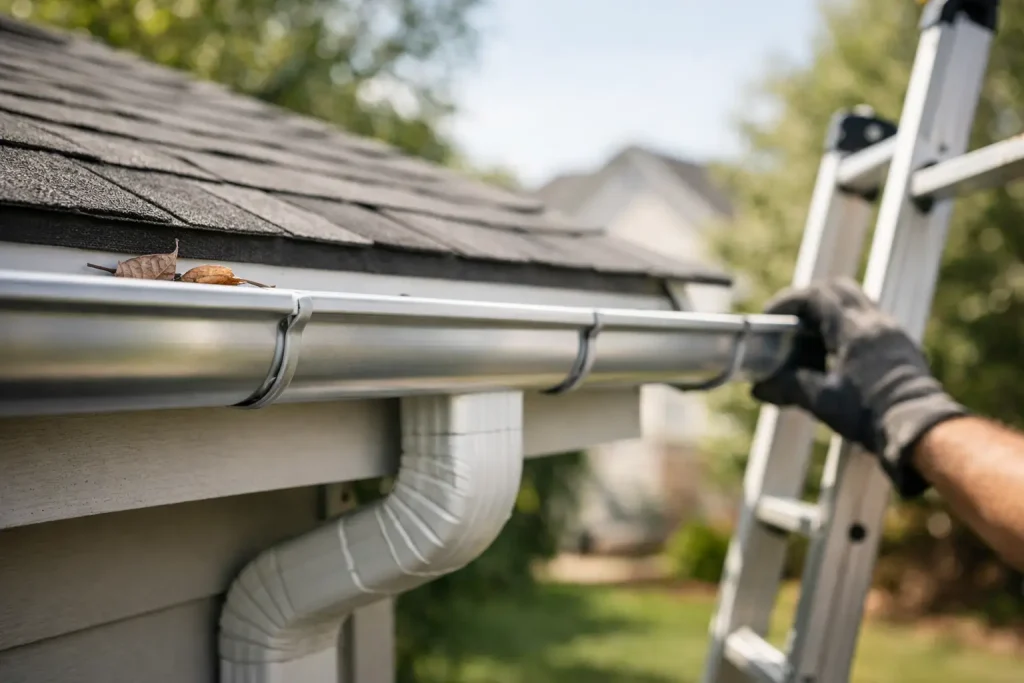
A lot of expensive exterior damage starts with something homeowners barely notice until it fails. Gutters are one of those systems. When they are working well, they quietly move water away from your roofline, siding, foundation, and landscaping. When they are clogged, pulling loose, or undersized, the damage can spread fast.
In Utah, that risk is easy to underestimate. Snow, ice, wind, spring runoff, and sudden storms can all put real stress on a home’s drainage system. If water is backing up at the roof edge or pouring next to the foundation, the issue is not just cosmetic. It can shorten the life of roofing materials, stain siding, rot fascia, and create problems around basements and walkways.
Why gutters matter more than most homeowners think
Your roof sheds a surprising amount of water in a short time. Without a reliable path to carry that runoff away, water tends to collect in the wrong places. It can spill over roof edges, soak trim boards, erode soil, and pool around the base of the home.
That matters because exterior systems work together. A roof protects the top of the house, but gutters help finish the job by directing water away from vulnerable areas. If one part fails, the others take the hit. Over time, even a small drainage problem can turn into fascia damage, siding repairs, foundation concerns, or ice buildup during winter.
For many homeowners, the biggest misconception is that gutters only matter during heavy rain. In reality, melting snow can be just as hard on the system. Freeze-thaw cycles can loosen fasteners, create ice blockages, and push water back toward the roofline. That is one reason gutter problems in Utah often show up after winter, even if no one noticed an issue in the fall.
Common signs your gutters need attention
Some warning signs are obvious. You may see sections hanging away from the house, water spilling over the sides, or downspouts draining too close to the foundation. Other signs are easier to miss. Peeling paint near the roofline, staining on siding, washed-out mulch beds, or damp areas near the home can all point to drainage trouble.
You should also pay attention after a storm. If you notice granules from shingles collecting in the troughs, branches wedged in corners, or visible sagging, it is worth having the system checked. Gutters do not need to be completely broken to cause damage. Even a minor slope issue or partial blockage can stop water from flowing where it should.
If your home has older gutters with repeated leaks at the seams, repairs may only buy limited time. In some cases, a targeted repair is enough. In others, replacement makes more sense because patching the same trouble spots over and over usually costs more in the long run.
Repair or replace? It depends on the condition
Not every gutter problem means you need a full replacement. If the system is relatively new and the issue is isolated, a repair may solve it. Loose hangers, a disconnected downspout, or debris buildup can often be corrected without major work.
Replacement becomes the better option when problems are widespread. Long runs that sag, multiple leaking seams, rusted sections, or gutters that are the wrong size for the roof area often point to a system that is no longer doing its job. The same is true when fascia has already started to rot. At that point, it is smart to address both the drainage issue and any affected trim together.
Age matters, but condition matters more. A well-installed system can last for years with proper maintenance. On the other hand, poor installation can create problems early. If water never drained correctly from day one, cleaning alone will not fix the design.
The right gutters for Utah homes
There is no one-size-fits-all answer for gutter design. The best setup depends on roof size, slope, valleys, surrounding trees, and how water moves across the property. Homes that handle light rain just fine can still struggle during fast snowmelt or a summer cloudburst.
Seamless gutters are a popular choice because they reduce the number of joints where leaks can develop. Fewer seams usually means fewer maintenance headaches over time. Material also matters. Aluminum is common because it is durable, lightweight, and cost-effective for many homes. Steel can offer added strength, but it may not be necessary for every property.
Downspout placement is just as important as the gutter itself. Even a good-looking system can fail if too much water is forced into too few outlets. That is why proper sizing and layout matter. Homeowners often focus on color or profile first, but performance should come before appearance.
How clogged gutters affect your roof and exterior
When gutters clog, water has nowhere to go. It backs up, spills over, or sits in the trough longer than it should. That extra moisture can work its way into fascia boards and the roof edge. In colder weather, trapped water can contribute to ice issues that strain both the gutters and the roofline.
Overflow also affects what is below. Siding can stain or warp, flower beds can wash out, and soil can shift near the foundation. If the runoff lands near entryways or driveways, it can create slippery conditions when temperatures drop.
This is one reason routine exterior maintenance pays off. A clogged gutter may seem minor compared to a roof leak, but the two can be connected. In some cases, what looks like a roofing problem starts with poor drainage at the edge of the roof.
Seasonal gutter care that makes a real difference
Homeowners do not need to overcomplicate gutter maintenance, but they should stay ahead of buildup and visible wear. Fall leaves get most of the attention, yet spring can be just as important because winter debris and ice movement often reveal hidden problems.
A simple visual check from the ground after major weather events can help catch trouble early. Look for sagging sections, overflowing water, detached downspouts, or signs of erosion below the roofline. If you see water pouring over one area during rain, that section may be clogged or pitched incorrectly.
Cleaning is important, but safety comes first. Climbing ladders or walking roofs is not worth the risk for most homeowners. If the house is tall, the roof is steep, or storm damage may be involved, it is better to have a professional inspect the system. That is especially true when gutters, fascia, and roofing issues may all be tied together.
Installation quality matters more than many people realize
A gutter system can look straight from the street and still perform poorly. The slope may be off by just enough to hold water. The fasteners may be too widely spaced. The downspouts may empty where they should not. These are the details that determine whether the system protects the home or creates repeat problems.
Good installation also means looking at the full exterior, not just one piece. If fascia is soft, if roof edges are damaged, or if runoff is collecting near the home, those conditions should be part of the plan. A contractor who understands roofing and exterior systems can usually spot problems that a quick gutter-only fix might miss.
That bigger-picture approach is especially helpful after storms. Wind and hail do not always damage one surface alone. If a homeowner is already dealing with roofing concerns, it makes sense to evaluate the gutters at the same time. Big West Roofing often sees these issues overlap, and addressing them together can save both time and future repair costs.
When to schedule an inspection
If your gutters are overflowing, separating from the house, or causing visible water near the foundation, it is time to have them looked at. The same goes for homes with recurring ice buildup, fascia staining, or signs that water is getting behind the gutters instead of flowing through them.
Even if the system seems fine, an inspection can be worthwhile after major storms or before listing a home for sale. Small drainage issues are easier and less expensive to correct before they become structural or cosmetic repairs.
For homeowners, the goal is simple. You want water to leave the roof quickly and move safely away from the house. When gutters are properly sized, securely installed, and kept clear, they do that job quietly and well. And when they do, the rest of your home gets a better chance to stay protected through every season.