
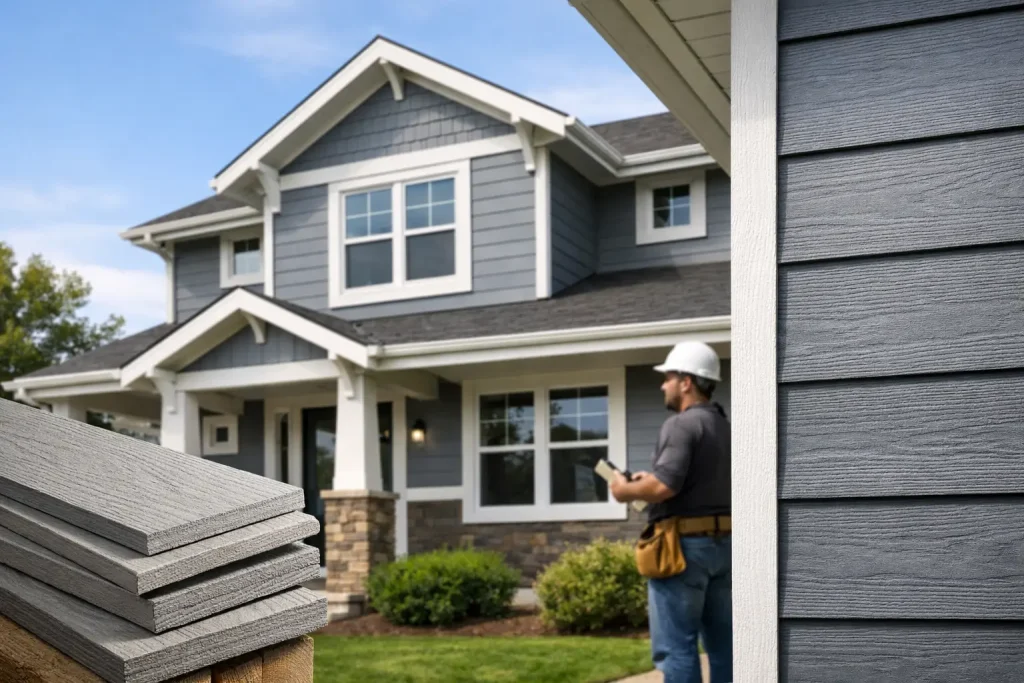
If your siding is cracking, fading, or taking a beating from Utah weather, hardie board siding usually comes up fast in the conversation. Homeowners hear that it lasts a long time, stands up well to moisture and fire, and looks sharp on almost any style of home. The real question is whether it makes sense for your budget, your maintenance expectations, and the conditions your home deals with year after year.
Hardie board siding is a fiber cement product made from cement, sand, and cellulose fibers. That combination gives it a solid, durable feel that is very different from vinyl and more consistent than natural wood. It is designed to handle exposure to heat, cold, moisture, and pests better than many traditional siding materials, which is one reason it has become such a popular choice for exterior replacements.
Why homeowners choose hardie board siding
For many homes, the biggest selling point is durability. Utah homes can see intense sun, dry heat, freezing temperatures, wind, and sudden storms. Siding has to do more than look good from the street. It has to protect the structure underneath and hold up through the seasons without constant attention.
Hardie board siding performs well in those conditions because it does not rot like wood and it is not as vulnerable to warping or melting as some lower-cost materials can be. It also resists insects, which matters if you want a cleaner, lower-maintenance exterior over the long haul.
Another reason homeowners like it is appearance. Fiber cement siding can mimic the texture of painted wood siding without bringing all the upkeep that wood usually requires. That means you can get a more traditional, high-end look while still choosing a material built for modern performance.
There is also a safety angle. Because fiber cement is non-combustible, some homeowners feel more comfortable choosing it over materials that are more vulnerable to fire. That does not make the whole house fireproof, of course, but it is still a meaningful benefit.
The trade-offs to understand before you decide
Hardie board siding has real advantages, but it is not the right answer for every home or every budget.
The first trade-off is cost. In most cases, fiber cement costs more than vinyl siding, both for materials and for labor. It is heavier, more labor-intensive to cut and install, and it requires a crew that knows how to handle it correctly. A lower upfront price can be attractive, but siding is one of those areas where installation quality matters just as much as the product itself.
Weight is another factor. Because the boards are heavier, installation takes more planning and more precision. That is not a problem when the work is done by experienced installers, but it is one reason this is not a material you want installed by a cut-rate crew.
Maintenance is relatively low, not nonexistent. Hardie board siding generally holds paint well, but it can still need repainting over time depending on sun exposure, weather conditions, and the finish used. If you are looking for a product you never have to touch again, that is probably not a realistic expectation.
And while it is durable, it is not indestructible. Hail, impact damage, and improper installation can still create issues. The product is strong, but details such as flashing, caulking, spacing, and moisture management still matter.
How hardie board siding compares to other siding options
Homeowners usually compare fiber cement to vinyl, engineered wood, and traditional wood.
Compared to vinyl, hardie board siding typically offers a more substantial look and better resistance to heat, fire, and impact. Vinyl is often less expensive and can be a good fit for homeowners focused on upfront savings, but it may not deliver the same long-term feel or curb appeal.
Compared to wood, fiber cement wins on maintenance and resistance to rot and pests. Wood has a natural beauty that some homeowners still prefer, but it usually requires more upkeep and more vigilance over time.
Compared to engineered wood, the answer depends on priorities. Some engineered wood products are lighter and easier to install, and they can also offer a strong appearance. Fiber cement still tends to stand out for fire resistance and long-term durability, though installation quality remains a major factor either way.
If you are planning to stay in your home for years and want a balance of appearance, performance, and resale value, hardie board siding often lands in a strong middle ground. It is not the cheapest option, but many homeowners feel it gives them more confidence over time.
Is hardie board siding a good fit for Utah homes?
In many cases, yes. Utah weather is demanding. Homes deal with hot summers, cold winters, snow, wind, and periodic hail. Materials that look fine in mild climates do not always perform the same way here.
Fiber cement is often a good match because it handles temperature swings better than many homeowners expect. It also does not attract pests the way wood can, and it offers good resistance to moisture when installed properly. For homeowners who want a product that can handle a lot without looking worn too quickly, this siding is worth serious consideration.
That said, local conditions still matter. A home in a high-wind area, a neighborhood with intense sun exposure, or a property that has already dealt with moisture issues may need a more detailed evaluation. Siding decisions should be based on the house, not just on a brochure.
What to expect during installation
A siding project is more than attaching new boards to the outside of the house. Good installation starts with inspecting the existing exterior, checking for hidden damage, and making sure the wall assembly is ready for the new material.
If there is rot, water intrusion, or structural wear behind old siding, that needs to be addressed first. Covering a problem is not the same as fixing it. This is one reason a thorough inspection matters before pricing and installation begin.
Once prep work is complete, the crew installs weather barriers, flashing, trim, and the siding itself according to manufacturer requirements. Precision matters here. Small shortcuts can lead to moisture problems, premature wear, or a finished look that does not hold up well.
For homeowners, the practical takeaway is simple. The product matters, but the installer matters just as much. A quality material can still underperform if the installation is rushed or inconsistent.
Cost, value, and long-term return
Hardie board siding usually sits in the higher range of siding costs, but that does not automatically make it overpriced. The better question is what you are getting for that investment.
You are generally paying for durability, a more premium appearance, lower maintenance than wood, and a material that can support resale value when the home is well cared for. If your current siding is failing, letting in moisture, or dragging down curb appeal, replacement can protect the home and improve how it looks and feels.
For some homeowners, the higher upfront cost makes sense because they do not want to revisit the issue in a few years. For others, especially if budget is the first concern, another siding option may be the better fit right now. That is not a wrong decision. It just depends on your priorities.
Financing, project timing, and whether insurance is involved after storm damage can also affect the choice. If siding replacement is tied to a larger exterior project with roofing, gutters, fascia, or soffit, it often makes sense to look at the full exterior system instead of pricing each item in isolation.
Signs it may be time to replace your siding
If your exterior has widespread cracking, swelling, fading, loose panels, or signs of moisture getting behind the siding, it may be time for a closer look. The same is true if repainting no longer lasts, energy bills are creeping up, or your home simply looks worn despite regular upkeep.
Storm damage is another trigger. Wind and hail do not always leave obvious damage at eye level, and siding problems can be easy to miss until they get worse. A professional inspection can help determine whether repair is still practical or whether replacement makes more financial sense.
For homeowners who want a durable exterior with strong curb appeal, hardie board siding is often worth the investment when it is installed correctly and matched to the needs of the home. If you are weighing your options, the best next step is not guessing from the driveway – it is getting a clear, honest assessment of your exterior so you can make a decision with confidence.