
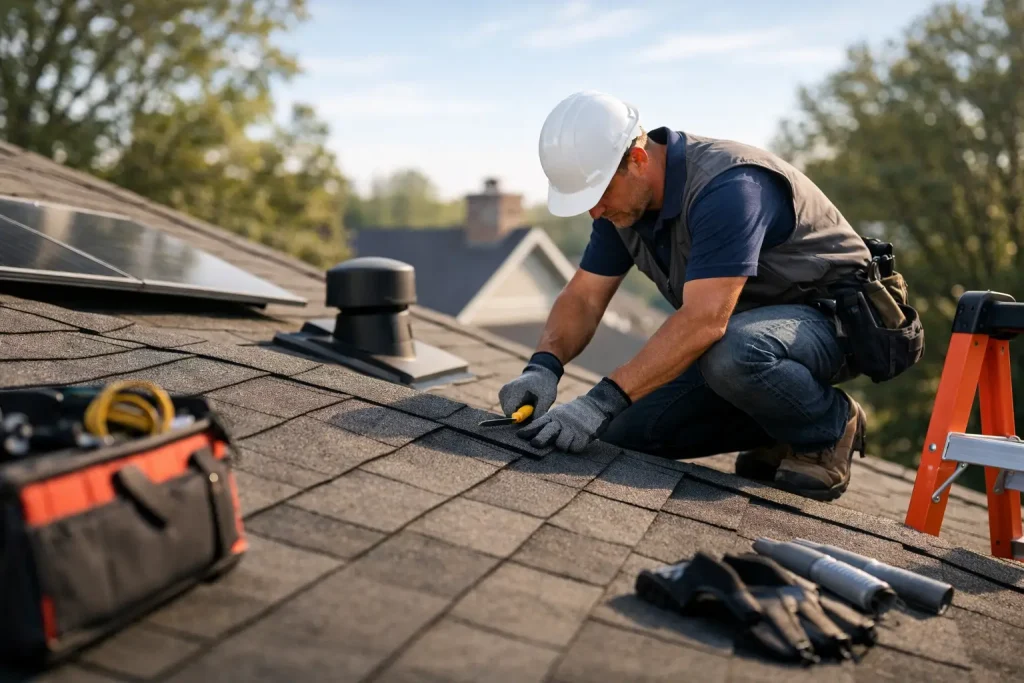
A roof usually gets ignored until water shows up where it should not. For Utah homeowners, that can mean a ceiling stain after a storm, loose shingles in the yard, or ice buildup that starts small and turns expensive fast. Good roof maintenance is not about doing busywork. It is about catching wear early, protecting your home, and avoiding the kind of repair that always seems to happen at the worst time.
If your roof looks fine from the ground, that does not always mean it is in great shape. A lot of roofing problems start in places most homeowners cannot easily see – around flashing, pipe boots, valleys, gutters, and roof penetrations. Add Utah wind, snow, hail, and strong sun, and even a solid roof can develop weak spots sooner than expected.
Why roof maintenance matters in Utah
Roofing materials take a beating in this climate. Winter moisture can work its way into small openings and expand during freeze-thaw cycles. Summer heat and UV exposure can dry out sealants and age shingles faster. Strong winds can lift edges, loosen flashing, and leave a roof more vulnerable during the next storm.
That is why regular roof maintenance often saves money over time. A minor repair to a damaged shingle area or vent flashing is a very different project than replacing stained insulation, drywall, decking, and flooring after a leak has been ignored. In many cases, the roof gives warning signs before major failure. The problem is that those signs are easy to miss without routine checks.
Maintenance also helps you plan. If a roof is aging but still serviceable, a professional inspection can tell you whether you likely need a tune-up, a repair, or whether it makes more sense to start budgeting for replacement. Straight answers matter, especially when you are trying to protect your home without overspending.
What roof maintenance should include
The best maintenance plan is simple, consistent, and focused on the areas where roofs usually fail first. For most homes, that starts with a visual inspection from the ground after major weather and a professional inspection on a regular schedule.
A proper roof inspection should look at shingles or other roofing materials for cracking, curling, granule loss, punctures, and wind damage. It should also check flashing around chimneys, skylights, vents, and wall intersections. These are common leak points because they rely on both materials and proper sealing to stay watertight.
Gutters matter more than many people realize. If gutters clog, water can back up under the roof edge, damage fascia and soffit, and create drainage issues around the home. Keeping gutters clear is part of roof maintenance because roof performance depends on water moving off the system correctly.
Attic conditions also tell an important story. Moisture, poor ventilation, and insulation issues can shorten roof life from the inside out. If you notice musty smells, frost in the attic during winter, or unusually high energy bills, the roof system may be part of the issue even if the shingles themselves still look decent.
Signs your roof needs attention now
Some roofing issues can wait for a scheduled inspection. Others should be looked at right away. If you notice water stains on ceilings or walls, missing shingles, exposed underlayment, sagging sections, or metal pieces lifting around roof penetrations, it is time to act quickly.
Granules collecting in gutters are another sign worth paying attention to, especially on older asphalt shingle roofs. A small amount is normal over time, but heavy granule loss often means the roof is wearing down and becoming more exposed to UV and moisture.
After hail or wind, even subtle damage should be taken seriously. A roof can look mostly intact and still have bruised shingles, lifted edges, or compromised flashing that leads to leaks later. This is one reason many homeowners schedule an inspection after a major storm, even if there is no obvious interior damage yet.
Seasonal roof maintenance tips
Roof care is not the same in every season. In spring, it makes sense to check for damage left behind by snow, ice, and winter winds. This is also a good time to clear gutters, inspect downspouts, and look for signs of moisture around the attic and ceiling.
Summer is often when sun exposure and heat reveal aging materials. Sealants can dry out, shingles can become brittle, and ventilation problems become more obvious. If your upstairs rooms feel harder to cool, the attic and roof system may need attention.
Fall is one of the most important times for roof maintenance. Leaves and debris should be cleared before winter weather arrives. This is also the time to make sure drainage is working properly and to address any minor repairs before snow and ice make them harder and more urgent.
Winter maintenance is more limited, but homeowners should still watch for ice dams, sudden leaks, or heavy snow concerns. Not every snowy roof needs snow removal, and trying to do it yourself can be risky. If snow load or ice buildup looks excessive, it is best to get professional guidance.
DIY roof maintenance vs. professional inspections
There is a right way for homeowners to stay involved without taking unnecessary risks. You can safely look for visible signs from the ground, monitor attic conditions, keep gutters cleaner, and pay attention after storms. That kind of awareness goes a long way.
Climbing onto the roof is a different story. Steep slopes, slick surfaces, and hidden weak spots can make even a quick check dangerous. There is also the risk of causing accidental damage by walking on the wrong area, especially on older shingles or certain roofing systems.
A professional inspection is valuable because it goes beyond what is easy to spot from below. Experienced roofers know where leaks typically begin, how storm damage shows up on different materials, and when a repair will solve the problem versus when replacement is the smarter long-term choice. For many homeowners, that clarity is just as important as the repair itself.
Roof maintenance and the rest of your exterior
Your roof does not work alone. Gutters, fascia, soffit, siding, and even ventilation all affect how well the system performs. Water that misses the gutter or overflows repeatedly can damage trim, stain siding, and create foundation drainage issues. A small roof problem can spread if the surrounding exterior components are also stressed or neglected.
That is why it helps to look at the whole exterior when maintenance is being done. If a gutter section is pulling away, if fascia boards are soft, or if soffit vents are blocked, those issues can affect roof performance and lifespan. Addressing them together is often more efficient than dealing with damage piece by piece.
When maintenance is enough and when it is not
One of the biggest questions homeowners have is whether maintenance will solve the issue or just delay a larger project. The honest answer is that it depends on the roof’s age, the extent of wear, the quality of the original installation, and whether there has been repeated storm damage.
If the roof is relatively young and the problem is isolated, maintenance and targeted repairs often make perfect sense. If the roof is nearing the end of its service life, has widespread material failure, or has multiple recurring leak points, ongoing patchwork can become more expensive than planned replacement.
This is where straightforward guidance matters. A trustworthy contractor should be able to explain what they found, what needs urgent attention, what can wait, and what options make the most financial sense for your situation. Big West Roofing has built its reputation around that kind of practical, customer-first service, especially for homeowners who want answers without pressure.
A simple plan homeowners can actually follow
The best roof maintenance plan is the one you will stick with. For most homeowners, that means watching the roof after major storms, keeping gutters clear, checking the attic for moisture or ventilation concerns, and scheduling inspections before small problems become major repairs.
If your roof is older, if your neighborhood has had recent hail or wind, or if you have seen any warning signs indoors, do not wait for the next storm to make the decision for you. A roof does not need to be failing to need attention. Sometimes the smartest move is simply getting a clear picture of its condition now, while your options are still easier and more affordable.
Taking care of your roof is really about taking care of everything under it – your home, your budget, and the people who count on both staying protected.