
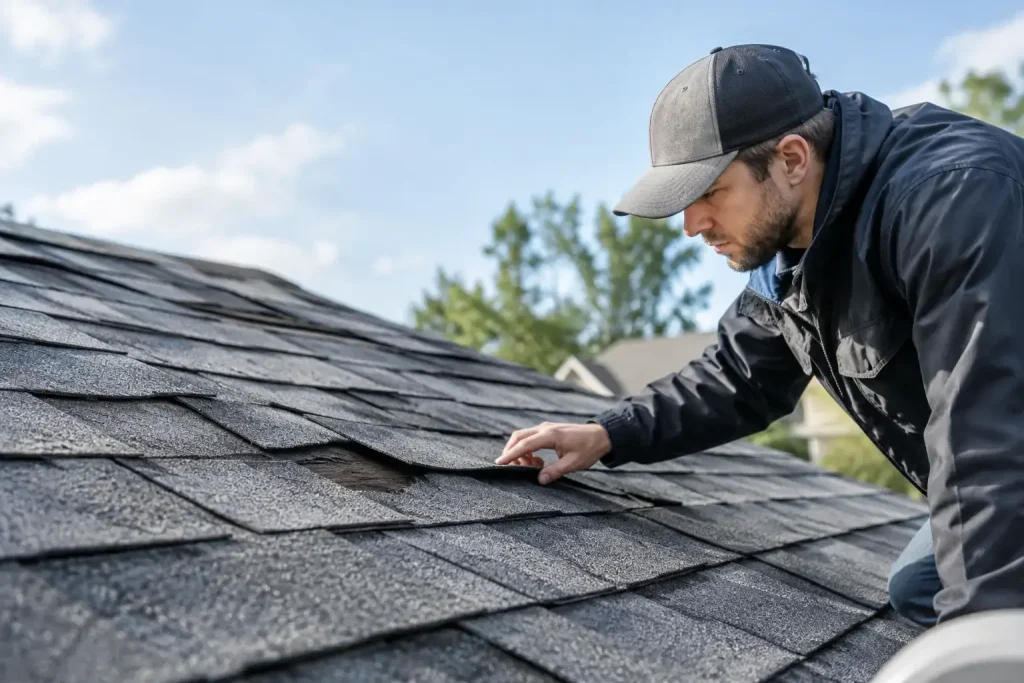
A shingle lying in the yard after a Utah windstorm is easy to spot. The more concerning damage is often still on the roof: lifted tabs, broken seal strips, missing granules, and exposed nail heads that can let water in during the next rain or snowmelt. Wind damaged shingles repair should begin quickly, but it should never begin with a homeowner climbing onto a steep or unstable roof.
Wind can damage a roof even when it does not remove entire shingles. It works under loose edges, breaks the adhesive seal that holds shingles down, and creates small openings that worsen over time. Addressing those openings early can be the difference between a straightforward repair and a leak that affects decking, insulation, drywall, or framing.
Start With a Safe Ground-Level Inspection
After the weather has cleared, walk around your home and look at the roof from the ground. Binoculars can help, but do not feel pressure to diagnose every detail yourself. Your job is to identify warning signs and protect the property until a qualified roofer can inspect it.
Look for shingles or shingle fragments in the yard, driveway, or gutters. Check whether roof edges look uneven, whether a section appears darker than the surrounding roof, or whether flashing around chimneys and vents looks bent or lifted. Inside the home, inspect the attic and upper ceilings for fresh water spots, damp insulation, dripping, or a musty smell.
Wind damage is not always obvious from street level. A shingle can remain in place while its seal has broken, leaving it vulnerable to the next storm. That is why a professional inspection is worthwhile after strong winds, especially if your roof is older, has previously been repaired, or has a history of leaks.
When Wind Damaged Shingles Repair Is Urgent
A missing shingle does not automatically mean the whole roof needs replacement. Still, some conditions call for fast action because water can reach the underlayment or roof deck. If rain, snow, or freezing temperatures are expected, exposed areas should be assessed as soon as possible.
Call for prompt professional help if you see missing shingles, curled or lifted shingle edges, exposed underlayment, loose metal flashing, a tree limb on the roof, or water entering the attic. Ceiling stains that appear after a storm also deserve immediate attention. Waiting to see whether the stain grows can allow moisture to spread behind walls and above ceilings.
If there is active leaking, move valuables away from the area, place a container beneath the drip, and take clear photos for your records. Avoid poking holes in the ceiling unless there is a significant bulge of trapped water and you have been advised how to handle it safely. Water-damaged ceilings can fail unexpectedly.
What a Professional Roof Inspection Should Check
A thorough wind inspection is more than a count of missing shingles. A roofer should evaluate the condition of the full roofing system, including vulnerable transitions and drainage areas.
The inspection typically includes shingle tabs and seal strips, ridge caps, roof valleys, flashing around penetrations, vents, skylights, gutters, fascia, and the roof deck where accessible. The roofer should also look for creased shingles. A crease can occur when wind folds a shingle back and leaves a visible line after it settles into place. Even if the shingle looks flat afterward, that crease may weaken it and shorten its service life.
The age and condition of the roof matter. On a newer roof with matching materials available, targeted repairs may restore protection without unnecessary expense. On an older roof with widespread lifting, brittle shingles, or repeated storm damage, a larger repair or replacement may be the more reliable long-term choice. A trustworthy contractor should explain both options clearly rather than pushing a one-size-fits-all answer.
Can You Repair Wind-Damaged Shingles Yourself?
Some homeowners are tempted to replace a few shingles on their own. The material may look simple, but proper shingle repair requires more than sliding a replacement into an empty spot. The new shingle must match the roof as closely as possible, be installed without damaging surrounding shingles, and be secured according to manufacturer requirements.
A misplaced nail, damaged seal strip, or poorly integrated replacement can create a leak path that is harder to find later. There is also the safety issue. Windstorms can leave a roof slippery with moisture, loose granules, or hidden structural damage. Falls remain one of the biggest risks in home maintenance.
Temporary protection may be appropriate in some situations, but it depends on the weather, roof access, and extent of the damage. For most homeowners, documenting the issue and arranging a professional inspection is the safer and more cost-effective next step.
Repair, Replacement, and Insurance: What to Expect
The right solution depends on the location and scope of the damage. If wind affected a small section and the rest of the roof is in good shape, replacing damaged shingles and resealing affected areas may be enough. If the damage appears across multiple slopes, the roof is near the end of its expected life, or matching shingles are no longer available, partial or full replacement may deserve consideration.
Insurance coverage can also depend on your policy, deductible, roof age, and the documented cause of damage. Wind damage may be covered under many homeowners policies, but coverage is not guaranteed. It is helpful to photograph visible damage, save any shingles or debris you find, and record the storm date. Do not make permanent repairs before documenting the condition, unless immediate work is needed to prevent further damage.
A local roofing contractor can provide photos, inspection findings, and an estimate that helps you understand the repairs needed. They can also explain the damage in straightforward terms when you are preparing to speak with your insurance company. The final coverage decision always belongs to the insurer, but good documentation can make the process less confusing.
Protect the Rest of Your Exterior, Too
High winds rarely affect only shingles. Gutters can pull loose, downspouts can detach, fascia can bend, and siding can crack or come free at corners. These problems may seem secondary, yet they can affect how water drains away from your roof and foundation.
After a wind event, check for sagging gutters, loose gutter spikes, bent metal, damaged soffit panels, and debris blocking drainage paths. If water is unable to move through gutters correctly, it can back up along roof edges and contribute to moisture problems. Addressing roof and exterior damage together often prevents a small storm repair from becoming a larger home maintenance issue.
Preventing Repeat Wind Damage
No roof is completely immune to severe weather, but regular maintenance improves its chances of holding up when the wind picks up. Keep gutters clear, trim tree branches that overhang the roof, and schedule inspections as the roof ages. Pay close attention after major storms, even if no leak is visible.
Quality installation matters just as much as the shingles themselves. Proper ventilation, correct nailing, secure flashing, and materials suited to Utah weather all help a roof perform as designed. If repairs are needed, ask what caused the failure and whether nearby areas show the same weakness.
A fast inspection gives you facts before a minor issue turns into interior damage. Big West Roofing can help Utah homeowners assess wind-related roof concerns, explain repair options honestly, and move quickly when protection is needed. Your home has already weathered the storm – a careful next step can help it stay protected for the one that follows.