
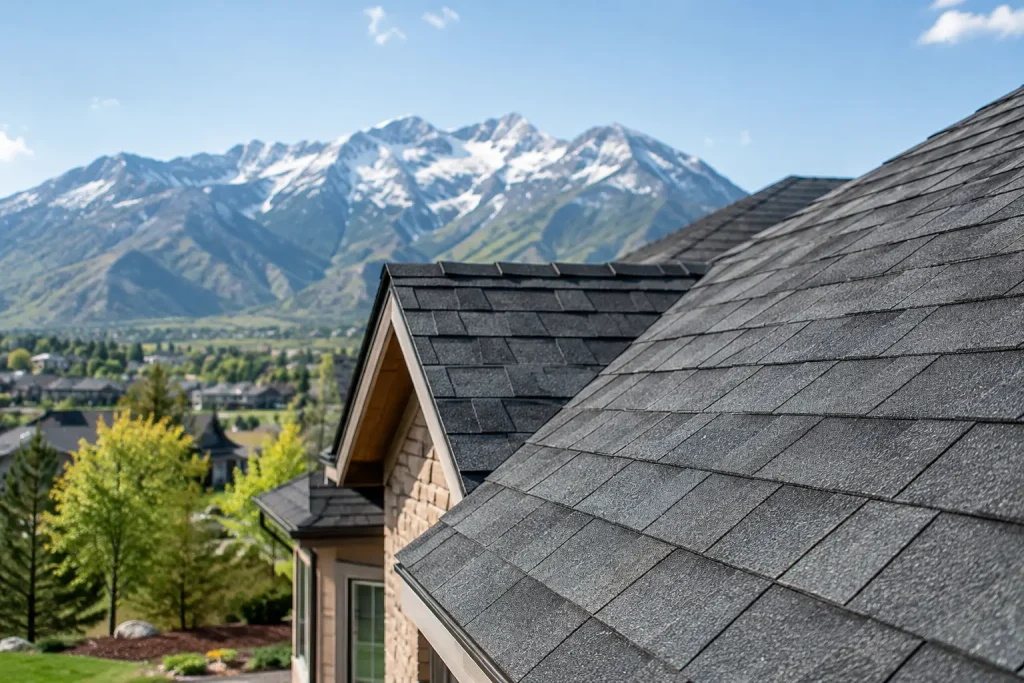
A single hailstorm can leave a roof looking fine from the driveway while bruising shingles enough to shorten its working life. That is why an impact resistant shingles review should go beyond marketing claims and focus on what the rating means, what it costs, and whether it makes sense for your Utah home.
For many homeowners along the Wasatch Front, impact-resistant shingles are a practical upgrade rather than a luxury. They can offer better protection from hail and windblown debris, but they are not damage-proof and they are not the right answer for every roof or budget. The best choice depends on your roof’s condition, your insurance policy, and how long you plan to stay in the home.
What Are Impact-Resistant Shingles?
Impact-resistant shingles are asphalt shingles engineered to better withstand the force of hail and other falling debris. Many use a reinforced backing, a modified asphalt blend, or both. From the street, they can look much like a standard architectural shingle. The difference is in the material’s ability to absorb an impact without cracking or losing protective granules as easily.
The rating homeowners will hear most often is Class 4. This is the highest impact rating under UL 2218, a commonly used laboratory test. In that test, a steel ball is dropped onto the shingle at set locations to simulate hail impact. A Class 4 product passes without signs of cracking or failure under the test conditions.
That distinction matters: Class 4 means the shingle performed well in a controlled test. It does not mean a roof cannot be damaged by a severe storm. Large hail, repeated strikes in the same area, strong winds, poor installation, and an aging roof can still create problems. A professional inspection after a significant storm is still the smart move.
Impact Resistant Shingles Review: The Real Benefits
The primary benefit is better resistance to hail-related bruising, cracks, and granule loss. On a newer roof, that added toughness may help prevent a storm from turning into a premature replacement. It can also reduce the chance that minor damage develops into leaks over time.
Utah roofs deal with more than hail. Sudden temperature swings, intense sun, wind, snow, and ice all put roofing materials to work. A quality impact-resistant shingle can be a strong fit for this climate because it adds another layer of durability where weather events are unpredictable.
Some insurance carriers offer premium discounts for verified Class 4 roofing materials. The savings can help offset the higher upfront price over several years, especially in areas with frequent hail claims. However, discounts vary by carrier, policy, address, and product. Ask your insurance company what documentation it requires before making a purchase decision based on expected savings.
There is also a less obvious advantage: confidence. When a storm rolls through, homeowners with a well-installed Class 4 roof may have fewer reasons to worry about every small hail event. That peace of mind has value, particularly for busy families who want to protect their home without constantly watching for the next repair.
What They Cost Compared With Standard Shingles
Impact-resistant shingles typically cost more than comparable standard architectural shingles. The exact difference depends on the manufacturer, color, roof complexity, local material pricing, tear-off needs, and the condition of the roof deck underneath.
The higher material cost should be viewed in context. A roof replacement is not just a shingle purchase. It includes labor, underlayment, flashing, ventilation details, disposal, and the careful work needed around chimneys, valleys, skylights, and penetrations. Choosing a less expensive shingle will not solve problems caused by poor flashing or improper installation.
For a homeowner planning to sell soon, a standard architectural shingle may be the better financial fit if the roof needs replacement now and the neighborhood does not place a premium on Class 4 products. For a family planning to remain in the home for many years, the additional cost of impact resistance can be easier to justify, particularly if the roof has a history of hail exposure.
Before deciding, compare complete estimates on an equal basis. Confirm the shingle class and manufacturer, the underlayment type, ventilation plan, flashing work, warranty coverage, and whether damaged decking is included as a possible repair item. A low quote that leaves out key installation details is not always the better value.
The Trade-Offs Homeowners Should Know
Impact-resistant shingles have real advantages, but they are not automatically the best roofing product for every property. Their higher price is the most direct trade-off. Insurance discounts are helpful when available, but they may not fully cover the price difference in every situation.
Style and color options can also vary between product lines. Most homeowners can still find an attractive architectural look, but a specific color or profile may only be available in a standard shingle line. If appearance is a major priority, compare samples in natural light before committing.
Another consideration is expectations after a storm. A Class 4 rating does not guarantee an insurance claim will be approved, and it does not eliminate the need for maintenance. Insurance adjusters evaluate actual storm damage, policy terms, deductibles, and the condition of the roof. Keeping installation records and material documentation is helpful, but each claim is evaluated on its own facts.
Finally, no shingle can compensate for a roof system that is not installed correctly. Nails driven too high or too low, missing starter materials, weak valley protection, inadequate attic ventilation, and poorly integrated flashing can lead to leaks even with premium shingles on top.
When Class 4 Shingles Make Sense in Utah
Class 4 impact-resistant shingles are often worth considering if your home has experienced hail damage before, your neighborhood frequently sees strong summer storms, or you want to reduce the risk of replacing a roof earlier than expected. They can also be a wise choice for homeowners who expect to stay put and want durable materials from the start.
They may be less compelling when budget is very tight, the roof has limited hail exposure, or the home will likely be sold in the near future. In those cases, a high-quality standard architectural shingle installed with excellent workmanship can still provide dependable protection.
Commercial property owners should take an even closer look at the building’s exposure and maintenance plan. A large roof has more surface area at risk, and storm-related disruptions can affect tenants, operations, and budgeting. The right system may be impact-resistant shingles for a sloped section, while a membrane or metal solution may better serve another part of the property.
How to Choose the Right Product and Installer
Start with a roof inspection, especially if you suspect storm damage or your shingles are nearing the end of their service life. An inspection can identify bruised shingles, lifted tabs, granule loss, flashing concerns, soft decking, and ventilation issues that are not visible from the ground.
Then ask direct questions. Is the product truly UL 2218 Class 4 rated? What manufacturer documentation will you receive? Does your insurance carrier recognize the product for a possible discount? How will valleys, vents, pipe boots, and flashing be handled? A trustworthy contractor should explain the answers clearly without pressuring you into an upgrade that does not fit your needs.
At Big West Roofing, we believe homeowners deserve straightforward recommendations, not a one-size-fits-all sales pitch. A free inspection can help you understand whether repair, a standard replacement, or an impact-resistant roof is the practical next step. If storm damage is involved, clear documentation can also make the insurance conversation less stressful.
A roof is most valuable when it protects your home quietly through the weather you did not see coming. If hail protection is a concern, choose the shingle and installation plan that gives your family the right balance of durability, cost, and confidence for the years ahead.