
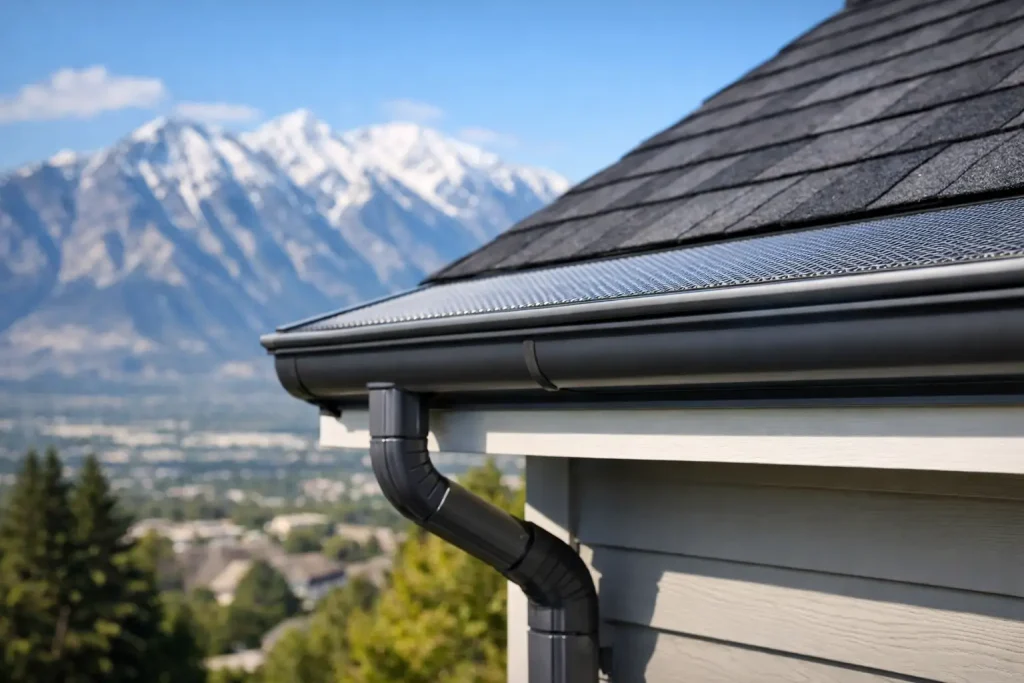
A gutter that overflows during a Utah downpour is not just an annoyance. Water can soak fascia boards, stain siding, wash out landscaping, and collect near the foundation. The best gutter systems for homes move roof runoff away quickly, stay securely attached through wind and snow, and fit the home well enough to do their job without becoming an eyesore.
For many homeowners, seamless aluminum gutters are the practical first choice. But material is only one part of the decision. Gutter size, downspout placement, slope, guards, and the condition of the roof edge all affect how well the system performs. Here is what to look for before replacing gutters or installing them on a new home.
What Makes the Best Gutter Systems for Homes?
A complete gutter system includes more than the horizontal channels at the roofline. It also includes downspouts, outlets, elbows, hangers, end caps, flashing, and a safe path for water to discharge away from the house. If one piece is undersized, poorly secured, or improperly installed, the whole system can struggle.
Utah weather makes those details especially important. A gutter system may need to handle sudden heavy rain, spring runoff, wind-driven debris, snow buildup, and strong sun exposure during the same year. The right choice depends on roof size, roof pitch, tree coverage, architectural style, and where water naturally flows around the property.
The goal is not simply to catch water. It is to control it from the moment it leaves the roof until it reaches a place where it will not threaten the home.
Seamless Aluminum Is the Best All-Around Choice
For most homes in Salt Lake, Davis, and Utah counties, seamless aluminum gutters offer the strongest balance of cost, durability, appearance, and low maintenance. They are formed on-site to match the length of each roof edge, which means there are fewer seams where leaks can develop.
Aluminum does not rust, and its lighter weight puts less strain on fascia boards than heavier materials. It is also available in many colors, helping homeowners coordinate gutters with siding, trim, or roofing. With proper installation and routine cleaning, a quality aluminum system can provide dependable service for many years.
There are trade-offs. Aluminum can dent if a ladder is placed carelessly or if it takes a hard impact. Very thin gutter material is more likely to bend or show damage over time. A contractor should recommend an appropriate gauge rather than treating every home as if it has the same needs.
When steel gutters make sense
Galvanized steel gutters are stronger than aluminum and can be a good fit for homes that need extra impact resistance. However, steel is heavier and can eventually rust if its protective coating is damaged. It also typically costs more to install. For most residential projects, aluminum delivers better long-term value, while steel can be worth considering for specific high-wear applications.
Copper gutters are a premium architectural option
Copper gutters are durable, distinctive, and well suited to historic homes or upscale custom designs. Over time, copper develops a natural patina that some homeowners love. The downside is price. Copper costs substantially more than aluminum, and installation requires experienced craftsmanship. It is a design-driven investment, not the most economical way to manage roof runoff.
Vinyl is affordable, but not always ideal
Vinyl gutters can be inexpensive and easy to find, but they are generally not the best choice for long-term performance in Utah. Temperature swings can make vinyl more prone to cracking, warping, or becoming brittle. Seams are also more common. Vinyl may work for a small budget-conscious project, but homeowners planning to stay in their home often find that seamless aluminum is the wiser investment.
Choose the Right Gutter Size Before Choosing Accessories
A standard 5-inch K-style gutter works well for many homes. It handles a reasonable amount of water, looks familiar on most rooflines, and is usually more affordable than larger systems. But it is not automatically the right fit.
A 6-inch gutter carries significantly more water and is often a better choice for large roofs, steep roof pitches, long gutter runs, metal roofs, or areas that receive fast, heavy runoff. It can also make sense when a home has limited places to install downspouts. Larger gutters may cost more upfront, but they can prevent overflow that leads to damaged fascia, siding, and landscaping.
Downspout capacity matters just as much. A wide gutter connected to undersized or poorly positioned downspouts will still overflow. Downspouts should be placed where water naturally collects in the gutter, while keeping runoff away from entryways, walkways, patios, and foundation walls.
A professional assessment should account for roof drainage area, valleys, pitch, and the length of every run. Guessing based only on what a neighbor has can leave a home underprotected.
K-Style vs. Half-Round Gutters
K-style gutters are the most common residential profile because they hold more water than a similarly sized half-round gutter and work well with modern fascia boards. Their flat back also makes them easier to mount securely. For practical performance and broad curb-appeal compatibility, K-style gutters are often the best fit.
Half-round gutters have a classic curved shape and are commonly used on older homes, custom properties, and designs with a more traditional look. They can shed debris more easily in some situations, but they usually hold less water at the same width and can cost more to install. A larger half-round size may be needed to match the drainage capacity of a K-style system.
The best profile is the one that meets drainage needs while complementing the home. A good contractor can show homeowners where appearance and performance align, and where they may need to prioritize one over the other.
Are Gutter Guards Worth It in Utah?
Gutter guards can reduce cleaning needs, but they are not a maintenance-free promise. Even quality guards need occasional inspection, especially after windstorms or when nearby trees drop needles, seeds, leaves, or roof grit.
For homes with mature trees, gutter guards can be a valuable addition because they help keep downspouts from clogging and reduce the need to climb ladders. Fine-mesh guards are often effective for small debris, while larger-screen designs may work well where leaves are the main concern. The right guard depends on the type of debris around the property and how water flows off the roof.
Guards are less necessary for homes with little tree coverage, although they can still offer convenience. They should never be used to cover up an existing problem such as improper slope, loose hangers, or overflowing valleys. Fix drainage performance first, then decide whether guards add enough value for the cost.
Installation Details That Protect Your Roofline
Even the best material can fail when installation is rushed. Gutters need a slight, controlled slope toward the downspouts so water drains instead of standing in the channel. They should be fastened with strong hidden hangers placed close enough together to resist sagging under snow, ice, and water weight.
The connection at the roof edge also deserves close attention. Damaged fascia should be repaired before new gutters go up. Proper drip edge and flashing help direct water into the gutter rather than behind it, where it can quietly rot wood and create costly repair needs.
Downspouts should carry water well away from the foundation. In many cases, extensions, splash blocks, or a more deliberate drainage plan are needed. Sending water directly onto a steep driveway or walkway can create erosion or slippery conditions, so discharge locations should be planned carefully.
This is why replacement is often a good time to inspect fascia, soffit, roof edges, and siding. These parts of the exterior work together. Addressing small trouble spots before gutters are installed can help prevent a new system from hiding old damage.
Signs Your Gutters Need Replacement, Not Another Repair
A loose hanger or leaking seam can sometimes be repaired. But repeated patchwork may not be the best use of money when the system has reached the end of its service life. Watch for recurring overflow, sagging sections, frequent clogs, peeling paint, rust, cracks, separated seams, or water marks on siding beneath the gutters.
You may also need replacement if the current system is too small for the roof. If gutters overflow only during hard rain, the issue is not always debris. The channels or downspouts may simply lack the capacity to handle the runoff.
At Big West Roofing, a gutter evaluation can include the roofline and exterior details that affect drainage. That gives homeowners a clearer picture of whether they need a repair, a better-sized system, or attention to fascia and flashing before installation.
A well-designed gutter system should fade into the background: it should look clean, drain reliably, and protect the parts of your home you do not want to think about during the next storm. If yours is overflowing, sagging, or sending water toward the foundation, a professional inspection can turn a small warning sign into a practical plan.