
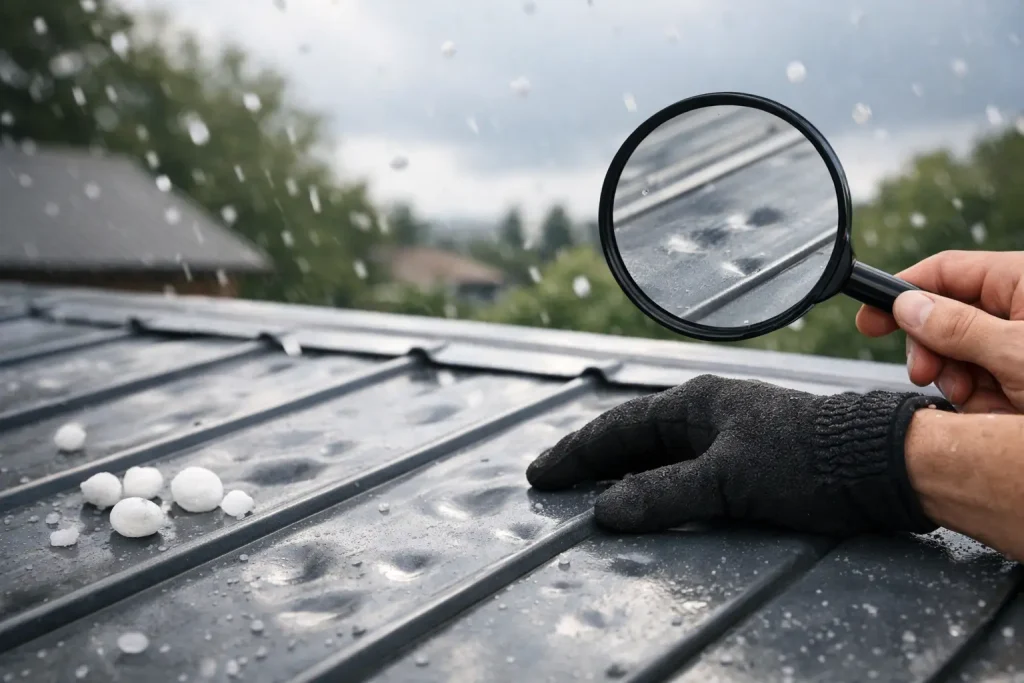
A metal roof is one of the toughest roofing systems available, but can hail damage a metal roof? Yes. Even when it does not puncture the panels, hail can leave dents, loosen components, damage protective finishes, and create problems that are easy to miss from the ground. After a Utah hailstorm, the question is not simply whether you see a hole. It is whether the roof is still protecting your home as it should.
Metal roofing is built for long service life, wind resistance, and low maintenance. That strength gives many homeowners peace of mind during storm season. Still, hailstones vary widely in size, density, and speed. A brief storm with small hail may leave no meaningful damage, while a short burst of larger hail can affect a roof’s appearance, drainage, and long-term performance.
Can Hail Damage a Metal Roof? Yes, but It Depends
The severity of hail damage depends on the type of metal roof, the gauge or thickness of the panels, the panel profile, and the condition of the roof before the storm. A newer standing-seam metal roof made from thicker steel will generally handle hail better than a thinner exposed-fastener panel system. Aluminum is lightweight and corrosion-resistant, but it can dent more easily than steel.
Hail size matters too. Pea-sized hail is unlikely to cause serious trouble on a properly installed metal roof. Hail around one inch in diameter can cause cosmetic dents, especially on softer metals or flatter panel areas. Larger hail, often combined with strong wind, can damage flashings, ridge caps, vents, gutters, skylights, and other areas where water protection depends on a tight seal.
The age of the roof also matters. If fasteners have begun to loosen, sealant is failing, or protective coatings are worn, a storm can turn small weaknesses into active leaks. That is why a roof that looked fine before a storm may still deserve a professional inspection afterward.
The Difference Between Cosmetic and Functional Damage
Not every dent means your metal roof needs to be replaced. The most common hail damage is cosmetic: shallow dings or dimples in the panels that affect appearance but do not compromise the roof’s ability to shed water. This can still matter, particularly if your home has a highly visible roof or you are planning to sell, but it is different from a leak risk.
Functional damage is more urgent. It affects the roof’s ability to keep water out, withstand wind, or resist corrosion. Hail can deform panel seams, crack protective paint finishes, damage exposed fasteners, or dent flashing around chimneys and valleys. Water may not enter immediately. Instead, it can find its way beneath a compromised detail during the next heavy rain or snowmelt.
A trained roofer can help distinguish a visual blemish from damage that affects performance. This is especially useful when homeowners are considering an insurance claim. Insurance adjusters and roofing professionals may evaluate the roof differently, so clear documentation and an honest assessment of the damage are valuable.
Signs to Look for After a Hailstorm
Start with a safe inspection from the ground. Do not climb onto a wet, steep, or potentially damaged roof. Look for obvious dents in metal panels, but also check the parts of the exterior that often reveal how hard the storm hit.
Damage to gutters, downspouts, window screens, siding, outdoor fixtures, and vehicles can indicate that the roof took a significant impact. Look for bent gutter sections, chipped paint on metal trim, dents in fascia, or torn screens. These do not prove roof damage, but they are good reasons to schedule an inspection.
From inside the home, watch for water stains on ceilings, damp attic insulation, musty odors, or drips after rain. Pay close attention to areas near roof penetrations, such as bathroom vents, furnace vents, chimneys, and skylights. A leak can begin at one damaged flashing detail and travel before it appears inside, so the visible stain may not be directly below the problem.
If you have a standing-seam roof, seams and clip areas need careful review. If you have an exposed-fastener metal roof, inspect for damaged washers, lifted fasteners, or fasteners that appear out of line. These systems can perform very well, but their seals need to remain intact.
Why Small Hail Damage Can Become a Bigger Problem
A metal panel is not just bare metal. Most residential metal roofs use a protective coating or painted finish designed to resist moisture, sunlight, and corrosion. When hail cracks, chips, or deeply scuffs that finish, the exposed area may become more vulnerable over time.
This is particularly relevant in Utah, where roofs endure strong sun, temperature swings, wind, snow, and occasional severe storms. A small finish defect may not cause a leak this season. But if moisture reaches the metal and the coating continues to break down, corrosion can develop and shorten the life of the affected area.
Hail can also change the way water moves across the roof. A dent near a seam, valley, or flashing may allow water to pool or be pushed toward a vulnerable joint. On a low-slope commercial metal roof, drainage and seam integrity are especially important. The issue is not always dramatic damage. Sometimes it is the slow wear that follows an impact.
What to Do if You Suspect Hail Damage
Take a few clear photos of visible damage to gutters, siding, windows, and any roof areas you can safely see. Note the date of the storm and save any local weather alerts or reports. This creates a useful record if you need to speak with your insurance company.
Next, arrange a professional roof inspection. A qualified local contractor can inspect panels, seams, fasteners, flashings, ridge caps, vents, and the roof’s drainage paths. The goal is to identify actual damage, not to pressure you into unnecessary work. In many cases, the right answer may be monitoring a cosmetic dent rather than replacing a roof that is still performing well.
If repairs are needed, acting early can protect the rest of the system. Repair options may include replacing damaged flashings, resealing penetrations, correcting fasteners, treating coating damage, or replacing individual panels when a match is available. Full replacement is generally reserved for widespread functional damage, aging systems, or roofs where repairs cannot provide dependable long-term protection.
Will Insurance Cover Hail Damage to a Metal Roof?
Coverage depends on your policy, deductible, roof age, and whether the damage is cosmetic or functional. Some policies cover direct physical damage from hail but limit or exclude purely cosmetic dents. Others may provide different settlement terms for an older roof than for a newer one.
Before filing a claim, review your policy and get a clear assessment of the damage. A roofing professional can provide photos and explain what was found, which can make conversations with your insurer more straightforward. Be cautious of anyone who promises claim approval or insists that every dent qualifies for replacement. A reliable contractor will explain the condition of your roof, your repair options, and the next practical step.
Protecting Your Metal Roof Before the Next Storm
You cannot prevent hail, but regular maintenance helps your roof perform better when storms arrive. Keep gutters clear, trim branches away from the roof, and address loose trim, deteriorated sealant, or damaged fasteners before they become entry points for water. After a major storm, a timely inspection can catch issues before a small repair turns into interior damage.
For homeowners considering a new metal roof, ask about panel thickness, metal type, finish warranty, and the installation details around flashings and penetrations. The strongest material still depends on careful installation. A well-built system gives hail fewer opportunities to cause lasting trouble.
If a recent storm has you wondering whether your roof is still protecting your home, a professional inspection can replace uncertainty with a clear answer. Big West Roofing is here to help Utah homeowners understand what they are seeing, make practical repair decisions, and move forward with confidence.