
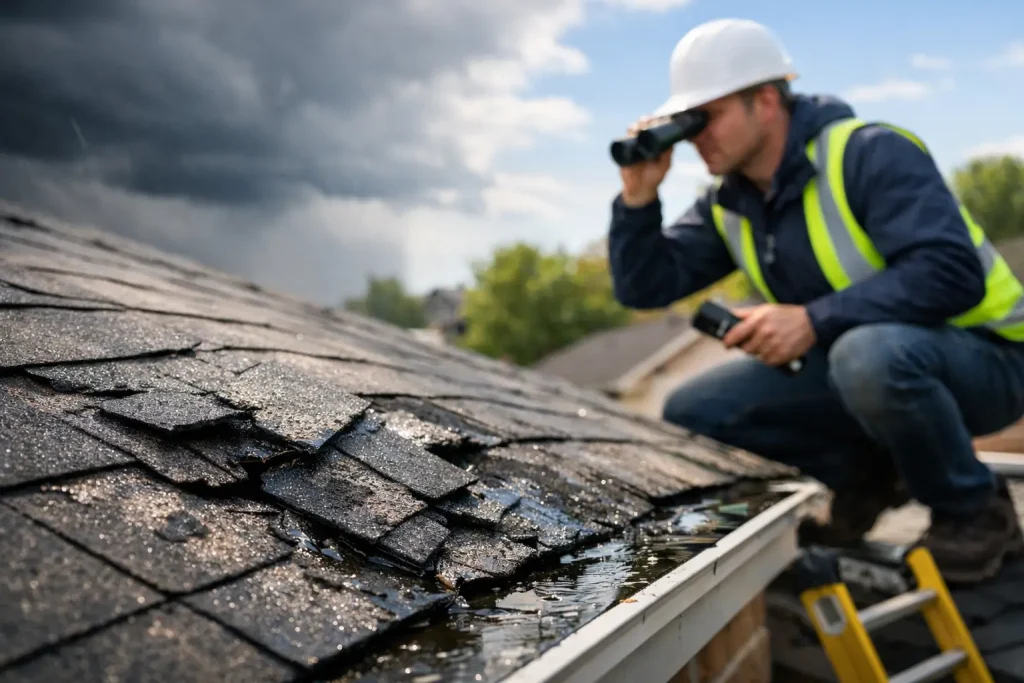
A Utah storm can be over in an hour, but the damage it leaves behind may not show up until the next hard rain. A few lifted shingles, a small puncture from hail, or loose flashing around a vent can let water into places you cannot see from the ground. Knowing how to spot roof storm damage early gives you a better chance to make a smaller repair before moisture affects insulation, ceilings, walls, or framing.
The safest approach is to inspect from the ground first, document anything unusual, and call a qualified roofer when you have concerns. You do not need to climb onto a wet or damaged roof to protect your home.
How to Spot Roof Storm Damage From the Ground
Start your inspection once conditions are safe and there is enough daylight to see clearly. Walk slowly around the outside of your house and look at the roof from several angles. Binoculars can help you get a closer view without putting yourself at risk.
Look for shingles that are missing, curled, cracked, bent upward, or sitting at an odd angle compared with the rest of the roof. Wind can break the seal that holds a shingle down even when it does not blow the shingle completely away. That loosening can create an entry point for wind-driven rain later.
Also watch for dark patches, exposed underlayment, bare areas, or shingles that appear unusually shiny. These can indicate lost granules, which are the protective particles on asphalt shingles. A few loose granules are normal as a roof ages, but a concentrated amount after a hailstorm deserves a closer look.
Check the ground and landscaping as well. Pieces of shingles, metal flashing, vent covers, roof sealant, or plastic from damaged skylights may have fallen during the storm. If you find roofing material in the yard, take photos before throwing anything away.
Pay Attention to Hail Damage Signs
Hail damage can be difficult for homeowners to identify because it does not always create obvious holes. On asphalt shingles, hail often leaves small, dark, circular impact marks where granules have been knocked away. The affected area may feel soft to the touch, but it is best to leave hands-on inspection to a professional rather than walking on the roof.
You may see clearer hail evidence on softer metal surfaces. Check metal gutters, downspouts, fascia, flashing, vent caps, garage doors, window screens, and air conditioning units for dents or fresh impact marks. Damage to these items does not automatically mean the roof is damaged, but it is a strong reason to schedule an inspection.
The size of the hail, the age of your roof, the slope of the roof, and the direction of the storm all affect the outcome. A newer, well-installed roof may handle a storm differently than an older roof with worn shingles. That is why an experienced inspection matters more than trying to judge the condition based on one sign alone.
Look for Wind Damage Around Edges and Openings
High winds put the greatest pressure on roof edges, ridges, valleys, and areas around chimneys, vents, skylights, and dormers. These are the places where roofing materials are more likely to lift or separate.
From the ground, look for uneven roof lines, loose ridge caps, displaced flashing, and shingles flapping or raised at the corners. You may also notice a gutter pulling away from the fascia or sections of soffit that have shifted. Wind damage to gutters and trim can allow water to move behind exterior materials, even if the roof itself looks mostly intact.
Do not ignore a small section of missing shingles. Underlayment offers temporary protection, but it is not designed to remain exposed to sun, rain, and wind for long. A prompt repair can prevent a localized issue from turning into a wider roof leak.
Check the Attic and Ceilings After Heavy Rain
Your attic can reveal roof damage that is not visible from outside. If you can access it safely, bring a flashlight and look for fresh water stains, damp insulation, wet wood, dark streaks, moldy odors, or active drips. Check near roof penetrations such as vents, exhaust fans, chimneys, and skylights, since flashing problems often appear there first.
A leak does not always drip straight down from the damaged spot. Water can travel along rafters, decking, or insulation before it becomes visible. A stain on a bedroom ceiling may be several feet away from the actual roof opening.
Inside the living area, watch for yellow or brown ceiling spots, peeling paint, bubbling drywall, warped trim, or a musty smell after rain. These signs may point to a roof leak, but they can also come from plumbing or condensation. A professional can help determine the source so you are not paying to repair the wrong problem.
Inspect Gutters, Siding, and Other Exterior Clues
Storm damage is not limited to the roof covering. Gutters that are bent, detached, clogged with shingle granules, or overflowing can send water toward your foundation and behind fascia boards. Downspouts should direct water away from the home, not dump it against siding or walkways.
Check siding for cracks, loose panels, dents, and new gaps around windows and doors. Look at fascia and soffit for peeling paint, soft spots, or areas that appear pulled away. These exterior components work together with your roof to manage water, protect ventilation, and keep your home looking cared for.
If a storm knocked down tree limbs, inspect the area where they hit or scraped the roof. Even a branch that did not puncture shingles can remove granules or crack a brittle shingle. Large limbs resting on the roof should be removed carefully by the appropriate professional before further damage occurs.
What Not to Do After a Storm
Avoid climbing onto the roof, especially if it is wet, icy, steep, visibly damaged, or covered with debris. Storm conditions can weaken decking, loosen shingles, and make surfaces slippery. A fall can be far more serious than the roof problem you are trying to inspect.
Do not pressure wash the roof or try to seal suspected damage with store-bought caulk from the ground. Temporary patches can sometimes trap water or interfere with a proper repair. If water is actively entering the home, place containers beneath the drip, move valuables away from the area, and contact a roofing professional promptly.
It is also wise to be cautious with anyone who appears immediately after a storm and pushes for a quick signature or upfront payment. A trustworthy local contractor should explain what they found, provide clear options, and give you time to understand the recommended work.
Document Damage for Your Insurance Claim
Take clear photos and short videos of roof-related concerns from the ground, including missing shingles, debris, dented gutters, damaged screens, water stains, and interior leaks. Make a simple note of the storm date, when you first noticed the issue, and any temporary steps you took to limit water damage.
For many homeowners, insurance coverage depends on the type of damage, the age and condition of the roof, the policy deductible, and the details of the policy. A roofing inspection does not guarantee a claim will be approved, but a detailed professional assessment can give you useful documentation and help you understand whether filing a claim makes sense.
Keep all receipts related to emergency mitigation, such as water cleanup or temporary protection. Before authorizing major work, review your insurer’s requirements and ask questions about the repair scope. Clear documentation helps prevent confusion later.
When to Schedule a Professional Roof Inspection
Contact us today to schedule an inspection with our team here at Big West Roofing after a significant hailstorm, high wind event, fallen branch impact, or any storm followed by a new leak. You should also call if your roof is older, you see granules collecting in gutters, or nearby homes have confirmed storm damage. Damage patterns can vary from one block to the next, so your neighbor’s result is helpful context but not a diagnosis for your home.
A professional roof inspection can identify subtle issues with shingles, flashing, vents, valleys, decking, gutters, and other exterior components. It also helps you separate urgent repairs from normal wear, which is especially valuable when you are deciding between repair and replacement.
Big West Roofing provides straightforward roof inspections for Utah homeowners who want clear answers after severe weather. You deserve an honest assessment, practical repair options, and help protecting your home without pressure. If something looks different after a storm, trust that instinct and have it checked before the next round of rain has a chance to make the problem bigger.