
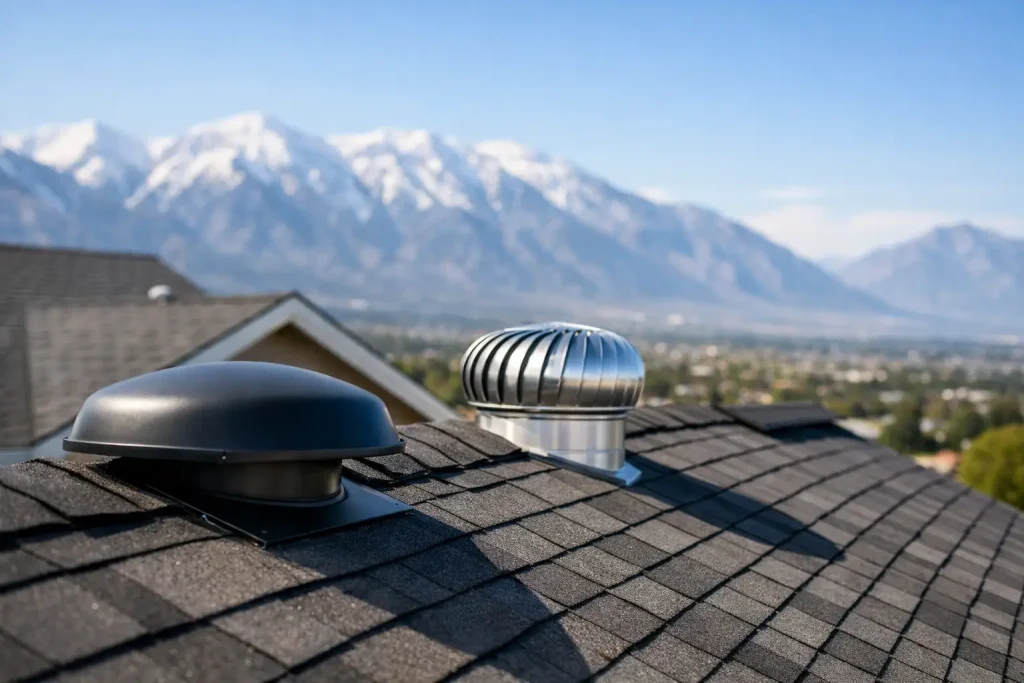
A hot upstairs bedroom in July, frost on attic nails in January, and shingles that seem to age too quickly can all point to the same overlooked issue: attic airflow. This roof ventilation guide helps Utah homeowners understand what ventilation does, what warning signs to watch for, and when a professional inspection is the right next step.
Roof ventilation is not about making your attic cold or turning it into conditioned living space. It is about moving excess heat and moisture out of the attic while allowing fresh air to enter. When the system is balanced and properly installed, it helps protect the roof deck, insulation, shingles, and the comfort of the rooms below.
Why Roof Ventilation Matters in Utah
Utah roofs handle major temperature swings. Summer sun can push attic temperatures far beyond the outdoor temperature, while winter storms bring snow, ice, and dry indoor air that can carry moisture into the attic. A roof has to manage both conditions.
During warmer months, trapped attic heat can make the home harder to cool. Your air conditioner works longer, upper rooms may stay uncomfortable, and shingles can be exposed to more heat than they were designed to handle over time. Ventilation cannot solve every cooling problem, especially if insulation or ductwork is lacking, but it is an important part of a healthy roofing system.
In winter, moisture is often the bigger concern. Warm household air naturally moves upward. If it reaches a cold attic through gaps around light fixtures, plumbing penetrations, attic hatches, or unsealed ducts, condensation can form on the underside of the roof deck and on nails. Left unaddressed, that moisture may lead to damp insulation, mold growth, wood staining, or rot.
Good ventilation works alongside air sealing and insulation. It does not replace either one. In fact, adding more vents without addressing major air leaks from the living space can leave the underlying moisture problem unresolved.
How a Roof Ventilation System Works
A properly designed attic ventilation system usually relies on intake and exhaust. Intake vents bring outside air into the attic near the lower edge of the roof. Exhaust vents allow warmer, moisture-laden air to leave near the roof peak. As air rises, the system creates a steady path for airflow from low to high.
Intake Vents: The Part Many Homes Need Most
Soffit vents are the most common intake vents. They sit beneath the roof overhang, where they are less visible from the street. Other homes may use fascia vents, drip-edge intake vents, or another low-profile intake option when the roof design has limited overhangs.
Intake is essential because exhaust vents cannot pull enough air through an attic if there is no clear place for replacement air to enter. A common mistake is adding ridge vents or powered vents while leaving blocked, painted-over, or insulation-covered soffits in place. That can reduce the system’s performance and, in some cases, pull conditioned air from inside the house instead.
Exhaust Vents: Letting Heat and Moisture Escape
Ridge vents run along the roof peak and provide continuous exhaust when paired with adequate intake. They are often a strong option because they are discreet and spread ventilation across the roofline. Other exhaust options include box vents, roof louvers, and, in certain situations, powered attic ventilators.
The best choice depends on the roof’s shape, slope, attic layout, and available intake area. A simple gable roof may be straightforward to ventilate. A complex roof with multiple ridges, valleys, cathedral ceilings, or additions may require a more tailored plan. More vent openings do not automatically mean better airflow. The goal is balanced intake and exhaust sized for the attic and installed where they can work together.
Signs Your Attic May Have a Ventilation Problem
Some ventilation issues are visible from inside the attic, while others show up as changes around the home. If it is safe to enter your attic, look without stepping on drywall or moving insulation unnecessarily. A qualified roofer can inspect the area if access is difficult or you are unsure what you are seeing.
Watch for these common signs:
- Upstairs rooms that stay unusually hot during summer afternoons
- Frost, condensation, or rusted nail tips on the attic side of the roof deck
- Damp, compressed, or uneven attic insulation
- Musty odors, dark staining, or visible mold on framing or sheathing
- Curling, blistering, or prematurely worn shingles
- Ice buildup at roof edges after snowstorms
None of these signs proves ventilation is the only cause. For example, ice dams can be related to heat loss, missing insulation, air leaks, roof geometry, and weather conditions. Shingle damage can also come from age, wind, hail, or installation issues. That is why a full inspection matters. A trustworthy contractor should explain what they find instead of treating ventilation as a one-size-fits-all answer.
The Connection Between Ventilation, Insulation, and Ice Dams
Homeowners often hear that a new vent will prevent ice dams. The reality is more nuanced. Ice dams form when snow melts on a warmer upper portion of the roof and refreezes near colder eaves. Ventilation can help keep the attic closer to outdoor temperatures, but it cannot overcome major heat loss from the house below.
The most effective approach usually combines air sealing, sufficient insulation, clear ventilation channels, and a roof system in good condition. Insulation should not block soffit vents. Proper baffles or vent chutes preserve an open path from the soffits into the attic while keeping insulation where it belongs.
If you have recurring ice dams, avoid relying on temporary fixes alone. Removing snow and ice may reduce immediate risk, but the home should be evaluated for the conditions causing repeated melting. Addressing the source can help protect gutters, shingles, fascia, and interior ceilings from water damage.
When Ventilation Changes Make Sense During Roof Replacement
Roof replacement is often the most practical time to correct a ventilation setup. With the existing roofing material removed, a contractor can assess the roof deck, add or update exhaust ventilation, and ensure flashing and underlayment are integrated correctly around new vents.
It is also a good opportunity to inspect the soffit and fascia. Damaged soffits can limit intake, and deteriorated fascia may need attention before new gutters are installed. For homes with older roofs, these components should be considered together rather than treated as unrelated projects.
Not every roof needs a ridge vent, and not every attic needs a powered fan. A home with a vaulted ceiling, limited attic cavity, or unusual roofline may require a different solution. The right recommendation should be based on measurements, attic conditions, existing ventilation, and the roof system being installed.
Questions to Ask During a Roof Ventilation Inspection
A helpful inspection should give you clear answers, not just a sales pitch. Ask whether your attic has both intake and exhaust, whether the intake openings are blocked, and whether the current ventilation is balanced for the attic space.
You can also ask if there are signs of condensation, mold, roof deck damage, or insulation problems. If new vents are recommended, the contractor should explain why that vent type fits your roof and how it will be flashed and finished. If the concern involves storm damage or a possible insurance claim, document any visible damage before repairs begin and ask what options may be available.
Big West Roofing can help homeowners evaluate roof ventilation as part of a free roof inspection, including whether the concern is tied to aging shingles, storm damage, attic moisture, or an exterior component such as soffit or fascia.
Avoid Quick Fixes That Create Bigger Problems
It can be tempting to add a fan, cut in extra vents, or cover a troublesome opening on your own. Roofing ventilation affects the roof deck, shingles, weather protection, electrical components, and indoor air movement. A poorly placed opening can create a leak risk, and an unbalanced powered fan can draw air from the home instead of from the soffits.
Be especially cautious about mixing multiple exhaust types without a plan. Ridge vents, box vents, gable vents, and powered fans can interfere with one another when they compete for airflow. The result may be short-circuiting, where air enters through one high vent and exits through another rather than traveling from the soffits through the attic.
A well-ventilated roof is quiet protection. If your attic shows moisture, excessive heat, or signs of wear, a careful inspection can turn a frustrating mystery into a clear, practical plan for protecting your home. Contact our team here at Big West Roofing! We’re happy to assess your roof, and give you the best solution for your home.