
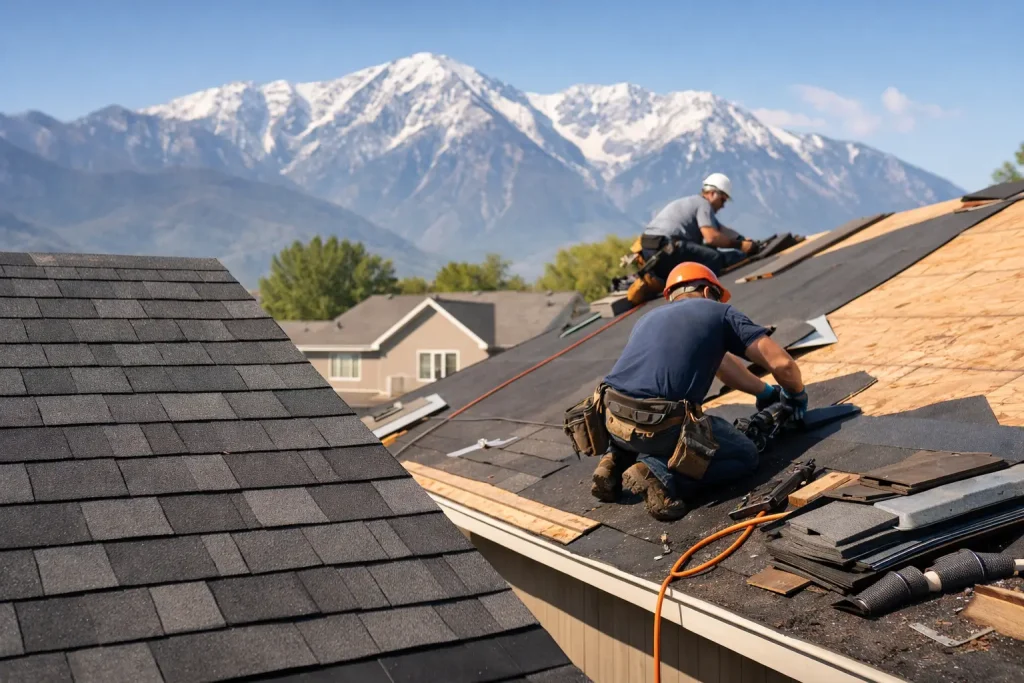
A roof rarely fails all at once. More often, homeowners notice a small water stain, a few shingles in the yard after a windstorm, or granules collecting near the downspouts. Those signs can be easy to put off, especially when life is busy. This residential roof replacement guide helps Utah homeowners understand when replacement makes sense, what choices matter most, and how to plan the work with confidence.
When Roof Replacement Is the Right Call
A repair is often the smart first move when damage is limited to one area and the rest of the roof is in good condition. A few missing shingles, a damaged pipe flashing, or a minor leak around a vent may be repairable. Replacement becomes more practical when problems are widespread, recurring, or tied to the roof’s age.
Most asphalt shingle roofs last roughly 20 to 30 years, though Utah sun, wind, snow, hail, installation quality, and attic ventilation can shorten or extend that range. If your roof is approaching the end of its expected lifespan, spending money on repeated repairs may only delay a larger issue.
Look for curled, cracked, bald, or missing shingles; dark streaks or moss growth; sagging roof lines; frequent leaks; and excessive granules in gutters. Inside the home, check ceilings, attic sheathing, and insulation for moisture stains, dampness, or signs of daylight. A leak does not always appear directly below its source, so a professional inspection is the safest way to identify what is actually happening.
Storm damage deserves quick attention. Hail can bruise shingles without leaving obvious holes, and wind can loosen or lift materials that later allow water underneath. After a significant storm, a free inspection can help you document damage early and decide whether an insurance claim may be appropriate.
Start With a Clear Roof Assessment
Before choosing colors or comparing estimates, get a complete assessment of the roof system. A roof is more than its visible surface. The condition of the decking, underlayment, flashings, ventilation, drip edge, valleys, and penetrations all affect how long the new roof will perform.
A thorough contractor should explain whether the roof can be installed over an existing layer or whether a tear-off is recommended. Although adding a new layer can reduce upfront labor and disposal costs in some situations, it can conceal damaged decking, add weight, and make future repairs harder to diagnose. A full tear-off costs more initially but gives the installer a clean surface to inspect and rebuild correctly.
Ask for the findings in plain language. You should understand what is damaged, what work is recommended, and why. A trustworthy contractor does not pressure you into the most expensive option. They help you weigh the condition of your roof, your budget, and how long you plan to own the home.
Choosing Roofing Materials for Utah Weather
Material selection affects appearance, price, maintenance, and long-term durability. There is no single best roof for every home. The right choice depends on your neighborhood, roof design, budget, and tolerance for maintenance.
Asphalt Shingles
Asphalt shingles remain the most common residential choice because they provide dependable protection at a practical price. Architectural shingles offer more depth and durability than basic three-tab shingles, and they come in many colors that complement Utah homes.
For many families, architectural shingles provide the best balance of cost, curb appeal, and performance. Higher-impact-rated shingles may be worth considering in areas that see regular hail. They generally cost more, but the added durability can offer peace of mind.
Metal Roofing
Metal roofing is known for longevity, clean lines, and strong performance in snow and wind. It can be an excellent fit for homeowners looking for a long-term investment or a distinctive appearance. Metal roofs often cost more up front than asphalt, and the final price depends heavily on panel type, roof complexity, and details around valleys and penetrations.
A properly installed metal roof can shed snow effectively, but snow retention may need to be considered above walkways, entries, or patios. This is one reason installation details matter as much as the material itself.
Low-Slope and Specialty Areas
Porches, additions, and sections with low roof pitch may require membrane roofing rather than standard shingles. These systems are designed to manage water on surfaces where drainage is slower. If your home has multiple roof styles, your contractor should recommend materials based on each section’s slope and needs rather than applying one product everywhere.
What a Roof Replacement Estimate Should Include
A low number on a proposal is not always a lower final cost. Roofing estimates should be specific enough for you to compare the actual scope of work, not just a broad material label and total price.
A clear estimate should identify the roofing material and manufacturer, underlayment, ice and water protection where needed, flashing work, ventilation improvements, tear-off and disposal, decking repair pricing if concealed damage is found, and cleanup. It should also explain the workmanship warranty and the manufacturer’s material warranty.
Roof size is only one part of pricing. Steep slopes, multiple stories, skylights, chimneys, valleys, complicated cutups, existing roof layers, and damaged decking can all affect labor and materials. If an estimate is dramatically lower than others, ask what may be excluded. Missing items often show up later as change orders or shortcuts.
Financing can make a necessary replacement easier to manage, particularly when a roof is damaged unexpectedly. If storm damage may be covered by insurance, take photos, save receipts for emergency protection, and avoid signing away control of your claim. A local contractor can help document visible damage and explain the repair scope, while the insurance carrier makes the final coverage decision.
The Residential Roof Replacement Process
Knowing what happens on installation day helps reduce stress. Most standard residential projects can be completed quickly, though weather, roof complexity, decking repairs, and material availability can change the schedule.
The crew begins by protecting landscaping, siding, windows, and surrounding areas as practical. Old materials are removed if a tear-off is part of the project. Then the roof deck is inspected for soft, rotted, or damaged sections before new materials go down.
Next comes the protective layer of the roofing system: underlayment, water barrier in vulnerable areas, proper flashing, and ventilation components. Shingles or metal panels are then installed according to the manufacturer’s requirements. The final steps include cleanup, magnet sweeping for nails, and a walkthrough of the completed work.
Roofing is noisy, and vibration can affect wall décor or attic items. Move vehicles out of the driveway, secure fragile items, keep pets comfortable indoors or off-site, and let neighbors know when work is scheduled. A good crew will work efficiently, but preparation makes the day easier for everyone.
How to Choose a Roofing Contractor
Your roof can be made from excellent materials and still fail early if it is installed poorly. Choose a contractor based on more than a sales pitch. Look for a local company with a proven reputation, proper licensing and insurance, clear written proposals, and a willingness to answer direct questions.
Ask who will perform the work, how the property will be protected, how unexpected decking damage will be handled, and what warranty applies to workmanship. Read recent reviews with an eye for communication, cleanup, follow-through, and how the company responds when a customer has a concern.
Local experience matters in Utah. A contractor familiar with snow loads, hail exposure, high winds, and local building requirements can recommend a roof system that fits the conditions your home actually faces. Big West Roofing approaches each inspection with that practical, homeowner-first mindset: explain the options clearly and complete the work with care.
Protect Your New Roof After Installation
A new roof needs very little day-to-day attention, but a little prevention goes a long way. Keep gutters clear so water can move away from the roof edge. Trim branches that rub against the roof or drop heavy debris. Check the attic periodically for moisture, especially after major storms or winter freeze-thaw cycles.
Schedule an inspection if you see damaged shingles, loose flashing, a new ceiling stain, or debris after high winds. Addressing a small issue early is usually easier and less expensive than waiting for water to reach the decking or interior of your home.
The best time to make a roof decision is before a minor concern becomes an emergency. A straightforward inspection and honest conversation can give you a clear path forward, whether your roof needs a small repair now or a replacement built to protect your family for years to come.