
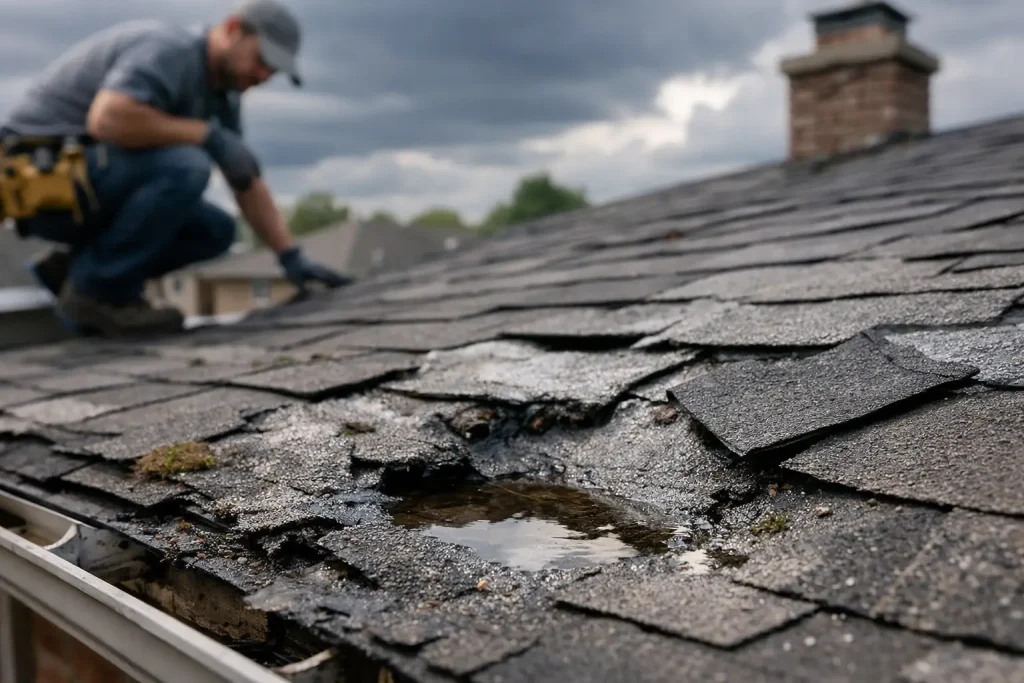
A small water spot on the ceiling may not look urgent, but it can point to a roofing problem that has been growing for months. Knowing the top signs your roof is failing helps Utah homeowners act before a manageable repair turns into damaged insulation, mold, rotten decking, or an unexpected replacement.
Utah roofs work hard. Intense summer sun, winter snow, high winds, freeze-thaw cycles, and hailstorms all take a toll. Some problems are easy to spot from the ground, while others only show up inside the home. The key is recognizing what deserves a prompt inspection and what can wait.
Top Signs Your Roof Is Failing
1. Water stains, drips, or damp spots inside
A brown ceiling stain, peeling paint near an exterior wall, or a drip during a storm is one of the clearest warnings that water is getting past the roof system. The leak may be directly above the stain, but water can also travel along rafters, decking, or insulation before it becomes visible indoors.
Do not assume the issue is minor just because the stain is small or only appears during heavy rain. Even an intermittent leak can damage wood framing and create conditions for mold. Place a container under active drips if it is safe to do so, then arrange a roof inspection as soon as possible.
2. Missing, cracked, curling, or loose shingles
Shingles are your roof’s first line of defense. When they crack, curl at the edges, lose tabs, or blow off in the wind, the layers beneath them become more exposed to rain, snow, and UV damage.
A few damaged shingles do not always mean you need a new roof. If the surrounding roof is in good condition and matching materials are available, a targeted repair may be the right answer. But widespread curling, repeated shingle loss, or brittle shingles often signals that the roof is nearing the end of its service life.
3. Granules collecting in gutters or at downspouts
Asphalt shingles are coated with protective granules that help them withstand sun and weather. It is normal to see a small amount of granule loss, especially on a newer roof. A noticeable buildup in gutters, at downspouts, or on the ground after storms is more concerning.
When shingles lose a significant amount of granules, they can age faster and become more vulnerable to cracking. Check for dark or shiny bare-looking areas on the roof as well. Granule loss is especially worth addressing after hail, since hail can knock granules loose even when the damage is not obvious from the ground.
4. A sagging roofline or soft spots
Your roofline should look straight and even. A dip, sag, or wavy section can mean the roof decking or structural supports have been weakened by moisture, age, or excessive weight. This is not a cosmetic issue to put off.
Inside the attic, soft decking, visible moisture, or wood that looks dark and deteriorated also deserves professional attention. Avoid walking on a roof that appears to sag, and do not try to diagnose structural concerns on your own. A qualified roofer can determine whether the problem is isolated or part of a larger repair need.
5. Daylight or drafts in the attic
On a bright day, carefully look around your attic for pinpoints of daylight coming through the roof decking. Also pay attention to unexpected drafts, wet insulation, or a musty smell. These conditions can indicate gaps around penetrations, damaged underlayment, failed flashing, or openings caused by missing shingles.
Not every attic draft means the roof has failed. Attic ventilation is necessary, and intake or exhaust vents are meant to move air. The concern is uncontrolled air and moisture entering through places that should be sealed.
6. Damaged flashing around chimneys, vents, and skylights
Flashing is the metal material installed around roof transitions and openings. It directs water away from vulnerable areas near chimneys, plumbing vents, skylights, valleys, and walls. Because these areas are more complex than an open field of shingles, they are common sources of leaks.
Look for lifted metal, rust, cracked sealant, or shingles pulling away around these features. A leak near a chimney or skylight does not automatically mean the entire roof needs replacement. Often, careful flashing repair can restore protection. Waiting too long, however, gives water time to damage the materials underneath.
7. Hail, wind, or fallen-branch damage
After a Utah storm, inspect your property from the ground. Look for shingles in the yard, bent or missing gutter sections, damaged fascia, dents on metal components, and branches resting on the roof. Wind can lift shingles without tearing them off completely, breaking the seal that helps keep water out.
Hail damage can be harder to recognize. It may leave bruised spots, granule loss, fractured shingles, or damage to vents and flashing. Since storm damage is not always visible from a driveway, a professional inspection is a smart next step after a significant hail or wind event. If damage may be covered, document what you see with photos and avoid making permanent repairs before speaking with your insurance provider.
8. Moss, algae, or persistent debris buildup
Dark streaks are often algae and may be largely cosmetic, but thick moss or debris that holds moisture against the roof can shorten shingle life. Leaves, pine needles, and branches trap water in valleys and near roof edges, where they can contribute to deterioration and clogged gutters.
Do not pressure wash an asphalt shingle roof. High-pressure cleaning can strip protective granules and cause more harm than good. A roofing professional can recommend a safe cleaning approach and check whether the growth is hiding damaged shingles or drainage problems.
9. Gutters overflowing or pulling away from the home
Gutters are part of your roof’s drainage system. When they clog or overflow, water can back up along the roof edge, damage fascia and soffit, and pool near the foundation. Gutters pulling away from the home may also be a sign that the fascia behind them has been affected by moisture.
Clean gutters can solve some drainage issues, particularly after fall leaf drop or a storm. If overflow continues after cleaning, though, the problem may involve gutter slope, roof runoff patterns, damaged drip edge, or a roof condition that needs closer attention.
10. Your roof is near the end of its expected lifespan
Age alone does not decide whether a roof needs replacement, but it provides useful context. Many asphalt shingle roofs last roughly 20 to 30 years, depending on material quality, installation, ventilation, weather exposure, and maintenance. Some roofs fail sooner after severe storms, while well-maintained roofs can last longer.
If your roof is approaching that range and several warning signs are appearing at once, it is wise to plan ahead rather than wait for a major leak. A planned replacement gives you more time to compare options, consider financing, and choose materials that fit your home and budget.
When to Repair and When to Replace
A repair is often the practical choice when damage is isolated, the roof still has meaningful life left, and the underlying decking is sound. Replacing a few shingles, repairing flashing, correcting a small leak, or restoring storm-damaged sections can protect your home without the cost of a full replacement.
Replacement becomes more likely when damage is widespread, leaks have occurred repeatedly, shingles are failing across multiple areas, or the roof is old enough that repairs would only delay the inevitable. The right decision depends on the roof’s condition, not just one visible symptom. An honest inspection should explain both options clearly, including what each option is likely to cost and how long it is expected to last.
What to Do When You Notice a Warning Sign
Start by taking photos from the ground and making note of when you first noticed the issue. If there is active water intrusion, protect belongings below the leak and use a container to catch water. Avoid climbing onto the roof, especially after rain, snow, or wind. A wet or damaged roof is not a safe place for a homeowner inspection.
Big West Roofing offers free roof inspections to help homeowners understand what is happening before making a decision. Whether the answer is a focused repair, storm damage support, or a replacement plan, getting a clear assessment early can protect both your home and your budget.
Your roof does not need to be actively leaking to deserve attention. A timely inspection after a storm, before winter, or when the first small warning appears can give your family the confidence that the home over your heads is ready for the next season.