
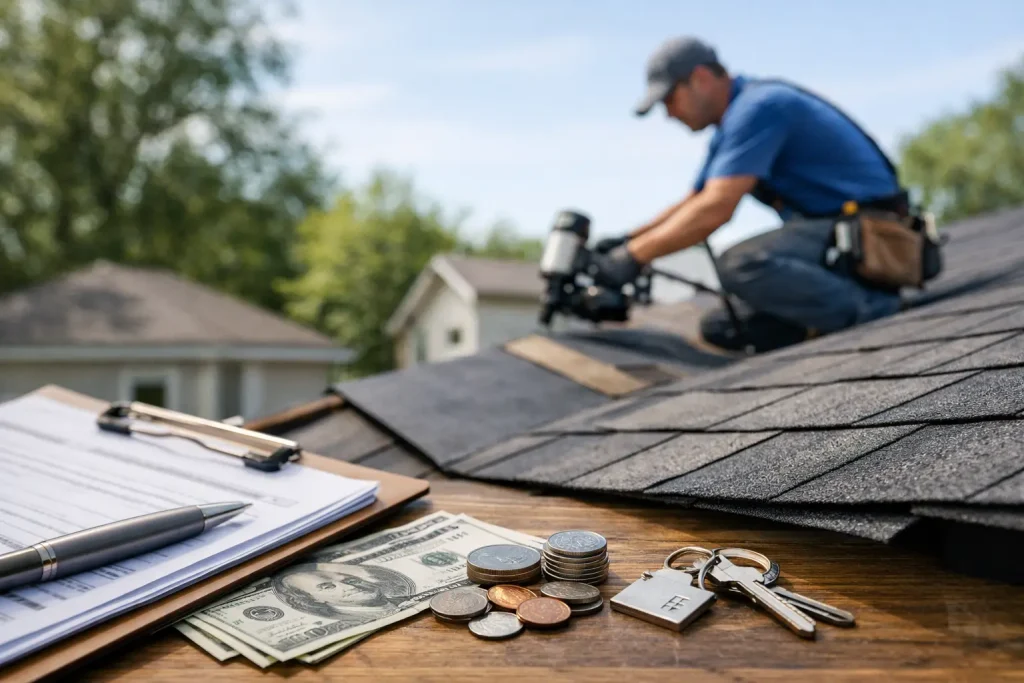
A storm rolls through, shingles end up in the yard, and the first question many homeowners ask is not about shingles or underlayment. It is about money. More specifically, it is about the insurance deductible for roof replacement and what that number means for the real cost of getting the roof fixed.
This is where a lot of confusion starts. Homeowners hear one thing from a neighbor, another from their insurance company, and sometimes something completely different from a contractor. The truth is usually simpler than people expect. Your deductible is the part of the approved claim that you are responsible to pay out of pocket. It is not optional, and it should be part of your planning from the start.
What the insurance deductible for roof replacement actually means
If your roof has covered storm damage and your insurance carrier approves the claim, the company generally pays for covered repairs or replacement minus your deductible. That deductible is your share of the loss.
For example, if your approved roof replacement cost is $18,000 and your deductible is $2,500, the insurance company would typically pay the covered amount minus that $2,500. You are responsible for the deductible.
That sounds straightforward, but there are a few details that can change the numbers. Some policies have a flat deductible, such as $1,000 or $2,500. Others have a percentage-based deductible tied to your home’s insured value. If your home is insured for $500,000 and your policy has a 1% wind or hail deductible, your out-of-pocket cost could be $5,000 before insurance starts covering the rest of the approved claim.
That is why homeowners should never assume their deductible is small. It depends on the policy, the type of damage, and the cause of loss.
Why deductible confusion happens so often
Roof claims move fast when damage is obvious, but the paperwork rarely feels simple. Insurance estimates may include depreciation, actual cash value, replacement cost language, and line items that most homeowners do not deal with every day.
Then there is the common misunderstanding that a contractor can somehow make the deductible disappear. In most cases, that is not how it works. If a contractor says you do not have to pay your deductible, that should raise a red flag. Insurance fraud laws and contract rules can come into play, and the homeowner can end up in a bad spot if the paperwork does not match the actual work or payment.
A trustworthy contractor should explain the process clearly, not blur the numbers to win the job.
How roof insurance payments are often structured
Many homeowners expect one check that covers everything. In reality, claims are often paid in stages.
The first payment may be based on the actual cash value of the damaged roof, which subtracts depreciation for age and wear. After the work is completed and documents are submitted, the insurance company may release the recoverable depreciation if your policy includes replacement cost coverage.
Your deductible still applies. So do any non-covered upgrades or extra work outside the approved claim.
This matters because homeowners sometimes mistake the first insurance check for the total amount available. They may also think the contractor is overcharging when the final price is higher than the first check. Often, it is just the normal structure of the claim.
When you pay the deductible for roof replacement
The timing can vary, but in most cases the deductible is paid as part of the project cost. Some contractors collect it in stages, such as a portion at scheduling and the remainder at completion. Others collect it with final payment once the insurance funds and paperwork are in place.
What matters most is transparency. You should know the contract price, what insurance has approved, what your deductible is, and whether there are any additional non-covered costs. If any part of that is vague, ask for clarification before work starts.
A good contractor will be comfortable walking through those numbers with you.
What insurance usually covers and what it may not
A roof claim is not automatically a full roof replacement claim. Insurance companies look at the cause and extent of damage, the age of the roof, the terms of the policy, and whether the damage came from a covered event.
Storm, hail, and wind damage are often covered if the policy includes those perils. Wear and tear, poor maintenance, old age, and long-term deterioration usually are not. If there is a leak because shingles have simply reached the end of their life, insurance may deny the claim even if the roof now needs replacement.
There can also be gray areas. A storm may damage part of an older roof, but matching issues, code requirements, and repairability can affect whether the insurer approves a repair or a full replacement. This is one reason it helps to work with a contractor who knows how to document storm damage clearly and communicate with adjusters when needed.
Should you file a claim if the deductible is high?
Sometimes yes, sometimes no. It depends on the scale of damage.
If your deductible is $3,000 and the total covered damage is only $3,500, filing a claim may not provide much benefit. If the roof replacement is $20,000 after a major hail event, that same deductible may make much more sense.
There is no universal rule, but homeowners should look at the likely scope of work before assuming a claim is worth filing. A professional inspection can help you understand whether the damage appears substantial enough to justify the process.
That is especially helpful in Utah, where wind, snow, and hail can all create roofing issues that are easy to miss from the ground.
Questions to ask before signing anything
Before you move forward with a roof claim project, slow the process down just enough to get clear answers. Ask what damage was found, whether it appears claim-worthy, what your policy deductible is, how payments will be handled, and whether any work falls outside the insurance scope.
Also ask the contractor if they will help document the damage and meet with the adjuster if needed. That kind of support can make the process much smoother, especially for busy homeowners who do not want to chase down every detail themselves.
Just as important, ask for a written agreement that matches the approved scope and explains your financial responsibility. You should never be guessing at the end.
Red flags homeowners should watch for
Most roofing companies are honest, hardworking businesses. But when storms hit, out-of-town crews and high-pressure sales tactics tend to show up too.
Be cautious if someone promises to waive the deductible, asks you to sign over the full claim with little explanation, pressures you to sign the same day, or avoids putting pricing and scope in writing. Be equally careful if they promise a full roof replacement before the insurance company has even reviewed the claim.
A roof is one of the biggest systems protecting your home. The claim process should feel organized, honest, and documented, not rushed or slippery.
How a local contractor can help without making false promises
The best help is practical help. That means a thorough inspection, clear photo documentation, a straightforward explanation of what looks storm-related, and support during the claim process if you choose to file.
It also means being honest if the roof damage does not support a claim. Not every roofing problem should go through insurance, and a contractor who tells you that is usually looking out for your long-term interests, not just chasing a job.
For homeowners who do have legitimate storm damage, a local company like Big West Roofing can help make the process easier by explaining the scope, answering questions about the deductible, and keeping the project moving once approval is in place.
The bottom line on an insurance deductible for roof replacement
The insurance deductible for roof replacement is your portion of the covered claim, and you should expect to pay it. The real key is knowing your deductible before the work begins, understanding whether the damage is actually covered, and choosing a contractor who explains the numbers clearly instead of trying to sell around them.
When the roof is damaged, stress tends to make every decision feel urgent. A little clarity goes a long way. The right contractor will not just replace shingles. They will help you understand what you are paying for, what insurance is paying for, and what makes sense for your home.